The most positive scenario for the Russians would be the use of nuclear weapons against all those who threaten Russia – this is the main message of the first day of the St. Petersburg International Economic Forum (SPIEF) during the discussion on “civilizational threats facing Russia”.
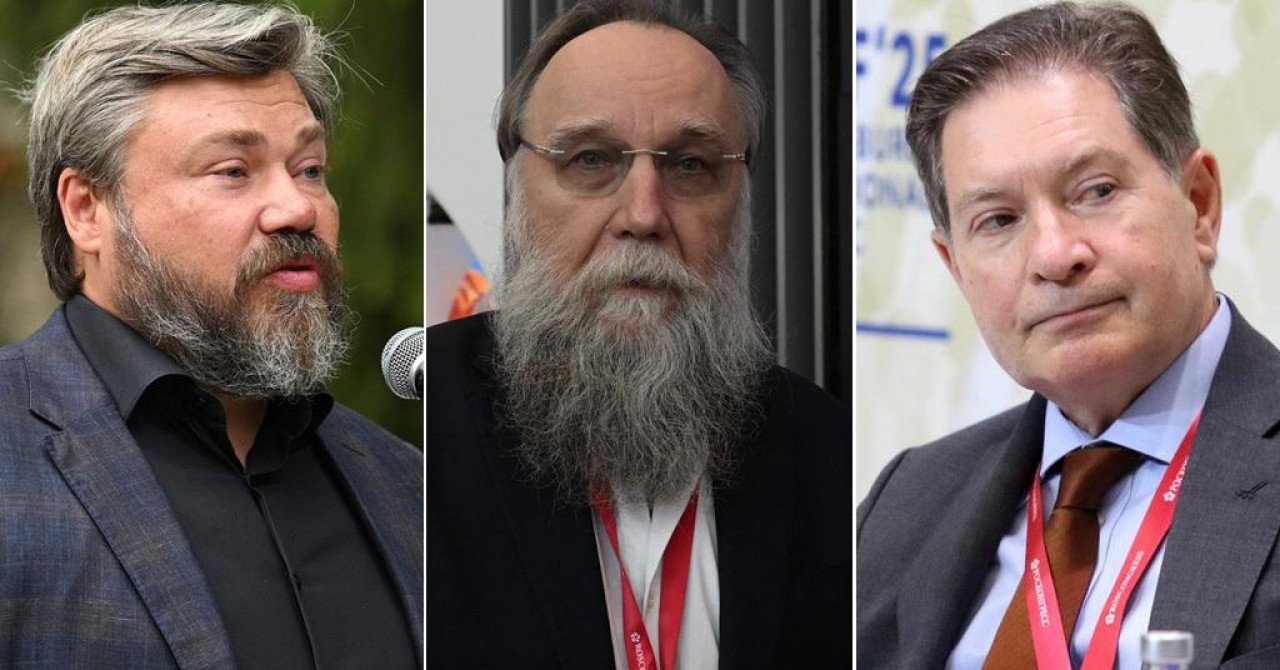
The participants were not marginal war bloggers, but prominent conservatives, close Vladimir Putinincluding Konstantin Malofeevfounder of TV channel Cargrad, which promotes the views of the Russian Orthodox Church, Georgija Filimonovthe governor of the Vologda region, and a philosopher Aleksandar Dugin. They presented a vision of a potential “salvation path” in which the most positive scenario for the Russians is the immediate use of nuclear weapons.
“This is a scientific report prepared by a whole group of experts,” Konstantin Malofeev began his speech, explaining that the initiators were himself, Aleksandar Dugin and a former intelligence officer Andrei Bezrukov. However, other influential Kremlin officials also contributed to this work, including Aleksandra GalushkaDeputy Secretary of the Public Chamber of the Russian Federation, and Alexey Komisarovrector of the Presidential Academy (RANEPA).
Five areas
The report concluded that Russia’s path to a peaceful future in 2050 faces threats that can be divided into five areas: geopolitics, ideology, demography, economics and technology. All these threats have been looming over Russia since the beginning of the 21st century, although their relevance has changed over time. In order to implement the best possible scenario (which, remember, assumes a nuclear attack), Malofeyev and the other authors of the report propose a ten-point list of “best actions” for the Russian authorities. Among them are the “de-Westernization of Russia”, the legalization of autocracy, the promotion of the cult of the family, the depopulation of urban areas and a new Constitution that would officially cement all of this.
As reported by the Moscow daily Komersant, the authors identified three scenarios for Russia in the coming decades. The first is “inertial”, and implies that, in 2036, the conflict with Ukraine will be frozen and without conditions for a quick victory, and a new arms race will continue. In 2050, American or Chinese hegemony will dominate, NATO will disintegrate, and there will be an ever-increasing threat of destroying Russia in war.
The next one is “bad”, which means that in 2036 Russia will experience defeat in the war with Ukraine. Ukraine will be a member of NATO, the wars in South Ossetia and Transnistria will continue, and Russia will fight to preserve its regional sovereignty, at least in a truncated form. In that case, 2050 will be followed by the “colonization” of Russia, the complete destruction of its sovereignty and a unipolar world and the creation of a military bloc based on the European Union.
“Good script”
The last scenario is “good” and in 2036 includes: the use of nuclear weapons, the collapse of the European Union, the occupation of Kiev and Odessa, the complete subjugation of Ukraine – or its annexation, or its transformation into a buffer state, or the creation of a “new East Slavic state” on its territory. And in 2050, Russia ensures “global security and justice”, forms its own macro-region in Eurasia and “the trinity of the Russian people”.
“The Russians don’t even see Ukrainians in their attacks anymore”
After that, Malofeyev gave the floor to Georgi Filimonov, who concluded that the Special Military Operation, i.e. the attack on Ukraine, “was very useful in awakening justice and unlocking the dormant potential of Russians.”
Besides the nuclear war proposal, there were other interesting ideas. For example, Andrei Bezrukov, a former Russian intelligence agent in Washington, suggested that Russia show that it is also ready for biological warfare. “We have to stop being nice. Many, many red lines that we discussed remain on paper. But even without a nuclear war, we actually have a huge range of options,” Bezrukov said and went into detail. “Let’s simply take the fact that the whole of Western Europe is now dependent on gas imports. Do you know what a gas tanker explosion is? It’s the equivalent – if detonated correctly – of a small nuclear explosion. They should understand that in Europe. And that means someone has to tell them that it can happen,” Bezrukov suggested.
It all ended with the appearance of the most famous Kremlin philosopher Alexander Dugin, who revealed to the gathered audience that the authorities in Russia are already implementing some of the proposals put forward by his colleagues. “They just need to be bolder,” Dugin concluded.