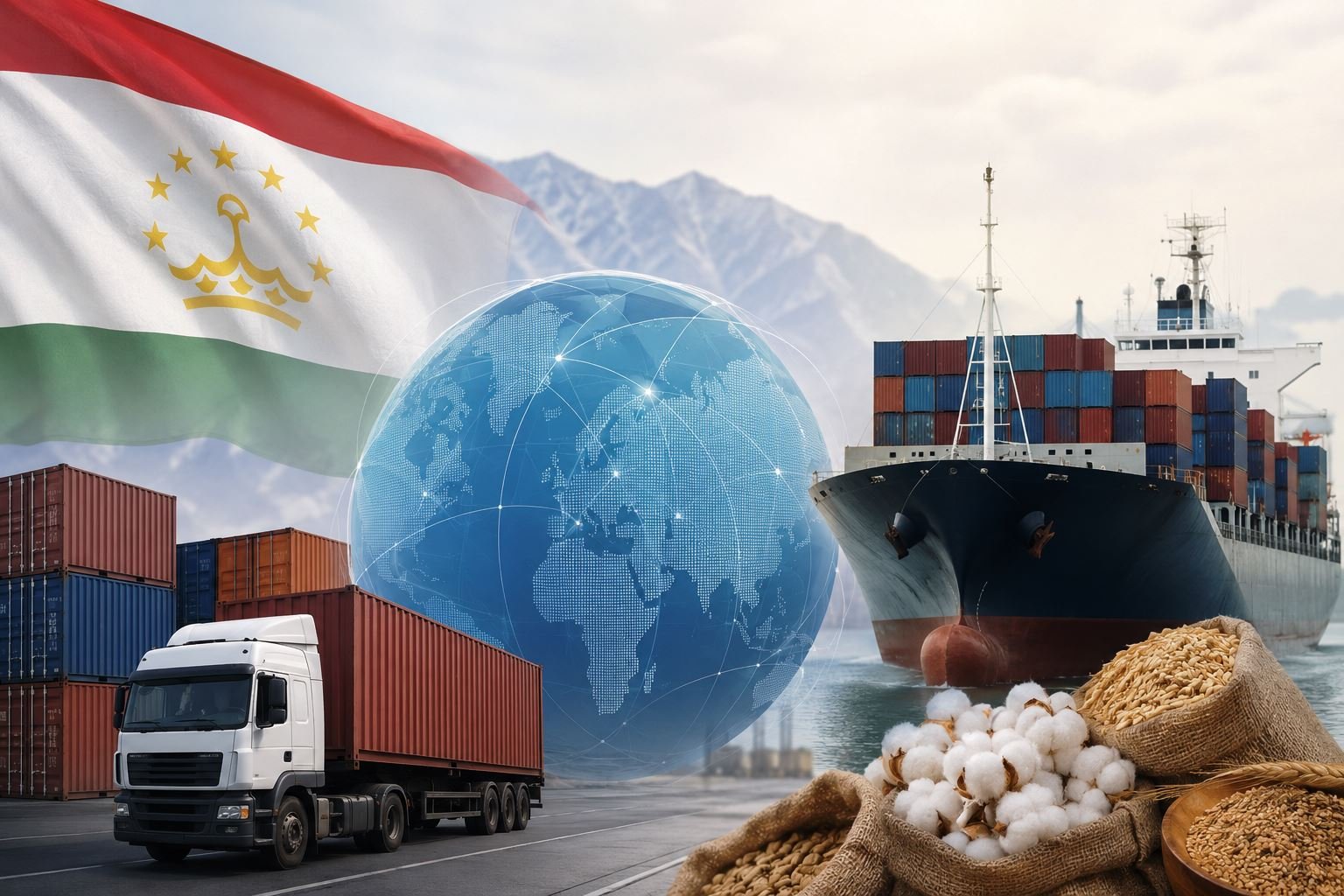
In January–April 2026, Tajikistan’s foreign trade turnover amounted to $3.769 billion, which is 21% more than in the same period last year, reports the Statistics Agency under the President of the country.
At the same time, the trade balance was sharply negative: the deficit amounted to $2.395 billion.
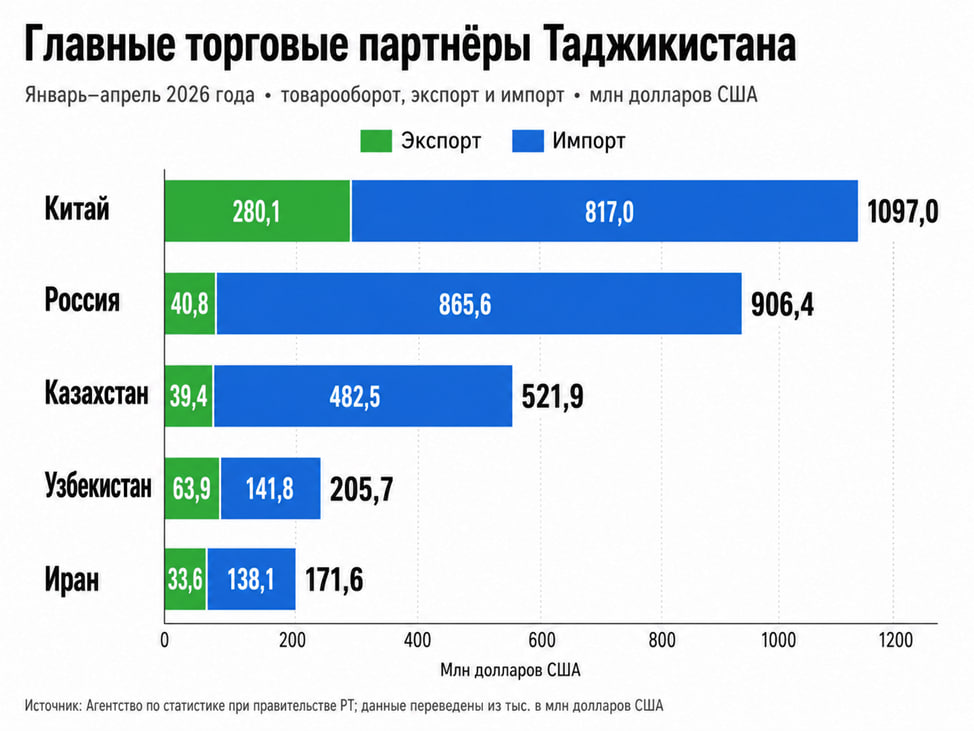
During this period, Tajikistan traded with 119 countries of the world. Tajikistan’s main trading partners remain China, Russia, Kazakhstan, Uzbekistan, and Iran.
Export
Over the four months of this year, the republic exported goods worth $687 million. This is 8.1%, or $51.5 million, more than in January–April 2025.
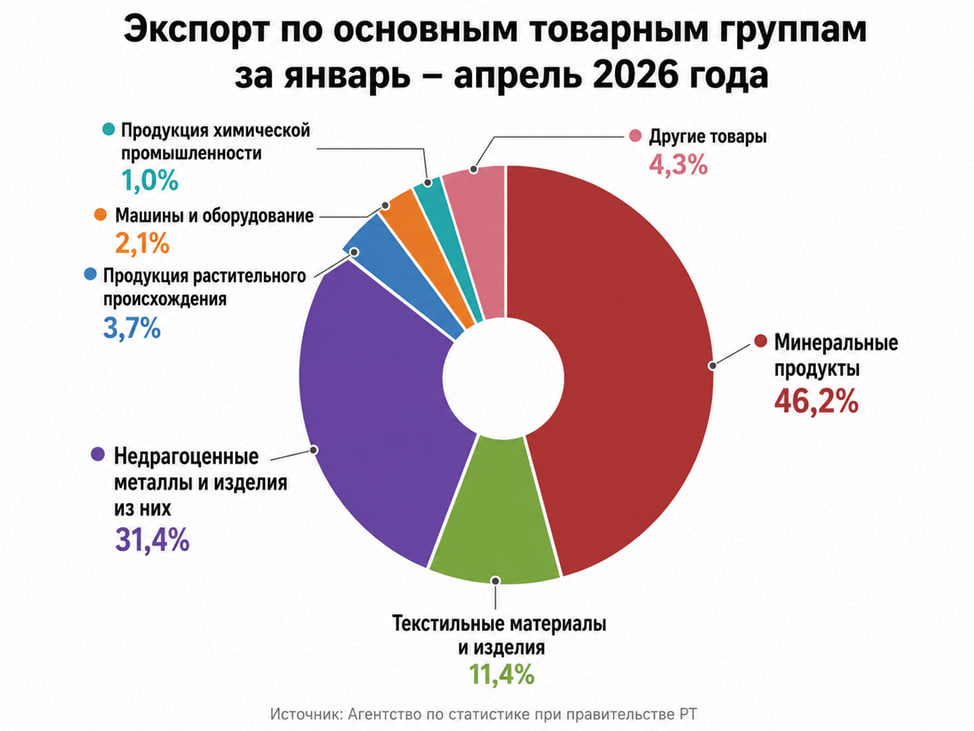
The growth in exports was primarily ensured by mineral products – their supplies increased by 1.6 times, or by $119.2 million. The export of precious and semi-precious stones and metals also increased – by 7.3 times (by $7.6 million), products of plant origin – by 1.6 times (by $9.4 million), textiles and textile products – by 11.6% (by $8.2 million).
Exports of cotton fiber increased by 13.1%, or by $5.5 million. The supply of machinery, equipment and mechanisms increased by 11.5 times (by $13 million), vehicles – by 3.7 times (by $3.5 million).
At the same time, exports of base metals and products made from them decreased by $75.1 million, chemical products by $1.1 million, live animals and products of animal origin by $0.7 million.
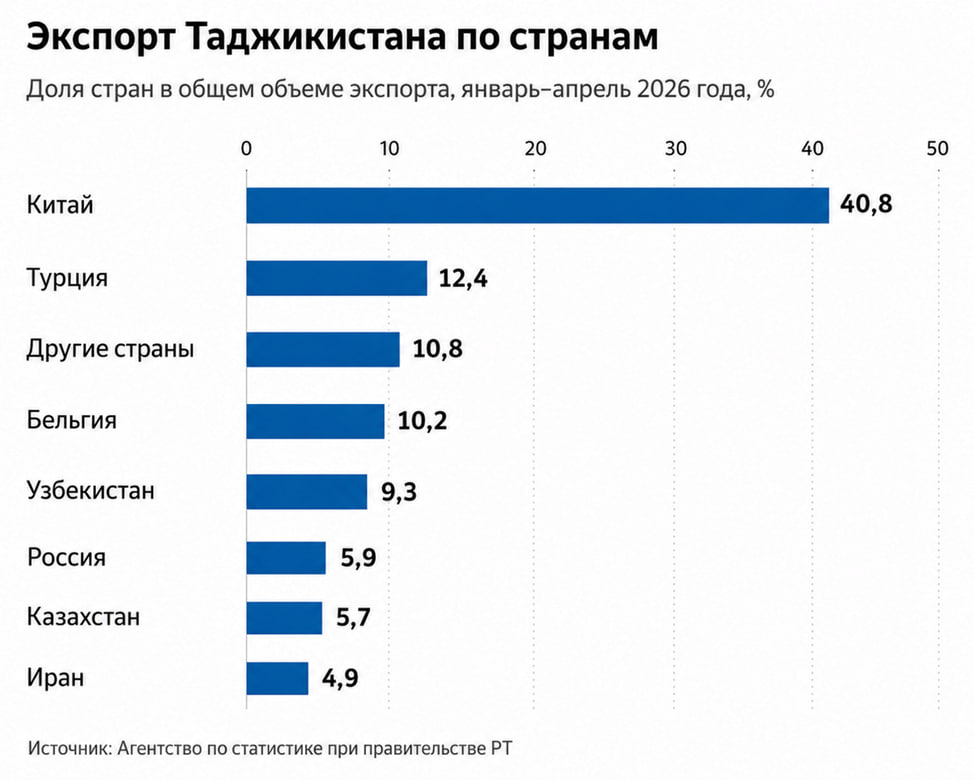
The main buyers of Tajik goods in January–April were China, Türkiye, Belgium, Uzbekistan, Russia, Kazakhstan, and Iran.
Import
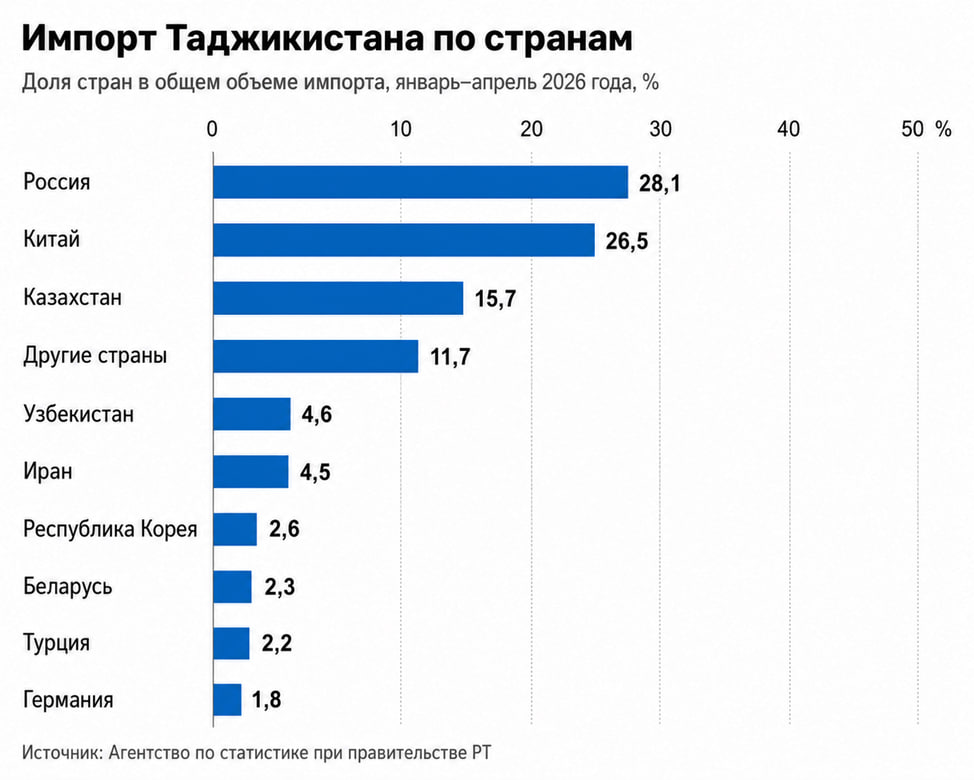
At the same time, imports grew significantly more – by 24.3%, or $603.4 million, and reached $3.82 billion. Thus, the volume of goods imported into the country was almost 4.5 times higher than exports.
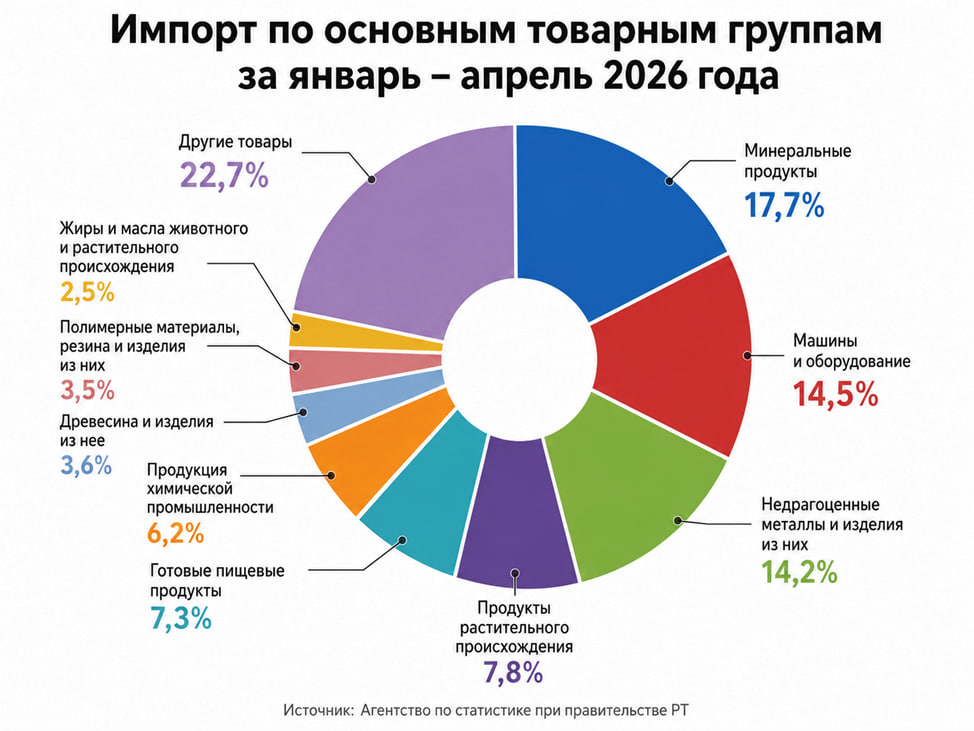
Imports increased in almost all major product groups. The biggest increase was in the supply of base metals and products made from them – by $187.3 million, machinery and equipment – by $136.6 million, mineral products – by $79.9 million, products of plant origin – by $67 million, and vehicles – by $52.9 million.
Imports of prepared foods, chemicals, plastics, wood and wood products, textiles, fats and oils, as well as live animals and animal products also increased.
The goods mainly came from Russia, China, Kazakhstan, Uzbekistan, Iran, the Republic of Korea, Belarus, Turkey, and Germany.