One of the main criticisms leveled at the authors of the law on intervention measures is that they were adopted without social dialogue and without presenting convincing and concrete explanations regarding compensatory measures. Estimates of the loss of public financial revenues range from approximately 570 million euros annually to approximately one billion euros. The proponents reply that the fear of a billion-dollar hole is exaggerated, they predict action towards a leaner state, a reduction in the costs of the state apparatus, debureaucratization, dynamic effects of the measures through increased competitiveness and economic activity and, as a result, a broader tax base. Otherwise, these could only become apparent over a longer period, while the blow to public coffers and the budget would already occur with the start of the implementation of the law.

“This law was written for a different kind of governance than we have been following for the last four years,” but the future mandate holder Janez Janša estimated that the law will be feasible with a different functioning of the state, “where work will also be done on the expenditure side, because the costs for the functioning of the state are too high.”
Also interesting was the statement by Marko Lotrič, the soon-to-be president of the Fokus government party and the state council, that part of the missing funds could be found in so-called special or extraordinary pensions. “I absolutely think that all those pensions that are extraordinary, that are not based on paid-in funds, that are not based on work performed, should be ventilated,” he assessed.
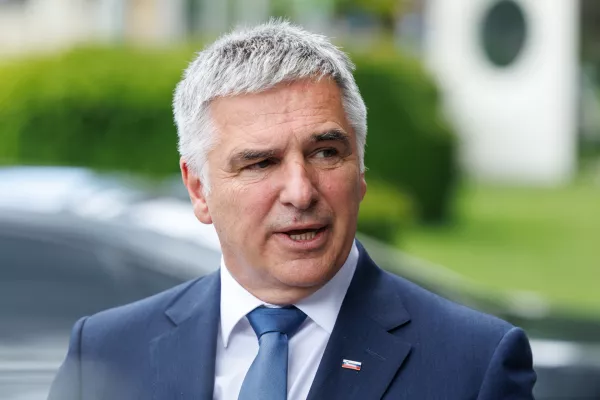
Marko Lotričthe soon-to-be president of the Fokus government party and the state council, we asked which beneficiaries were specifically referred to by the statement that all those pensions that are extraordinary, that are not based on paid-in funds or on work performed, should be ventilated, as well as whether they intend to propose legal changes in this direction and how much savings they are counting on.
The public relations service of the State Council answered us in general that Lotrich’s statement referred mainly to those forms of pension or pension-like benefits that are not directly linked to individual payments of insured persons to the pension fund or to full working years and contributions from work. “In public discussions, individual privileged pension statuses and some historically acquired rights that deviate from the general rules of the pension system are usually mentioned.” As they added, the purpose of the statement was to draw attention to the need for greater transparency and fairness of the pension system and to the question of the long-term sustainability of the pension fund. “It would make sense to check whether all existing special regimes are still adequately justified and consistent with the principle of equal treatment of insured persons,” Lotrič also believes.
A long list of special pensions
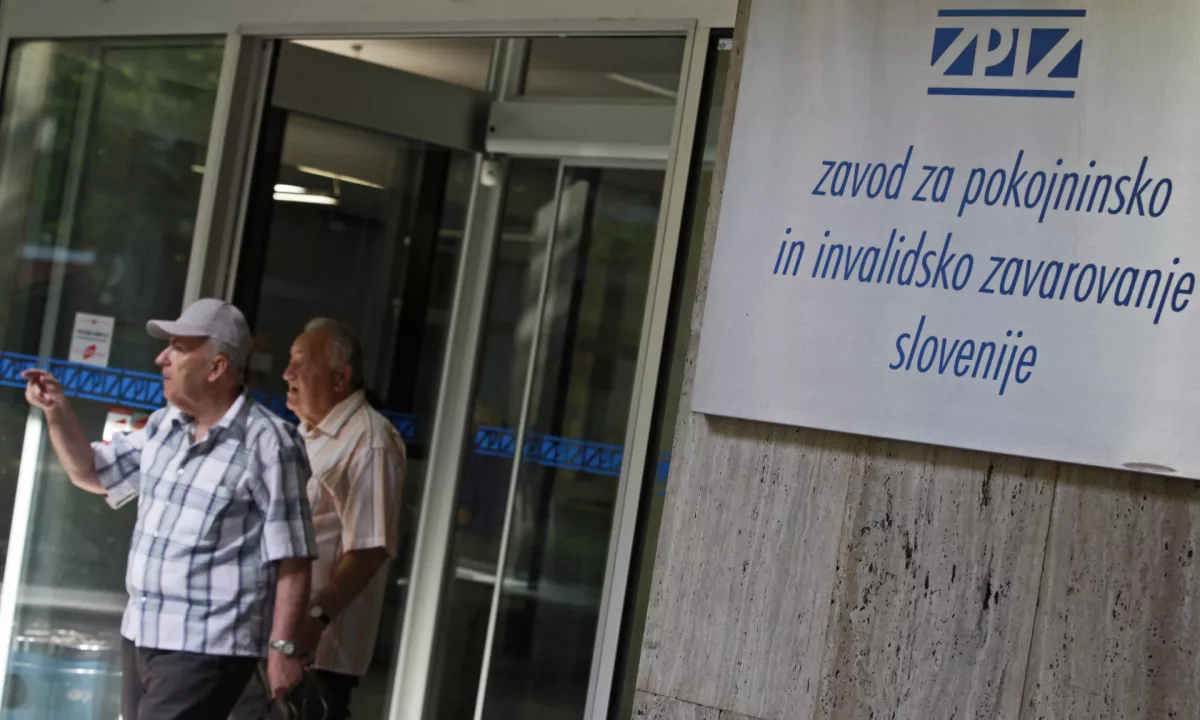
The Institute for Pension and Disability Insurance (ZPIZ) did not want to comment on Lotrich’s statement at this stage. However, they sent us a list of beneficiaries of pensions and other PIZ benefits as well as refunds of contributions from PIZ, which they manage under the common heading “Obligations of the Republic”. In these cases, the state, on the basis of special provisions of pension and other special laws, provides funds from the state budget to cover obligations that arise due to the assessment of rights from PIZ under special conditions or due to the loss of contributions.
The list of types of users or contributions is long and includes more than 50 different categories. According to the latest data from 2024, the total amount of payments for this purpose amounted to approximately 325 million euros per year.
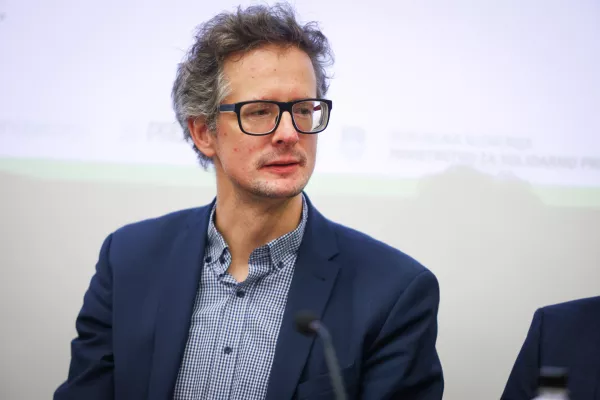
Igor Feketijaoutgoing Secretary of State at the Ministry of Labor and co-author of the pension reform, is in favor Diary explained that among these payments, by far the largest items are contributions for the disabled, guaranteed pensions, contributions for the self-employed and farmers, in short, for areas that the incoming government will very likely not touch.
In the case of pensions for NOB participants and similar recipients, which are popularly highlighted on social networks, according to Feketi, those who stumble upon them do not check the amounts that go to this purpose, which are lower from year to year due to the death of recipients. At the same time, these are already acquired rights (even in the case of widow’s and family pensions for these recipients), which cannot be interfered with retrospectively, as this would fall before the constitutional court. For the future, the SDS amendment to the pension reform provided that special pensions will no longer be inherited, but only the part of the pension assessed according to the general regulation, but not according to the special regulation, will be taken into account when calculating the widow’s or family pension. “So this part of the pension system has already been refined.” According to Feketi, it is therefore not possible to save almost anything in this area. The only thing that could be changed is occupational pensions, which is also not particularly realistic.
Knocking down results pension reforms
The total financial effect of “extraordinary” pensions, which the proponents of the intervention law might target, is therefore actually not that large, at most a few million euros, and in itself cannot cover the large shortfall from the measures of the intervention law, which, according to ZPIZ estimates, would cause a shortfall of 500 to 600 million euros in the pension fund. These are measures of full dual status (full pension, full salary), a social cap on contributions and a reduction in the basis for the payment of contributions for smaller SPs and farmers. The pensions of the latter will not be and are not fully covered by the contributions paid in the future, but due to the social correction in the pension system, their pensions are calculated from the lowest pension base (currently 1289.78 euros).
Feketija points out another important aspect, namely the threat of part of the funds from the recovery and resilience plan, the payment of which is also linked to the implementation of the pension reform, which is now heavily interfered with by the measures of the intervention law. “This is a real threat, but no one is particularly interested because it sounds technical, but we have already received a letter from the European Commission requesting an explanation of what is happening. Any interference with the sustainability of the pension system, as much as half a billion euros of additional expenditure per year, absolutely undermines the result of the pension reform.”
On the question of where and how the missing funds will be provided, Feketija does not want to speculate, but does not rule out the possibility that certain rights may be curtailed in the future.