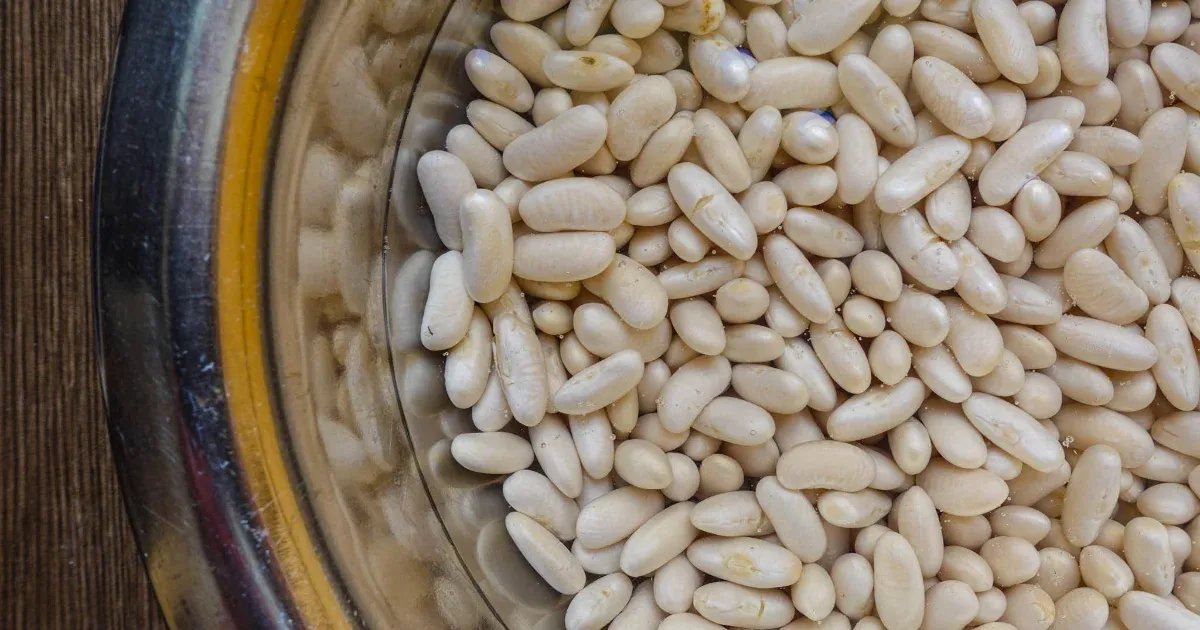
Legumes are the food of the future: they are sustainable, they are abundant in fiber, high-quality carbohydrates, they are filling, they can be prepared in a thousand ways, they last forever in the pantry, they are available canned, dry and frozen, they can be fast food and slow. The most practical foods.
It is an ancient rule that dry beans should be soaked for at least one night before cooking. Our mother and great-grandmother do the same. On the other hand, in the fast-paced weekdays, it’s hard to think ahead, knowing already on Friday morning what will be for Saturday lunch.
A few years ago, I experienced Kenji Lopez as a huge sensation his experiments with legumes. He cooked beans in all sorts of ways and found that soaking them was bullshit, the beans cooked just fine without it, just slower. Since I’m a big impulse cook, I was terribly happy that I was relieved of the mental burden of planning 12 hours in advance, that I could just cook beans without any preparation. Lopez figured out that it’s better to cook the beans for up to three hours instead of one, rather than waiting 12 hours to soak them. His arguments included not only time saving, but also the fact that the soaking water removes a lot of flavor and minerals from the beans, which end up down the drain instead of enriching the food. He believes that soaking had no influence on the puffing effect of the beans. He conducted his tests with the red bean, which is less represented here, which is one of the varieties with the strongest puffiness effect.
My own experience shows that everything depends on the portion of beans that we are preparing and eating. Sometimes a fresh, frozen bean cooks and puffs up for hours, while a dry one cooks quickly and doesn’t puff up. Sometimes it boils, the grains fall to pieces, sometimes not. The point is that when preparing a meal, it is far from enough to pay attention to the cooking technology, the taste, the texture, since the food is primarily food after all. Many people have probably already experienced that soaked legumes can swell up to twice their size overnight, they absorb so much water, after which their cooking time is significantly reduced.
Dietitians are in favor of soaking, and research also proves that soaked legumes significantly easier to digest they are less puffy than if we cooked them without soaking.
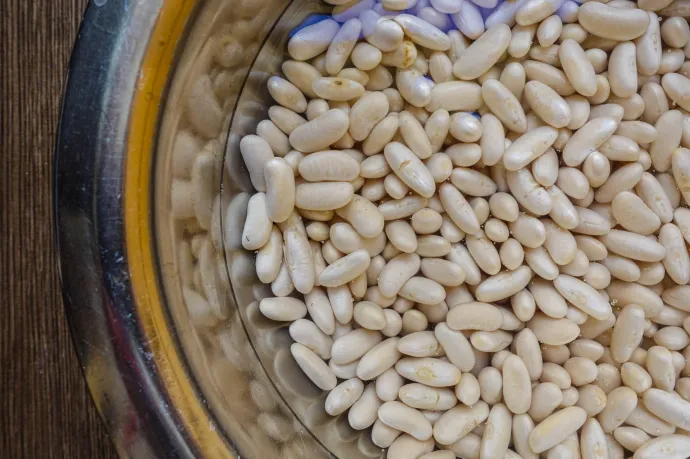
The reason why beans should be soaked is primarily due to their structure. Beans contain so-called oligosaccharides, which are indigestible fibers and cause strong gas formation in the intestine. Neither the stomach nor the small intestine digest them, they reach the large intestine intact, where they are then fermented by beneficial bacteria. In the meantime, gas is produced, just like when we ferment vegetables, and the top of the mason jar hisses. This is actually a good sign, despite the fact that the symptom itself is unpleasant, as it means that the bacteria in the colon are nourished and strengthened by these fibers.
During soaking, compounds that can cause digestive problems in too large quantities or block the absorption of certain minerals are also partially dissolved from the beans, such as lectins and phytic acids, these are also called antinutrients. Among other things, the representatives of the paleo diet curse wheat and beans for these reasons. Except one nor is it customary to eat it rawwhich is why it is practical to pre-treat legumes with another ceremony in addition to cooking, since the longer they are soaked and cooked, the more of these less useful substances soak out of them. In case of extra sensitivity, you can add another step, boil the beans in fresh water, pour off the first water after boiling for a few minutes, and only then cook it until ready in another portion of fresh water.
Soaking is therefore important even if it is not absolutely essential in terms of cooking technology, so much so that many prefer to soak beans for two days before cooking. In this case, it is worth changing the water every 12-14 hours. Many people do a little of baking soda to the soaking waterwhich can also help, others also claim that the hardness of the water also affects the effect of soaking, and soft water will be much more effective in pre-hydrating the beans. Although the cooking time of lentils is shorter and their size is smaller, it is still worth soaking for at least a few hours, red lentils alone are unnecessary. If you eat canned legumes, it is better to drain the juice and rinse the beans.
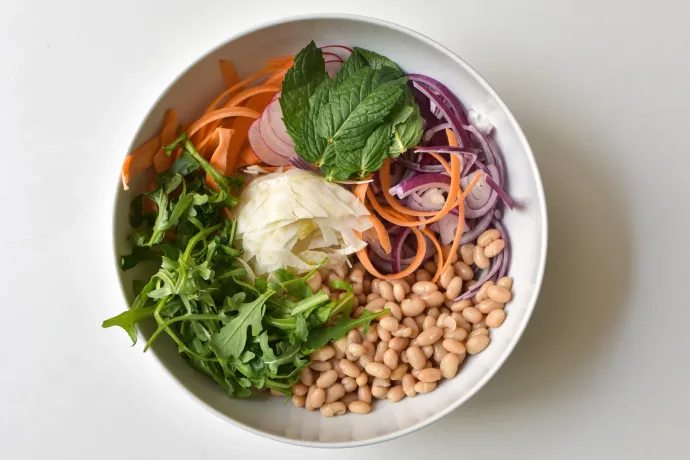
Bean salad – Photo: Bori Ács / Telex
Another trick against flatulence is getting used to it: if we eat only a little of the beans at first, but every day, after a while the symptoms will decrease, our digestive system you get used to how to digest them, and they will puff less.
The third eternal tip is liquid: if we drink more water at this time, it facilitates digestion, in the same way as soaking – the fibers dissolve in the water.
It is also no coincidence that many gastrocultures like bean dishes that are prepared very slowly and at low temperatures. Such are the Indian dahls and varieties of salt, which not only help to dissolve the fibers that stimulate bloating, but also reduce the chance of the eyes falling apart.