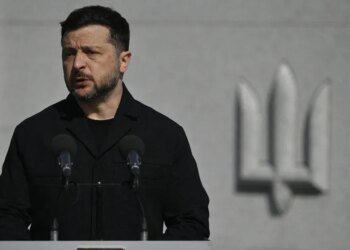

Rainbow avengers: Donald Tusk (R) with Péter Magyar in Warsaw on May 20.
The Chancellery of Prime Minister Donald Tusk lost a lawsuit concerning personnel changes made at the Polish-Hungarian Institute in Warsaw after the current coalition took power. The legal precedent should serve as a warning to Péter Magyar’s government, who have rushed to dismiss public and constitutional officials as soon as they came to power.
On May 22, the District Court of the Capital City of Warsaw issued a ruling in the case of Prof. Maciej Szymanowski, the former director of the Wacław Felczak Institute of Polish-Hungarian Cooperation, who was dismissed from his position overnight in June 2024 despite his ongoing term. Prof. Maciej Szymanowski had headed the Felczak Institute since July 2018, that is, since the institute was established by law. In July 2023, he was reappointed as director for another five-year term, which was to last until August 2028.
Despite being protected by a clear legal framework, on June 12, 2024, a few months after Donald Tusk’s government took power in Poland, Prof. Szymanowski received a dismissal order, which took effect the very next day.
Professor Szymanowski described the circumstances of his dismissal to the court as completely unprecedented. “I have never encountered such a procedure for dismissal and handover of duties,” he said during the trial. As he recounted, he learned of the decision suddenly, while preparing for a business trip. “First a phone call telling me to report to the Chancellery of the Prime Minister, and a moment later an email with the dismissal,” he testified. He also emphasized that no standard procedure for handing over the institution to the person appointed by the Chancellery as acting director had been carried out. “No handover of duties, no handover protocol,” he stated in court.
The proceedings revealed a vast scale of irregularities surrounding the dismissal of the former director of the Institute of Polish-Hungarian Cooperation.
“The termination notice I received did not contain any reasons or justification,” Prof. Szymanowski said during the trial. “It was only from the response to the complaint that I learned there were allegations against me. I had never heard of them before,” the professor testified.
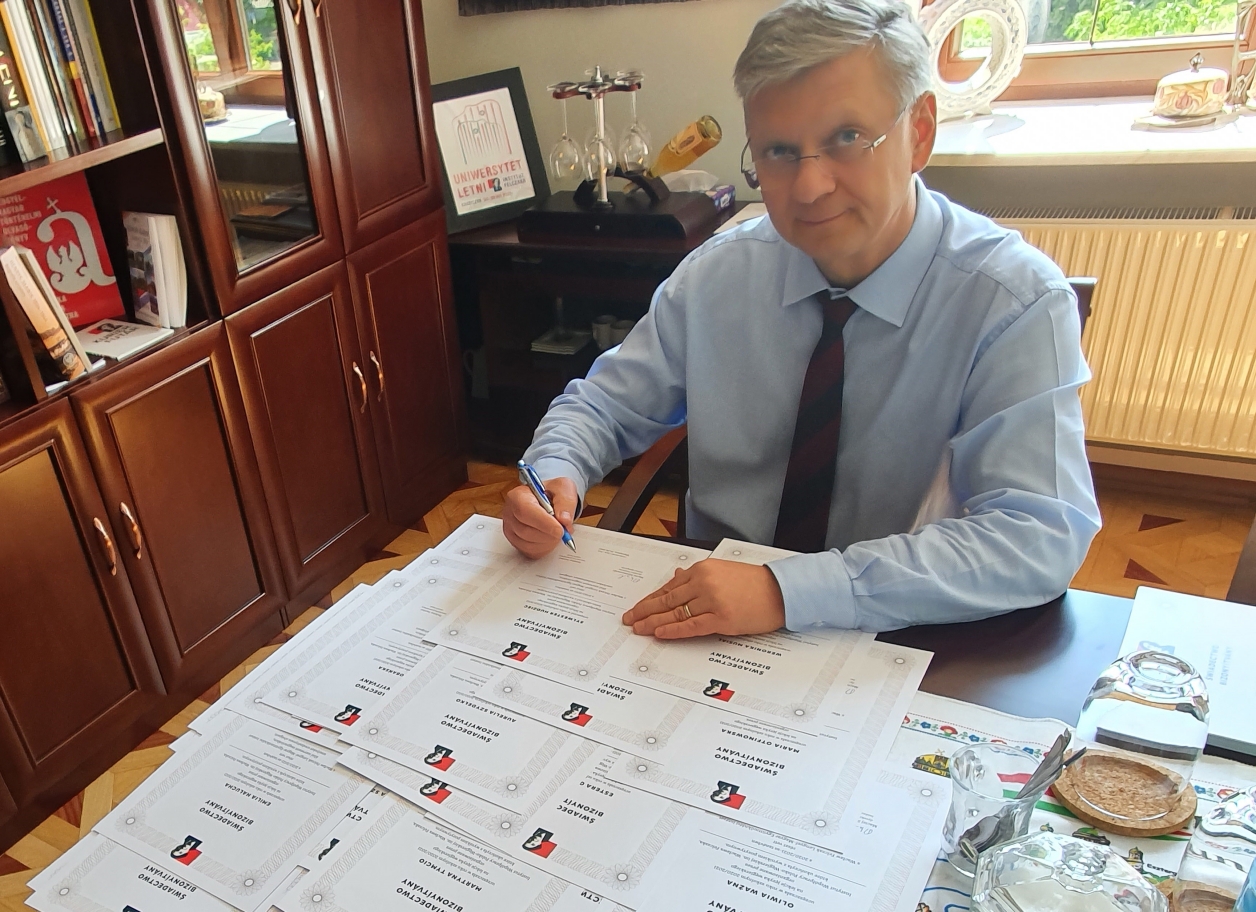
During the trial, the attorney representing the government repeatedly attempted to discredit the way Prof. Szymanowski managed the institute, pointing to, among other things, alleged irregularities in the institution’s operations. Attorney Ewa Morawska-Sochacka, who currently also serves as Director General of the Office of Electronic Communications, cited suggestions regarding alleged mismanagement or improper administration of the institute. One of the arguments pointing to poor management of the institution was said to be the lack of a deputy director.
Attorney Morawska-Sochacka even suggested that the professor’s actions might have been aimed at “entrenching” himself in the position. According to the representative of the Chancellery of the Prime Minister, the absence of a deputy director was intended to hinder the assumption of duties following the dismissal of the institute’s head. She also claimed that the position of director, despite being a fixed-term appointment, is not fully protected, and that regulations allow for the head of the institution to be dismissed at virtually any time. As it turned out on Friday, during the announcement of the verdict, the court completely rejected this argument.
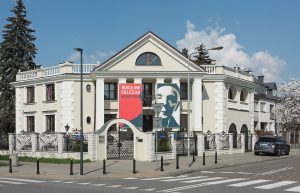
Wacław Felczak Institute. Photo: Wikipedia
In response to the charges, Professor Szymanowski’s attorney, legal advisor Christian Młynarek, pointed out that the Chancellery of the Prime Minister, in deciding to remove Prof. Szymanowski from the position of director of the Wacław Felczak Institute of Polish-Hungarian Cooperation, failed to follow the basic procedures required by the law under which the institution was established. Młynarek demonstrated in court that, prior to the director’s dismissal, it was necessary to obtain the opinion of the Institute’s Council expressed in the form of a resolution.
As evidenced by witness testimony, while the Institute’s Council did receive a letter from the Chancellery, it ultimately failed to issue the required opinion. Młynarek further argued that the mechanism of the director’s fixed term was intended to guarantee the stability of the institution’s operations and its relative independence from current political changes, and not, as the representative of the Chancellery of the Prime Minister attempted to prove, to “cement” the institution.

Maciej Szymanowski. Photo: Courtesy of Maciej Szymanowski
The professor’s attorney also pointed out that even if one were to acknowledge the existence of grounds for dismissing the former director, these grounds were invoked by the Chancellery of the Prime Minister too long after their alleged discovery.
Ultimately, following a trial that had been ongoing since last September, on Friday, May 22, the District Court for the Capital City of Warsaw ruled that the dismissal of Prof. Maciej Szymanowski from his position as director of the Wacław Felczak Institute of Polish-Hungarian Cooperation was unlawful and awarded him the compensation sought by the former director’s attorney.
Prof. Szymanowski’s case is not unique though; the Tusk government has been accused of a nation-wide witch hunt against conservative politicians and media outlets from the beginning of it taking power in Poland. Two of those accused, former Justice Minister Zbigniew Ziobro and his deputy, Marcin Romanowski, have been granted political refugee status by the Orbán government, considered by many a serious loss of face for the increasingly authoritarian Tusk government. There are numerous opinions pointing at similarities between the beginning of the Péter Magyar Regime and its Polish counterpart, it being very likely that a number of dismissals will be challenged in Hungarian courts.

Via dorzeczy.pl; Featured image: MTI/Hegedüs Róbert