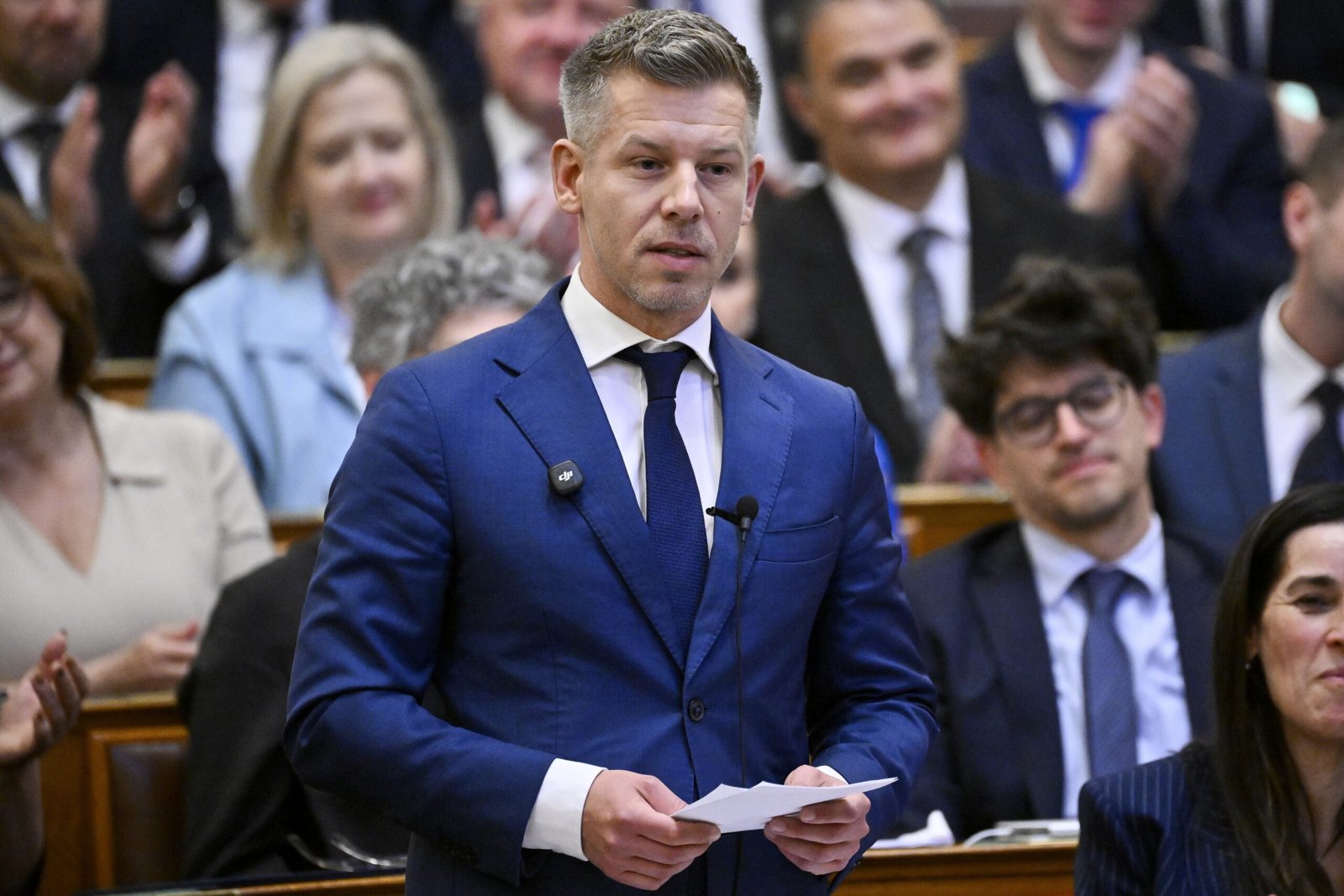

Péter Magyar’s claims can no longer be simply dismissed as political hyperbole; they are pure misinformation, wrote Piroska Szalai, a member of parliament and expert on wages and labor market issues. On the topic of wages and poverty, she corrected the prime minister using statistics.
“…Péter Magyar spouted a bunch of nonsense in Parliament again today,” Piroska Szalai wrote in a Facebook post following Thursday’s parliamentary session. The MP, known as an expert on wage and labor market issues and former chief advisor to Viktor Orbán, corrected five specific errors made by the prime minister, although the wage and labor market expert stated that she could have listed even more.
Hungary is not the poorest country in the EU! The fact is that poverty in Hungary has been below the EU average since 2017. In contrast, Péter Magyar claims, as he has done countless times in every parliamentary session, that Hungary is the ‘poorest country,’”
said the expert. As she emphasized, this was last the case in 2010, when Hungary ranked among the lowest in the EU Member States. According to official EU data, 1.3 million Hungarians have now escaped the risk of poverty or social exclusion.
Szalai noted that the EU 2020 Strategy had set a target of reducing poverty by 450,000 people, a goal that Viktor Orbán’s government has more than doubled. “We were among the seven member states that fulfilled their commitment,” the expert emphasized, adding that the current EU 2030 Strategy had committed to a further reduction of 292,000 people, of which 63% had already been achieved at the halfway point. This is the fourth-best result among the 27 member states of the Union, the politician noted.

Over the past decade, the proportion of the population at risk for poverty in the EU has declined the third most in Hungary.
Furthermore, Péter Magyar claims that three million Hungarians live in poverty. “According to the latest official data from the European Union, 1,827,000 people in Hungary are at risk of poverty or social exclusion,”
Szalai clarified, explaining that the government under Viktor Orbán has achieved one of the greatest improvements in the entire EU: “One million more people are employed today, unemployment has fallen significantly, and wages have risen to an unprecedented extent, with increases—with the exception of 2023—significantly outpacing inflation every year,” said the politician, also pointing to the extensive system of tax exemptions and benefits.
Not least, Magyar regularly spoke of 800,000 poor pensioners. “According to OFFICIAL EU data, 380,000 of our fellow citizens over the age of 65 are at risk of poverty or social exclusion,” the expert noted, also refuting Magyar’s claims regarding child poverty.
In our country, the decline in child poverty was one of the largest in the EU,”
the politician emphasized, pointing out that this was due to the substantial support received by parents.
Regarding the national debt situation, Szalai wrote that Hungary’s national debt as a percentage of GDP has fallen dramatically since 2010 and is well below the EU average as well as the eurozone average. In 2025, the Hungarian figure stood at 74.6%of GDP, the EU average at 81.7%, and the eurozone average at 87.4%. In 2010, public debt in the country was still at 80.2%.
“You can turn Parliament into a political spectacle, you can trumpet dire news every day—there’s just one problem: the facts still do not support Péter Magyar,” the expert concluded.

Featured image: MTI/Hegedüs Róbert