Qeqqata Kommunia has for the first time had over a billion kroner in revenue.
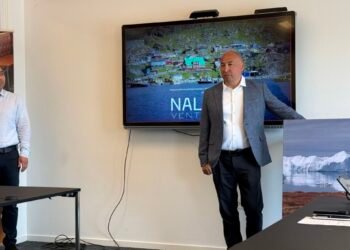
At its latest municipal board meeting, the politicians in Qeqqata Kommunia discussed the annual accounts for 2025. And the accounts contain a milestone that arouses joy in the municipality.
For the first time, the municipality has topped one billion kroner in revenue. Precisely, the accounts show that the income has been DKK 1,048,957,500.
Mayor Malik Berthelsen welcomes the milestone, but at the same time urges caution:
– Regardless of whether we have reached one billion, we must still remember that we have increasing expenses all the time, and therefore we must continue to be careful, says Malik Berthelsen in a press release about the result.
Points to challenge in Kangerlussuaq
The municipality made a profit in 2025 of DKK 47 million. But despite profits and higher-than-expected income, there are challenges ahead:
– It should be noted, however, that this result has been achieved exclusively as a result of increasing tax revenue, emphasizes Malik Berthelsen.
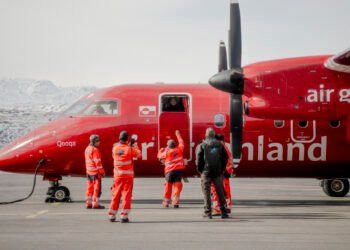
He also recalls that the population in Kangerlussuaq has dropped significantly as a result of the transfer of air traffic to the new airport in Nuuk. It will be an economic challenge for the future, the mayor believes.
Administration: The economy is structurally challenged
In the administration’s description of the economic development, emphasis is placed on the fact that operating expenses have continued to increase.
The municipality considers the development to be a structural challenge for the municipality’s finances, as the income cannot be expected to follow the same growth rate going forward.
– There has therefore been a focus on tighter financial management in all the administrations, which we must continue to focus on, so that the expenses are incurred within the agreed budget framework, says the administration in the presentation of the case.
The finances of the municipalities are generally expected to be challenged in these years by the demographic development, where large cohorts are on their way to retirement, while an ever smaller workforce contributes with labor and tax payments.