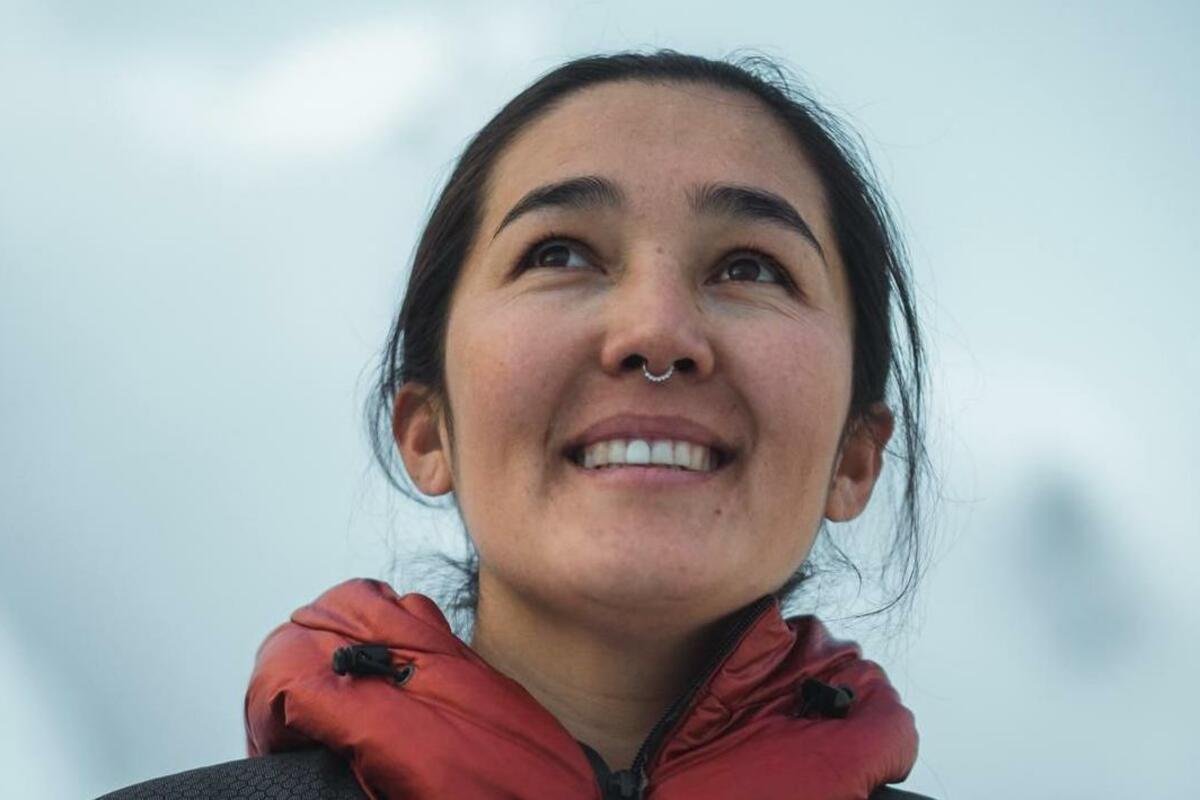
The moment River Ahmad reached the top of Mount Everest, she felt “total happiness”.
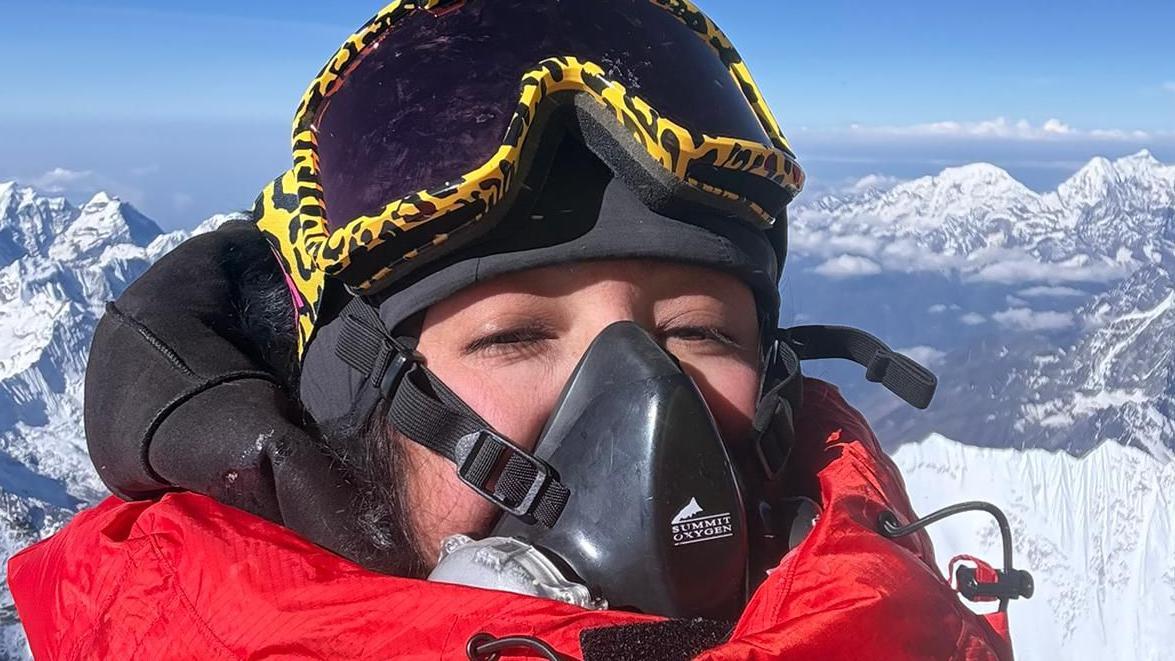
The 30-year-old is the first Afghan woman to conquer the world’s highest peak, after a final ascent on May 21 that lasted 11 hours.
“When I stood on the roof of the world, I felt powerful,” she told the BBC World Service.
Ahmad stated before the ascent that she was climbing “for a higher goal, for freedom, for education”.
She wants to use her feat to draw attention to the situation in Afghanistan, where the Taliban have banned education for women and girls over the age of 12 since returning to power in 2021.
The ascent from Camp Four, the highest camp on the route at 7,950 meters above sea level, leads to the very summit at 8,849 meters, through the so-called “death zone”, where the oxygen level is only 30 percent of that at sea level.
Ahmad says that during the grueling climb, she was encouraged by the memories of everything she went through to get there – from surviving a Taliban attack by playing dead, to moving to Australia and adjusting to a new culture.
Ahmad grew up in Ghazni, a city in southeastern Afghanistan, just south of the Hindu Kush mountain range.
“Every day I walked for up to four hours up and down the mountain, through deep snow, to get to school”.
She was born during the first Taliban rule, when girls’ education was strictly limited.
However, since US-led forces ousted the Taliban in 2001, girls have been able to return to school and women have been given greater opportunities for higher education and employment.
In 2014, Ahmad says she managed to convince her family to let her attend university in Kabul, and was the only woman on a bus traveling to the capital when Taliban fighters stopped it and opened fire.
She recalls that she was menstruating and quickly smeared blood on her face, then lay motionless until the attackers left, thinking she was dead.
The family then moved to Kabul, where she studied journalism and worked under a pseudonym as a radio journalist.
She says she moved to India in 2019, and three years later to Australia, where she learned English and worked in a chain of furniture stores.
She became interested in hiking only after a family tragedy, says Ahmad.
After six months of living in Australia, her brother committed suicide at the age of 20.
She was broken and lost.
That’s when she decided to change Zaki’s name to River, enchanted by the rivers in Australia.
“Rivers are clean and unstoppable, they flow no matter what.
“I thought that I should be like that too.”
Ahmad then decided to participate in an organized climb on the bridge over Sydney Harbour.
“I felt happy high above the ground and that’s when it dawned on me that I should take up mountaineering,” she says.
That’s how the idea of conquering Mount Everest was born.
She began training, joining a gym and climbing peaks near Melbourne while trying to raise $85,000 for the expedition.
She says that she paid almost a quarter of the expenses from her own savings, while the rest was provided by a loan from the foundation.
“Fundraising is very difficult.
“I didn’t get any sponsors for this expedition,” she says, but adds that she hopes to get more support for future endeavors.
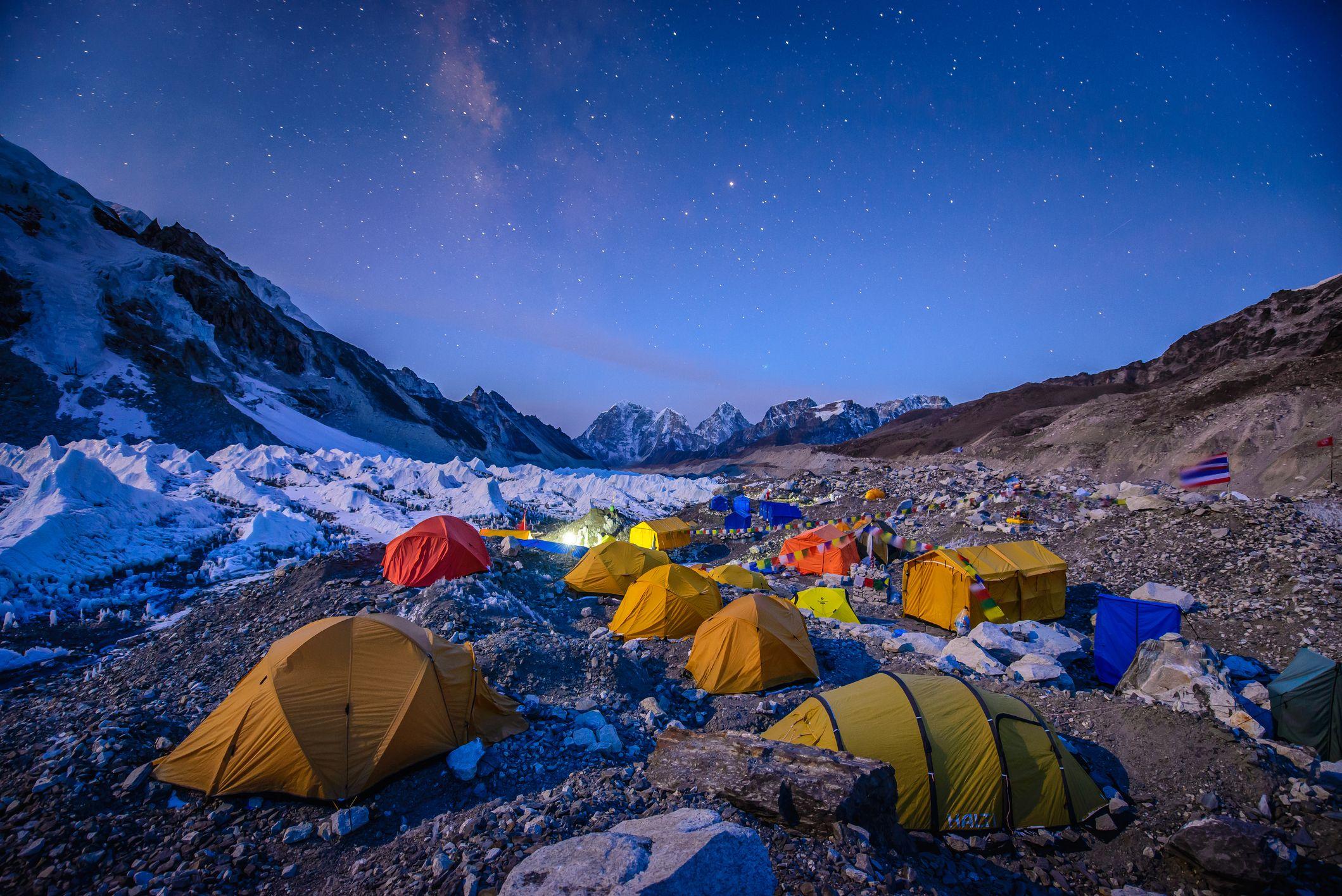
After arriving in the Everest region in March, she climbed two mountains over 6,000 meters and acclimatized and trained for several weeks.
She is one of nearly 500 people allowed to climb Mount Everest this year, as Nepal’s government issued a record number of permits.
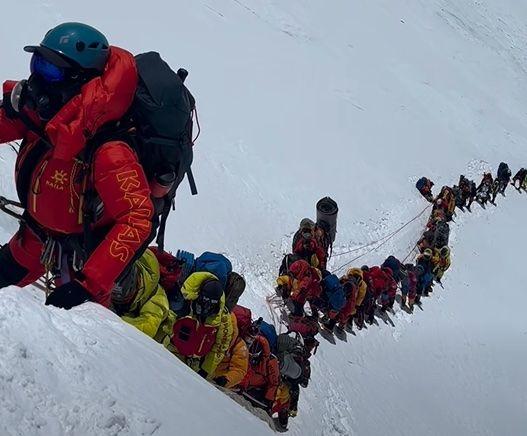
And the big crowd during the ascent brought additional challenges.
Each climber is led by at least one support member, usually a Nepalese or from the Sherpas community, which means that more than 1,000 people are trying to reach the summit at the same time.
In addition, the route from China via Tibet was closed to foreign mountaineers this year, which made the crowd even bigger.
The period of the year during which the conditions are suitable for climbing to the top is very short and usually it is the second half of May.
During the day, when the weather was favorable, long lines of hikers formed.
River says she and her two guides from the Sherpas community had to wait four hours near the summit, where temperatures at this time of year are usually below minus 25 degrees Celsius.
“That crowd, it was terrible,” she says.
“I was very scared.”
She adds that she was afraid that waiting would jeopardize her rise.
Experts warn that such delays can pose a deadly risk for mountaineers who have not brought enough oxygen, and that prolonged exposure to harsh conditions increases the risk of frostbite and snow blindness.
160 people reached the summit that day, including Nepalese support staff who do not need permits.
The previous day, a record was set, when 274 mountaineers conquered Mount Everest.
A day later, two mountaineers from India died during the descent.
The Nepalese government is concerned about overcrowding, so in recent years it has increased the price of permits and is tightening the conditions for obtaining permission to climb.
Officials are also working with expedition organizers to deploy hikers, although critics say those measures are not effective enough.
Ahmad says that she is “very grateful” for the help and experience of her guides, and she recalls the incredible happiness she felt at the very top, but also during the descent, which was much faster than the ascent.
“I was elated not only for conquering Everest, but also for the experience of a lifetime to observe nature from the highest point on Earth,” she says.
“I lived that wonderful moment to the fullest.”
She adds that the reactions of Afghans are “incredible”, and that even former president Hamid Karzai celebrated her success as a feat of all Afghan women.
“This sent a message to the homeland that we can do the hardest thing,” she says.
But her main message is more comprehensive.
“Even today, millions of girls in Afghanistan are denied the basic right to education, and we have to climb that mountain,” says Ahmad.
The Taliban government initially claimed that the ban on secondary and higher education for girls and women would be temporary, citing safety and security reasons.
The BBC recently sought comment from the government’s deputy spokesperson, who referred our question to the Department for Education, which did not respond.
Ahmad says he plans to raise funds to help women in Afghanistan and tells them, “Stay strong.”
“Believe in yourself and that you can overcome this darkest time in our history.”
“We can do it”.
BBC is in Serbian from now on and on YouTube, follow us HERE.
Follow us on Facebook, Twitter, Instagram and Viber. If you have a topic suggestion for us, please contact bbcnasrpskom@bbc.co.uk
Download the application and follow the news


FOLLOW US ON

News