In a more dangerous and fractured world, national resilience strategy has become a top priority, and social cohesion is one of the key elements.
That makes national identity a strategic asset.
Across the world, policymakers increasingly speak of resilience in terms of supply chains, critical infrastructure, cybersecurity, and institutional performance. Those are all essential.
But resilience is not all technical. States have institutions, mechanisms, plans and resources, yet still struggle if their people do not feel bound by a common story, common values, and a common sense of belonging.
Recent studies on national resilience point to a simple truth: nations endure not only by protecting territory and institutions but also by sustaining identities that can adapt to change without losing coherence.
Resilience, in other words, is not just the ability to absorb disruption. It is the ability to preserve collective meaning through disruption.
For Cambodia, a country that has lived through imperial decline, colonialism, war, genocide and post-conflict reconstruction, resilience has been the core of nation building.
Cambodia’s survival has depended not only on political authority or external support, but also on the endurance of Khmer identity—a deep civilisational consciousness rooted in history, culture, religion, and memory.
This identity has long served as a source of social continuity in times of upheaval. It is one reason Cambodia has repeatedly been able to recover from trauma without losing its sense of nationhood.
That should not be taken for granted.
Today Cambodia faces a myriad of risks, including armed aggression from Thailand, energy crisis, economic slowdown, digital disruptions, and erosion of public trust in institutions.
In such a setting, national resilience cannot be built only from the top down. It also has to be cultivated from within society.
Khmer identity is central to that effort.
With more than two millennia of history, Khmer civilisation runs deep. Its cultural and political imprint extends well beyond present-day Cambodia, with Khmer heritage sites and civilisational influences spread across mainland Southeast Asia.
Temples and pagodas have functioned not only as religious sites but as moral and social anchors.
Rituals and festivals have reinforced belonging across generations.
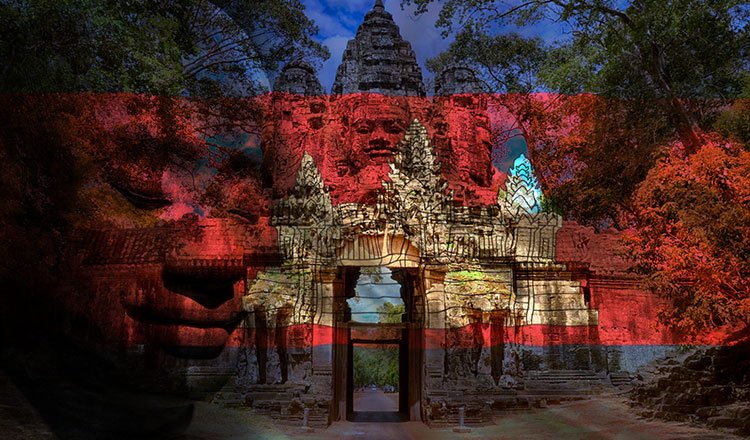
Historical symbols such as Angkor Wat have embodied more than pride in a glorious past; they have represented civilisational endurance.
This matters because resilience requires emotional as well as institutional foundations.
People must feel that what they are defending, whether in a political crisis, economic downturn, or geopolitical tensions, is larger than immediate material interest.
They must feel attached to a national community worth preserving.
A healthy identity is one that gives a society confidence while allowing it to adapt. It is rooted but not closed. It is proud but not insecure.
For Cambodia, this means Khmer identity must be renewed in civic as well as cultural terms.
That renewal should begin with education, research and publication, and internationalisation.
Young Cambodians need more than patriotic messaging. They need serious historical literacy.
They must study their history, understand their heritage, and know who they are. National resilience begins with self-knowledge.
A resilient society is one whose citizens understand both the greatness and fragility of their national experience.
Cambodia should also connect identity with responsibility. Being Khmer in the 21st century should mean more than reverence for history.
It should also imply civic discipline, ethical leadership, openness to innovation, and a commitment to national development.
For a younger generation growing up in a globalised, digital environment, the challenge is to ensure that globalisation does not hollow out national belonging.
Khmer identity must therefore be made relevant to the present and the future and not only to the past.
National resilience will be stronger if Khmer identity is framed as a unifying national project rather than a restrictive cultural label.
For policymakers, the implication is clear: national resilience strategies should pay greater attention to identity, culture, and social cohesion alongside defence, economics and governance.
Cambodia’s comparative advantage is that it still possesses a deep reservoir of civilisational identity.
Khmer identity, if nurtured wisely, can help provide that anchor. It can strengthen social cohesion, sustain morale in times of stress, and give national resilience a deeper foundation.
- Tags: EDITORIAL, energy crisis