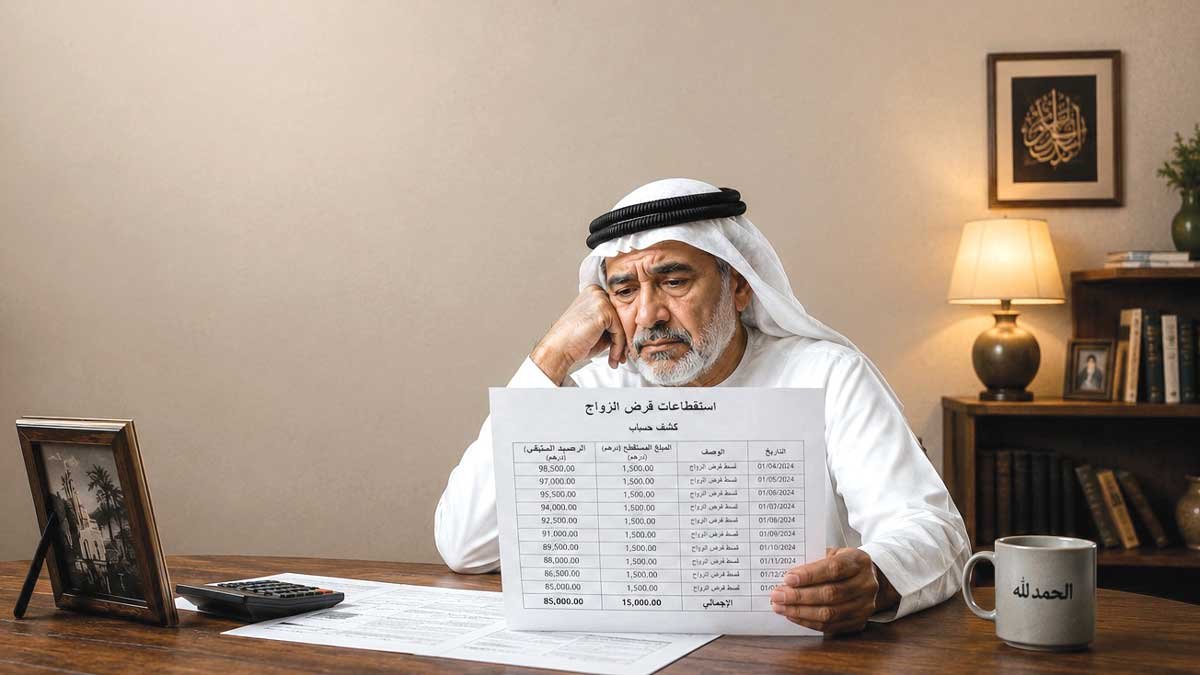
Specialists have warned that many employees, after decades of work and stable income, are entering the retirement stage and are looking forward to a calmer and more stable life, only to find themselves facing increasing financial and living pressures. They attribute this to complete reliance on the monthly salary during years of service, postponing savings and investment, and continuing to bear loans and long-term obligations, which leads to a widening of the gap between retirement income and actual needs. Specialists have identified seven common mistakes that employees make before retirement that affect their stability. Financial, in exchange for five basic pillars of financial protection that ensure maintaining quality of life and living stability after retirement.
In detail, specialists monitored recurring examples of retirees who enjoyed good income levels during their working years, but they did not develop savings or investment plans that would guarantee them financial stability after retirement, and they relied almost entirely on the monthly salary as the main source of income, and with the end of their working lives, many of them faced difficulty adapting to the decline in income and the increase in living obligations compared to the period of work. Cases also emerged of retirees who entered this stage while they were still burdened with long-term loans and financial obligations, which depleted A large portion of their retirement income, reducing their ability to maintain the standard of living they had become accustomed to for years, while others lost an important portion of their end-of-service benefits or life savings within a short period, as a result of hasty investment decisions or entering into ill-considered projects that lacked a proper assessment of risks and returns.
mistakes
The insurance expert and CEO of UES, Dr. Jihad Vetrouni, spoke about seven main mistakes that individuals make when planning for retirement, which may lead to financial crises after the end of one’s career, including postponing retirement planning, which is considered one of the most common mistakes and has an impact on future financial stability, as many individuals view retirement as a distant stage in time, which leads to losing the opportunity to benefit from the cumulative growth of funds in the long term.
He said: “Many people also make the mistake of completely relying on the retirement salary or end-of-service bonus as the sole source of income after the end of their professional life, without taking into account that these amounts may not be sufficient to cover their living needs for many decades. Important mistakes also include underestimating the impact of inflation on the purchasing power of savings unless they are invested appropriately.”
He added: “Other mistakes include not diversifying sources of income and investment, or adopting unbalanced investment strategies that are not appropriate for age and ability to bear risks.”
He pointed out that postponing saving and relying on one source of income is a mistake that may lead to a financial gap that threatens the financial stability of the retiree, stressing the importance of starting early in saving, as every year of delay leads to losing an additional opportunity to benefit from investment returns during the years of rest after the job.
He pointed out that insurance programs and private retirement plans have become among the basic tools that contribute to enhancing financial stability during the retirement stage, stressing that government or institutional retirement systems constitute a basic pillar of social protection and provide an important level of financial security after the end of one’s professional life.
gap
Investment and entrepreneurship affairs advisor and economic expert, Dr. Jamal Al-Saeed, considered that the most prominent mistakes that some people make during their working years include: relying on the pension as the sole source of income in the future without building additional savings or investments, expanding loans and long-term financial obligations, and consuming most of the income during the working years without creating a financial reserve for emergencies or planning for future expenses related to health, supporting children, or housing requirements, in addition to overestimating financial capabilities after retirement without making accurate calculations of the potential gap between income and expenses.
He said: “Diversifying sources of income, saving early, and controlling debts are basic conditions for planning a successful and financially secure retirement. The earlier the employee starts planning, the greater the chances of creating savings and financial assets capable of providing additional income after retirement.”
He added: “Building an effective retirement plan must be based on five basic pillars, which begin by defining future financial goals and estimating expected needs after retirement, allocating a fixed portion of income to saving and investing on a regular basis, reviewing financial obligations periodically and working to reduce debts before reaching retirement age, diversifying sources of income and not relying solely on the retirement pension, through studied investments or income-generating assets that are proportional to the individual’s ability to bear risks, in addition to conducting an annual review of the financial plan to ensure its compatibility with economic and personal variables,” Al-Saeed advised. Young people should start financial planning from the first years of work and not wait until approaching retirement age, save regularly and avoid excessive borrowing for consumer purposes, build a sound financial culture that helps make informed investment decisions, diversify sources of income and work to develop assets that can provide sustainable income in the future, ensuring quality of life after retirement.
Get ready for years of comfort
For his part, the family arbitration expert at the Dubai Courts and the senior advisor in Islamic affairs, Dr. Abdullah Musa, confirmed that proper planning is one of the most important foundations for financial success after retirement, especially with regard to early preparation for the period of rest years, as it helps build financial stability that ensures a more secure life after the end of service.
He said: “Some retirees face financial challenges as a result of delaying marriage to advanced stages of life, which forces them to bear loans and financial obligations that continue until the retirement years, so that loan deductions turn into a burden that affects their standard of living. Hence, the importance of early marriage for young people emerges, allowing the children to grow, complete their education, and enter the labor market during the father’s period of service, which reduces the financial burden on him upon retirement.”
He advised against moving between jobs frequently and obtaining retirement benefits or early end-of-service benefits, explaining that this matter may have a negative impact on the amount of income available after retirement.
He said: “The most important advice for young people and employees is to be careful during their careers to start planning for retirement early and not postpone it until the last years of work, while setting clear financial goals and reviewing them periodically. It is also important to diversify sources of retirement income and not rely on the pension alone, by combining savings, investment, insurance and various retirement plans, in addition to creating an emergency fund independent of retirement savings.”
Social repercussions
The professor of culture and society at a number of Emirati universities, Dr. Saif Rashid Al Jabri, supported this opinion, stressing that the effects of not preparing early for retirement are not limited to the financial aspect only, but extend to the family and social aspects as well. With the decline in income and the continuation of financial obligations, some retirees may face pressures that affect the stability of the family and increase disputes related to expenses and living needs, especially if the children are still in the stages of study or financially dependent on the family. The retiree may also feel the loss of part of his social role or His professional status, which he has been accustomed to for many years, may lead to isolation or psychological tension and difficulty adapting to the new lifestyle. Therefore, early retirement planning contributes to reducing these challenges by providing financial stability and enhancing the ability to adapt to the social and family variables that accompany this stage.
Al-Jabri stressed the necessity of planning for retirement at least 10 to 15 years in advance, allowing for building sufficient savings and gradually rearranging financial obligations. Diversifying sources of income through safe investments or return-generating assets is one of the most important means of enhancing financial stability, and not relying on the retirement pension as the sole source of income.
Retirement consulting service
The General Pensions and Social Security Authority launched the retirement consultation service, which aims to provide accurate legal and technical guidance on the pension law, enabling citizens to understand the procedures followed, enhance customers’ awareness of their rights and duties, and help them plan for retirement and make sound decisions in light of clearer and more transparent information. The new service is available through the “Maashi” digital platform, and provides specialized consultations to beneficiaries about the controls and retirement laws applied by the Authority.
6 tips for “post-retirement” life
The Abu Dhabi Retirement Fund confirmed that planning to achieve social security and efficiency after retirement requires the necessity of following six tips that will help you take practical and effective steps in improving the quality of your social life. They are represented in the necessity of being aware of the social changes that occur in the nature of relationships and social status in the post-retirement stage, and the necessity of accepting them in order to be able to maintain your relationships and social status and cross over to the stage of renewed giving, as well as analyzing the roles and job status that you miss in your life after retirement in all its details, starting with a cup of coffee. Morning with your colleagues or employees, in addition to restructuring your social life activity, and planning an active life with renewed, purposeful goals and interests as an alternative to the roles, status, and social activities that you are missing in a way that ensures your continued feeling of accomplishment and giving, as well as identifying your abilities, knowledge, and social skills that you need to develop, to ensure effective adaptation to the new changes in your relationships and social life on the family and community scale, such as reconnecting effectively with children and grandchildren after a long absence as a result of preoccupation with work life.