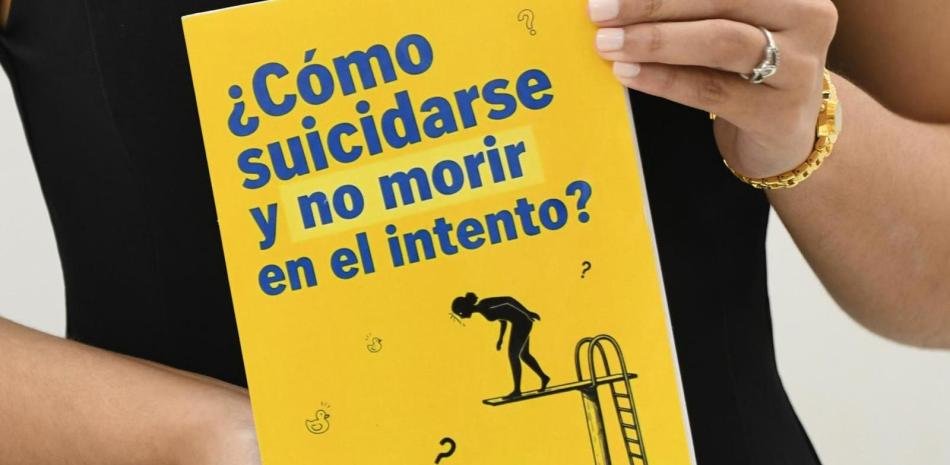
At just 20 years old, the young Dominican Sarah Liz Bobadilla published her first literary work titled “How to commit suicide and not die trying?”, a raw testimony in which the author shares her journey from the deepest trauma to healing, after suffering depression and surviving four suicide attempts.
Today, through the pages of his personal development work, he has made people who are going through mental health crises feel identified and accompanied, transforming their pain into a tool for help.
During an interview for Listín Diario, Bobadilla described what it meant to open his heart to the world: “I ended up telling my story a million times and I ended up being judged a million times”and answered the following questions:
DT: What was it like to mature so quickly as a result of your experiences?
SB: It was a difficult process, especially because what makes you grow the most is seeing the people who love you suffer and knowing that they suffer for you. I wouldn’t say that you see it as that they suffer because of you, but rather that they suffer because they see that you are going through something difficult and it hurts them. It is a very complex process, since overnight your life changes and the lives of the people around you change as well.
DT: Were you aware of the impact that such a direct title would have?
SB: At first it was more of a play on words. I didn’t think it would have as much impact as it did. I did know some commotion was going to happen. However, when I came face to face with reality, I saw that the impact it had on people was much stronger than I expected.
DT: How did you turn your traumas into creative work?
SB: Therapy. Many times I went to therapy and what they recommended to me was that I write what I thought. And one day I realized that my way of transmitting things could help someone else.
I realized that I could identify the situations I had gone through, identify what hurt me and how I felt about it. I was also able to release the resentment I had towards certain people, towards certain moments in my life by putting into words what I felt.
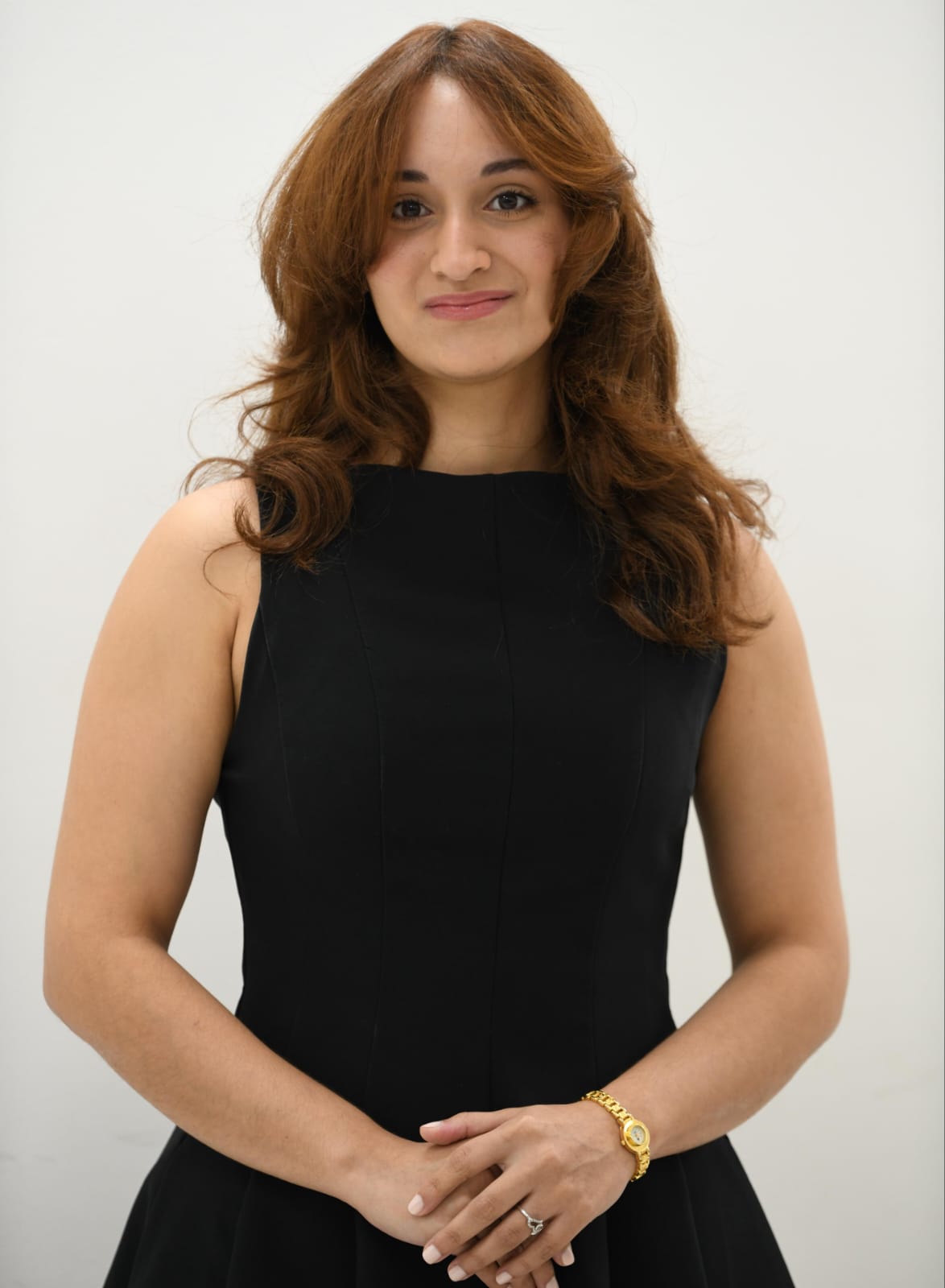
Sarah Liz Bobadilla during her interview for Listín Diario
DT: What did it mean to shed the guise of “being fine” in front of your readers?
SB: I think the hardest part is knowing that the people close to you are also going to read those experiences and know that while you acted like you were fine, you were really very bad. Getting rid of that disguise was completely changing who I am, what I believed in, what I thought I could be capable of. Getting rid of that costume was leaving a stage behind.
DT: What was the most difficult chapter for you to write?
SB: I think it was the strong girl’s costume, because the other chapters were not the first time she had told them. From the first moment they laid a hand on me, I said it, I never stayed silent.
I always went and stood up to what had happened and said it honestly, without shame, because I understood that I had not done anything wrong and that whoever had done it was the one who should feel ashamed. However, In the disguise of the strong girl, I showed a part of myself that I had not told anyone, I showed that I was vulnerable and that I tried to be strong.
DT: How many times did you suffer abuse?
SB: Three. And three times I said what had happened, only on the third time, for a while I stayed silent, but there was a time when I was so bad, I didn’t go out, I didn’t talk to people, I cried all the time and eventually at home they realized that something had happened to me.
At first I didn’t want to tell it because in that situation I was drunk and I felt a little guilty. But eventually, after asking so much, I ended up telling what had happened. What you have to understand is that regardless of whether you drink two glasses or three bottles, no one should touch you.
DT: How did your family react when you found out?
SB: My mother has supported me in all situations, my father too, but she is the one who has always been there, who has experienced what happened to me most closely. My sisters supported me, they cut off any relationship with that person. And my family on my father’s side, well I know that there is a part that has a thorn in my side. So, everyone took it differently. I know there are people who still don’t believe me or who simply don’t want to face reality.
DT: What was it like to reconstruct your story after the gaps left by the electroshock?
SB: It is still very difficult. Electroshock is something a little complex to talk about because there are many opinions about it. Personally, I believe that your healing should not result in the loss of moments. From the electroshock, it can be said that I have not yet fully recovered.
They gave it to me on two different occasions, since I relapsed, and each time it was very difficult, I lost a lot of weight, I was not myself, I was more down.
Moments, for example, with my partner at the beginning of our relationship that I value a lot, I don’t have. Moments with people, places and situations that I really treasure were completely erased so I could rebuild myself after the electroshock.

Representative image of mental health
I wouldn’t say I’m completely rebuilt, I feel like it’s something you don’t fully recover from because it erases part of your life.
I think that we live in a very advanced society, that there are many types of treatment, and that before trying electroshock I would have preferred to try other types of therapy, listen to more opinions, but I understand that in the situation I was in it was what most psychiatrists recommended, what they said helped, and well it was a desperate decision.
DT: What is your relationship with your mother like today?
SB: It’s very strong. I sometimes tell her that she is my wife, because she and I are together all the time, we do everything together. She is my everything. He has not directly told me if he feels responsible, but they are things that one feels and knows.
She has suffered, I say even more than me, because going through this situation is difficult, but seeing someone you love, and even more so a child going through that, I imagine it has to be much more. She hasn’t told me directly, but I have seen her suffering, I have seen her crying and I know why that is.
DT: Have you always liked to write?
SB: Yes, since I was little I liked writing, but I was really a bit lazy. I went to therapy a lot and the psychologist told me: “And where is what you wrote?” And I told him: “Well, in my mind, I have it in my thoughts.”
DT: What does writing mean to you today?
SB: I realized that I liked it more than I expected, Not only tell my story, but tell the stories of people who suffer in general.
Along the way I have met people who have gone through much more difficult things than what I went through, not to catalog everyone’s pain, but everyone knows. And I have taken on the task of writing their stories so that others can see what they went through and how they overcame it, because maybe it can help someone else.
DT: What reactions have you received from readers?
SB: Many people told me generally positive comments, which was a best sellerWhat a good book, what a way to tell my story. Really all I got from those who read the book were positive comments. For those who did not read it, it was the opposite.
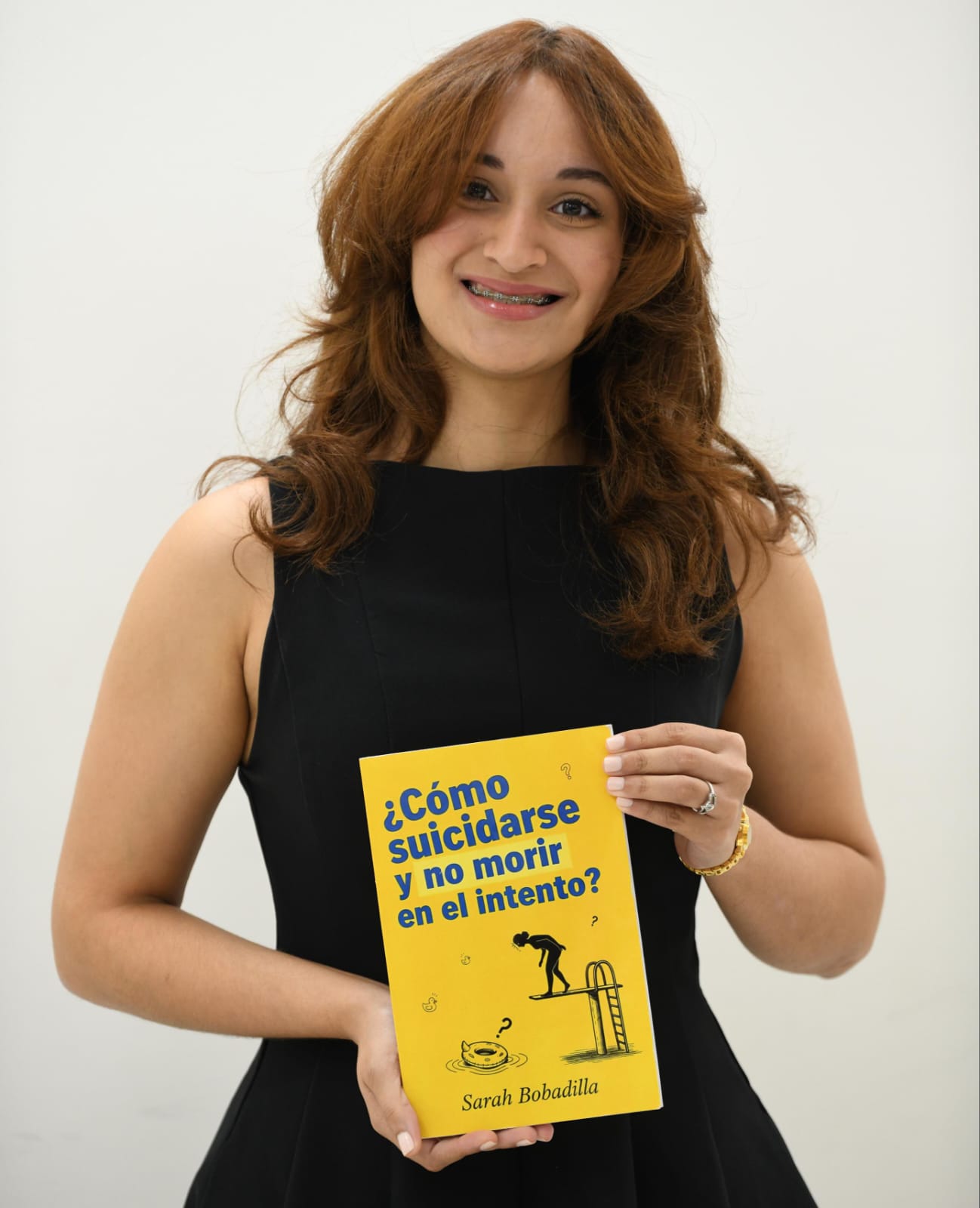
Sarah Liz Bobadilla author of “How to commit suicide and not die trying?”
DT: How did you manage to rebuild your faith?
SB: I was watching videos and a phrase came out that said: “God spoke to me, maybe he did and I didn’t understand it.” And I clicked and connected with the penultimate time I tried to commit suicide.
I was in front of the sea, I was about to jump, and a man approached me and asked me: “Are you okay?” And I told him no, it wasn’t right. He sat down with me and the first thing he asked me was: “Do you believe in God?” I told him that I did not believe in God, and he told me that he did believe in God and gave me his reasons. From that moment on I took it as a sign.
DT: How should the media and society address mental health?
SB: I think that in terms of the media, we live in a country that suffers a lot from mental health issues and that it is something that is not being given importance. I say that mental health is a problem that only people with an affluent level can treat, because we are very deficient in that regard.
We do not have support, we do not have an institution, we do not have people who talk about this or people who tell their story, and those who do not have the money are called crazy, and those who have the money are called mentally unbalanced.
So, we see how the media focuses on gossip when we have truly important topics to talk about. We make famous and recognized people who cannot even articulate a word, people who stand in front of a camera to say the first thing that comes to mind and who in turn influence Dominican society.
The media influences, that’s what you have to understand, and your voice has power. You can use it to positively help society or to turn it into what it is becoming, which is a disaster.
DT: Today, how do you feel?
SB: I really feel good, I feel satisfied with what I have achieved so far. I never thought I would get this far nor did I think that the situations I went through could help someone else, so I feel satisfied and proud of myself.
DT: What would you say is the first step in seeking help?
SB: Talk and be honest, say how you feel and accept that it’s okay to not be okay, that it’s okay to feel sad, that it’s okay to feel down, that you don’t have to feel guilty about it and that your emotions, even if they’re for the silliest thing, are worth it. It’s okay for you to feel that way.
Synopsis
“How to commit suicide and not die trying?” It is a deeply human and brave story where Sarah Liz Bobadilla explores the traumas that led her to suffer from depression. Through frank introspection, the author transforms pain (metaphorized in the sea, the scene of her first crisis) into a path to healing.
More than a testimony of survival, the work demonstrates that rebuilding oneself is a great act of self-love and that, after the darkness, there is always hope for those who once felt broken.