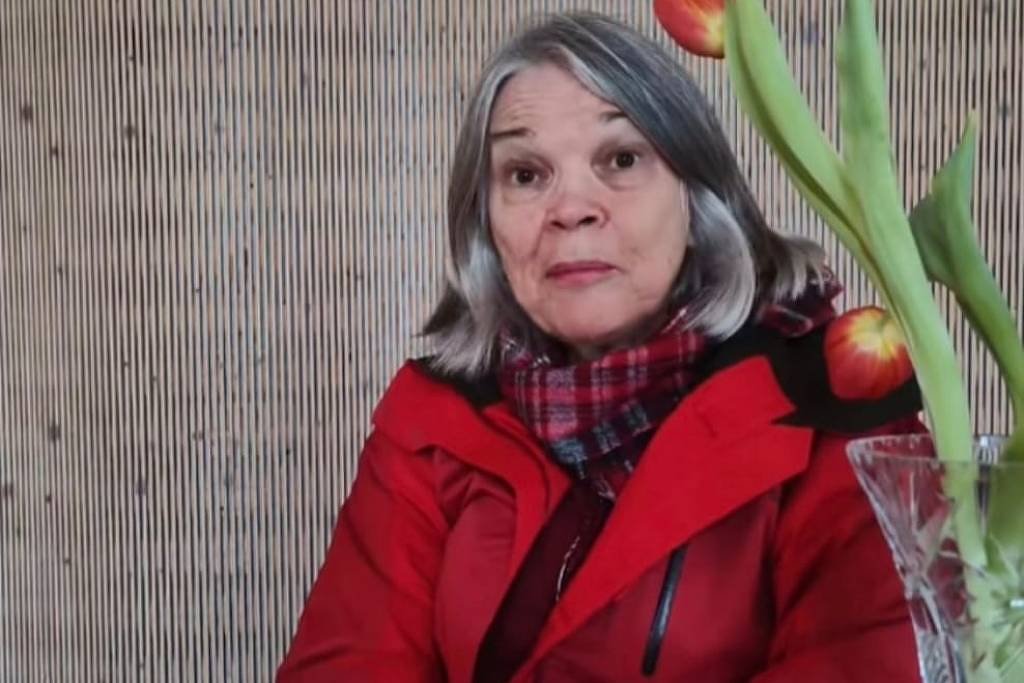
In November 2024, Brazilian Célia Maria Cassiano used a social network to communicate that he had been diagnosed with motor neurone disease. At the time, the art history professor was 67 years old.
On April 15, 2026, she achieved what she wanted assisted suicidein Switzerland. In the farewell video, posted on Instagram after the procedure, Célia states that she decided to fight for the right to a dignified death so as not to remain dependent and tied to devices on a bed. She says she needed three people to take her to the bathroom.
“Those who have never been through what I’m going through can’t imagine what it’s like to need and feel totally incapable. I screamed, screamed, asked for help and no one listened to me. So, I’m saying, I’m privileged to be here, privileged because I had a lot of resources, because it’s very expensive and hard work”, says Célia in the post.
THE Switzerland allows assisted suicide. In Brazil, the practice is criminalized. One of the main legal obstacles is article 122 of the Penal Code, which provides for a sentence of 2 to 6 years for anyone who induces, instigates or assists another person to commit suicide — therefore incriminating the perpetrator. assisted suicide and other forms of assisted death. This criminal framework does not distinguish between cases of intolerable suffering in serious and incurable illnesses and other situations, which prevents any legal practice in this regard.
In South America, Colombia, the Ecuador and the Peru allow the procedure by court decision, and Uruguay by law.
“Fight for the right to have a dignified death. It is not an obligation, it is a choice for whoever so desires”, says the teacher in the video.
Degenerative, rare and progressive, motor neurone disease is the same one that killed Irish actor Michael Patrick, aged 35, who participated in “Game of Thrones” and other productions.
The condition is part of a group of progressive and degenerative neurological disorders that destroy the nerve cells responsible for muscle control, affecting movement, speech and breathing. The most common form is ALS (Amyotrophic Lateral Sclerosis).
Célia was associated with Eu Decido, an organization chaired by lawyer and professor Luciana Dadalto. The entity defends the right to assisted death. The teacher looked for the place to find out if there was an alternative in Brazil. The only option would be a legal action with a small chance of success.
“We don’t even have a specific bill on this topic nor a court decision”, explains Luciana.
“There was always something a little veiled in Brazil, that assisted death was not an important issue for society. And now I think that with the Antonio Cícero (Brazilian writer who also opted for assisted death in 2024), with Célia, we began to understand that it is a topic for society. We have Brazilians who go to Switzerland to have the right to practice”, says the president of the institution.
According to Luciana, who is also a specialist in bioethics and living will —a document to record in advance a person’s decisions about medical treatments they want or not to receive if they are unable to express themselves in the future—, Switzerland is the only country in the world that accepts non-resident foreigners to the right to assisted death.
With the unfavorable response regarding the possibility of carrying out the procedure in Brazil, the woman decided, on her own, to travel to Switzerland. The association does not provide this type of intermediation. Its role is to put the discussion on the topic on the agenda in society.
How does the procedure work in Switzerland?
It is necessary to be a member of one of the local civil associations to start the process by sending personal and medical documents reproduced with a sworn translator. The analysis is carried out and what they call a green light is granted (it means that the volunteer meets the criteria).
The person must arrive in Switzerland at least 72 hours before the procedure. During this period, she will undergo an evaluation by two Swiss psychiatrists who will attest to her decision-making capacity, that is, whether she is capable of self-determination and is not coerced.
Some individuals wish to perform a type of rite, such as eating a certain dish for the last time, for example. When ready, the person self-administers the drug, which can be done in two ways: lethal drink or intravenous.
The police are then called to verify whether the act was voluntary. The destination of the body is cremation. If the family chooses the transfer, they will have to pay the costs.
Célia said on her Instagram that the last few days, spent in Switzerland, were the best of her life. She walked around and visited some museums.
“It’s a look at autonomy. Living in a country where assisted death is permitted does not mean that you will be forced to die this way. It is a possibility, a choice. This is the change in thinking that our society needs to make to legalize or allow assisted death. It’s understanding. And then I think our biggest difficulty is respecting the other’s wishes even if that wish doesn’t make sense to us”, says Luciana.