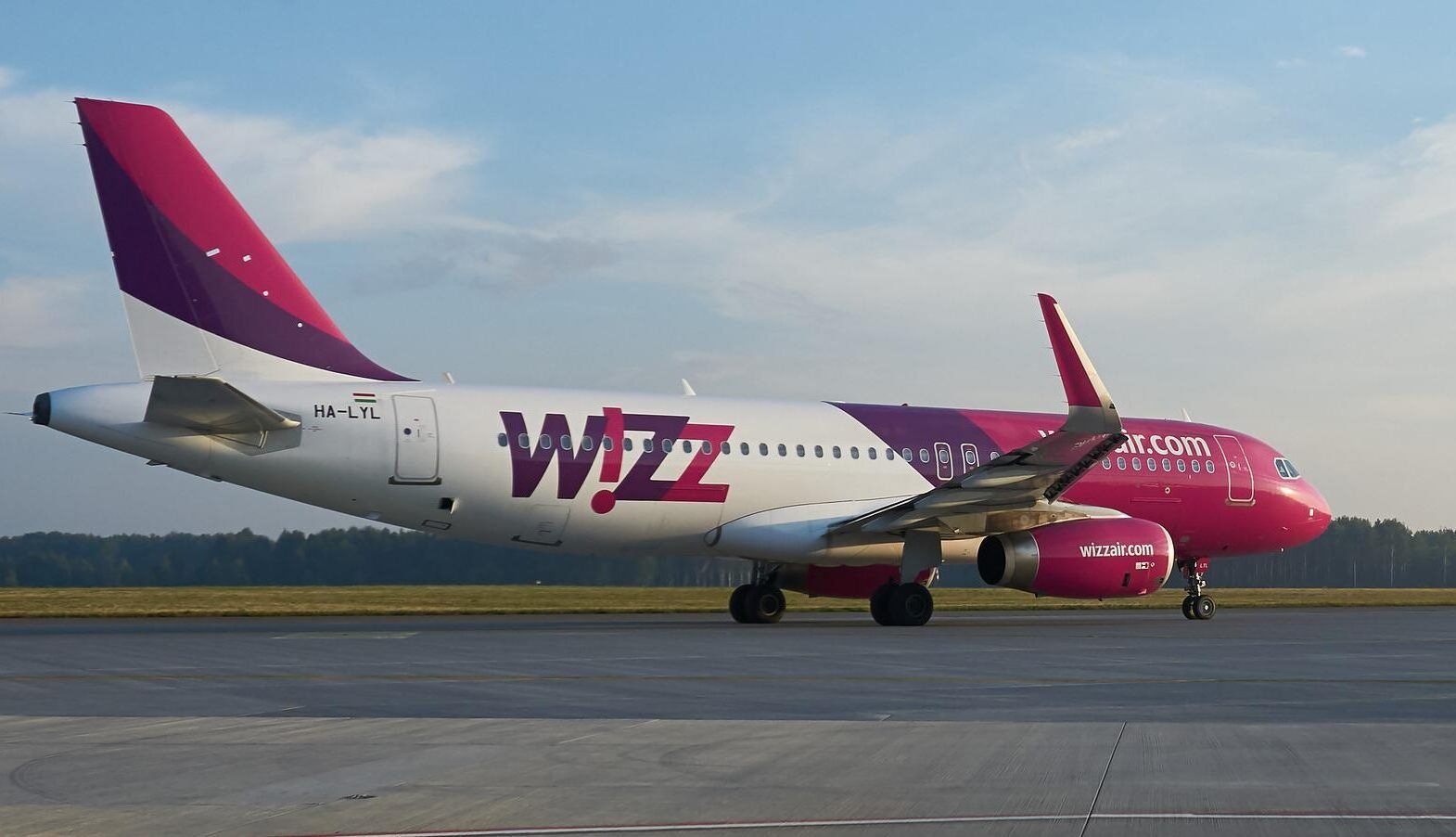

Despite volatile jet fuel prices and geopolitical tensions, Wizz Air is continuing its growth strategy. With a significant expansion of capacity in Central and Eastern Europe, a state-of-the-art fleet, and the multi-billion-euro “Customer First Compass” transformation program, the Hungarian-based airline aims to set new records this year.
Wizz Air is on a growth trajectory, as Ian Malin, the airline’s Chief Commercial Officer, announced during an online press conference on Tuesday that the company expects to carry 80 million passengers this year. To achieve this goal, the airline is ramping up its capacity, particularly in its core markets in Central and Eastern Europe.

Liszt Ferenc Airport, Wizz Air. Photo: Hungary Today
Following a successful 2025 fiscal year, in which 68.6 million passengers were carried, Wizz Air is planning a major operational push for the upcoming peak season.
Up to 1,200 flights are scheduled to depart daily—a 20% increase compared to the same period last year.
The strategic focus is on strengthening connections between European capitals and expanding strategic locations. Most recently, new bases were opened in Bratislava, Palermo, and Warsaw, while capacity at existing hubs such as Budapest and Milan was significantly increased. The airline has also recently consolidated its position in the Italian domestic market.
A central pillar of the strategy is the three-year “Customer First Compass” program, launched in April 2025. With a total investment of approximately 14 billion euros, Wizz Air aims to correct the often-criticized image of low-cost carriers.
According to Ian Malin, the results of the first year are positive. Customer satisfaction rose by five percentage points to over 77%. New digital services such as the WIZZ Link booking platform, the WIZZ Class comfort option, and the “Disruption Assistance” tool—which enables automated rebooking in the event of flight cancellations—are designed to modernize the travel experience. With an operational execution rate of 99.5% of all scheduled flights, Wizz Air also ranks at the top of the industry in terms of punctuality.
Despite the service initiative, price remains the most important factor; approximately 40% of all tickets are still offered for under 40 euros.
This is made possible by one of the youngest fleets in the world. Of the current 262 aircraft, three-quarters already belong to the highly efficient Airbus A321neo series. The average age of the aircraft is 4.65 years. By 2029, the company plans to fully transition to the A321neo model, which not only reduces operating costs but also makes a significant contribution to sustainability.

Photo: Pixabay
Malin responded calmly to pressing questions about the current economic situation. Thanks to a smart hedging strategy, the company has secured about 70% of its fuel requirements for the summer at favorable terms. “Despite rising kerosene prices, we are currently planning neither flight cancellations nor the introduction of fuel surcharges,” he emphasized.
With a liquidity reserve of approximately two billion euros, the airline considers itself financially well-equipped to weather even geopolitical turbulence.
Long-term goals were also discussed. Chief Corporate Officer Owain Jones reaffirmed the goal of becoming climate-neutral by 2050 through the use of sustainable aviation fuel (SAF) and optimized flight routes, among other methods. Marion Geoffroy, CEO of Wizz Air UK, highlighted the social transformation within the company. By 2030, the proportion of women in the cockpit is set to rise to 7% and in management to 40%—an ambitious goal for an airline that already employs staff from over 100 nations.
Via MTI; Featured image: Pixabay