The decision marks one of the most notable changes to emerge from the transition between Phase 2 and Phase 3 of the multi agency scheme, which aims to improve public transport reliability and reduce congestion along one of Ireland’s busiest national routes.
The N11/M11 BPIS is being delivered jointly by Wicklow County Council, Dún Laoghaire Rathdown County Council, Transport Infrastructure Ireland (TII), the National Transport Authority (NTA) and the Department of Transport. Wicklow County Council is acting as the lead local authority and sponsoring agency, while TII serves as the approving authority. The Kildare National Roads Office is managing the project in accordance with TII’s project management guidelines.
The scheme, first initiated in 2020, is designed to introduce bus priority measures along the N11/M11 corridor, enabling buses and coaches to bypass peak hour congestion by using enhanced hard shoulders and upgraded junction layouts.
The project also includes proposals to rationalise minor junctions, improve safety, and increase the overall people carrying capacity of the route. The N11/M11 forms part of the Trans European Transport Network route E01, linking Dublin and the Greater Dublin Area to Rosslare Europort, making it a strategically important corridor for both commuters and freight.
The publication of the Phase 2 Option Selection Report in April 2025 set out a preferred option that included several major interventions. Among them was the proposed closure of several direct accesses and minor junctions, including the Herbert Road junction. That proposal quickly became one of the most contentious elements of the scheme, drawing strong public opposition from residents and road users who argued that the closure would significantly disrupt local connectivity.
In the latest update, Wicklow County Council acknowledged what it described as “clear public sentiment” regarding Herbert Road. As a result, the junction will now be retained, and all previously proposed southbound interventions between Junction 6 (Bray/Fassaroe) and Junction 7 (Bray South) have been removed from the scheme. The decision represents a substantial revision to the Phase 2 preferred option.
The retention of Herbert Road is not the only amendment. The council also confirmed that all intervention measures previously proposed between Junction 8 (Kilmacanogue) and Junction 9 (Glenview) will not proceed at this time.
These works were deemed to offer relatively lower bus priority benefits compared with other parts of the corridor. The remainder of the Phase 2 Preferred Option including hard shoulder bus priority, a major upgrade of Junction 7, and new segregated service roads, will advance to Phase 3.
Phase 3, now formally underway, marks a shift from option selection to detailed design and environmental evaluation. Approval to progress was granted by TII in June 2025, and following a competitive tender process, Ove Arup & Partners Ireland Ltd (trading as Arup) was appointed as Technical Advisors for Phases 3 and 4. The contract was officially signed on 16 April 2026.
During Phase 3, engineers and environmental specialists will refine the preferred option within the defined corridor, developing detailed designs for junctions, access arrangements, drainage, structures and boundary treatments. This phase will also identify any land acquisition requirements and involve direct engagement with affected property owners. Environmental assessments will run in parallel, with the potential to prompt further design adjustments to avoid or reduce impacts.
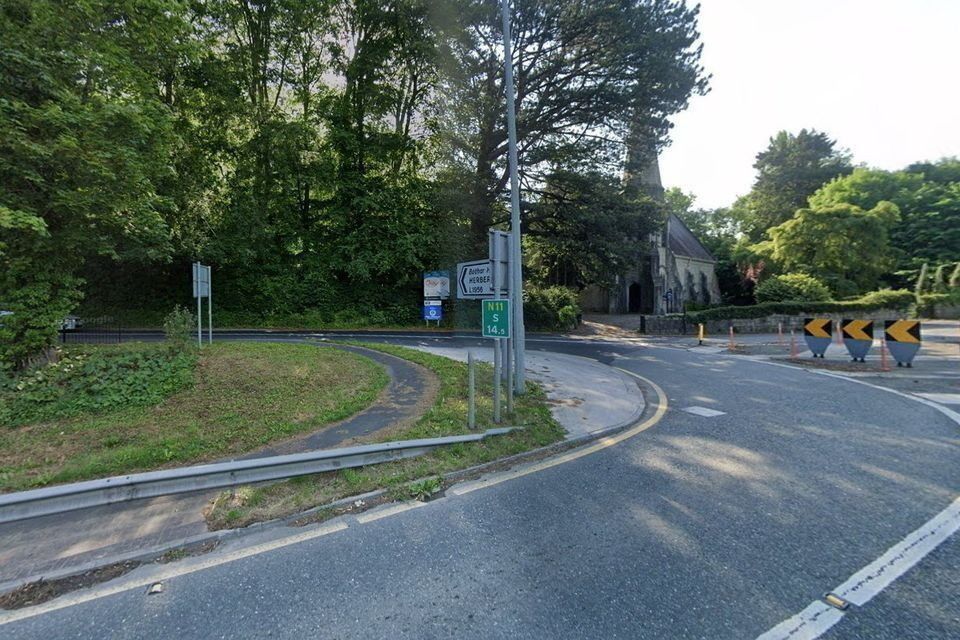
The N11 Herbert Road junction, Bray.
The process is expected to take approximately 24 months, concluding with the completion of the Environmental Impact Assessment and the preparation of statutory planning documentation. Subject to funding and further approvals, the project will then move to Phase 4, when a planning application will be submitted to An Coimisiún Pleanála.
Speaking at the contract signing, the Cathaoirleach of Wicklow County Council described the milestone as an important step in delivering improved public transport along the N11/M11. The chief executive of Wicklow County Council also welcomed Arup’s appointment, emphasising the collaborative approach between national and local authorities and the commitment to delivering meaningful transport improvements.
Tánaiste and local TD Simon Harris has welcomed the signing of the contract, describing it as a “major step forward” for commuters and communities across Wicklow.
Welcoming the announcement, the Tánaiste said the move is “real, tangible progress for the thousands of people who travel this route every day”.
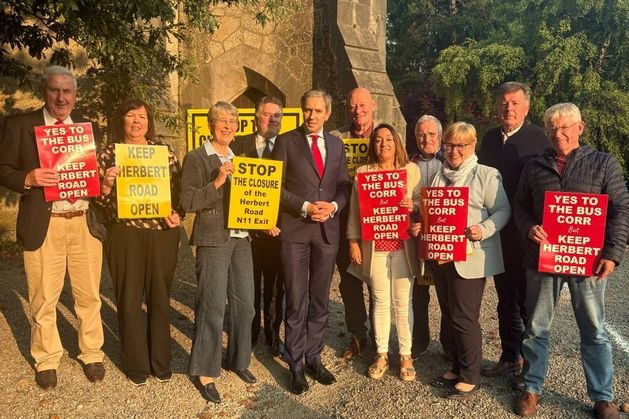
“Just as importantly, the move into the next phase now brings much-needed clarity for people in Bray, particularly residents and families who rely on Herbert Road. I have been clear on this issue since early last year: Herbert Road must remain open. That is non-negotiable.”
“This next phase now puts the responsibility on Arup to deliver a design that will work, one that provides the necessary access from the N11 while keeping Herbert Road open and protecting local connectivity.”
For residents along the corridor, the retention of Herbert Road stands out as the most immediate and tangible outcome of recent public engagement. While the broader scheme remains at a technical stage, the decision signals a willingness by the project team to adapt proposals in response to community concerns.
Funded by the Local Democracy Reporting Scheme