The Social Democrats’ decision not to recognize a 20-year-old agreement on pensions has been cited by the right-wing Liberals and Conservatives as a move to block a government that includes their parties. What is the agreement and why is it important?
What has happened?
Denmark’s election on March 24th was inconclusive. The so-called ‘red bloc’, made up of the left-wing parties, achieved 84 seats, with the right-wing, ‘blue bloc’, achieving 77. Neither group has a majority alone, rather they will need to collaborate with the non-aligned Moderates, who have 14 seats, if they want to govern.
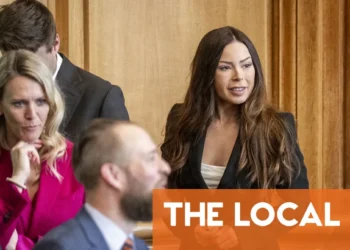
Mette Frederiksen, leader of the Social Democrats, has been appointed to lead negotiations. She has so far tried two different alternatives: the first is a centre-left government with her own party, as well as the Social Liberals, Green Left and Red-Green Alliance, with the support of the other left-wing parties and the Moderates.
After pressure from the Moderates to open up negotiations to the Liberal and Conservative parties, which are both in the blue bloc, Frederiksen did so. This would result in a coalition between the Social Democrats, Moderates, Liberals and Conservatives. Since then, however, the Liberals and Conservatives have only taken part in one meeting.
What happened at the meeting?
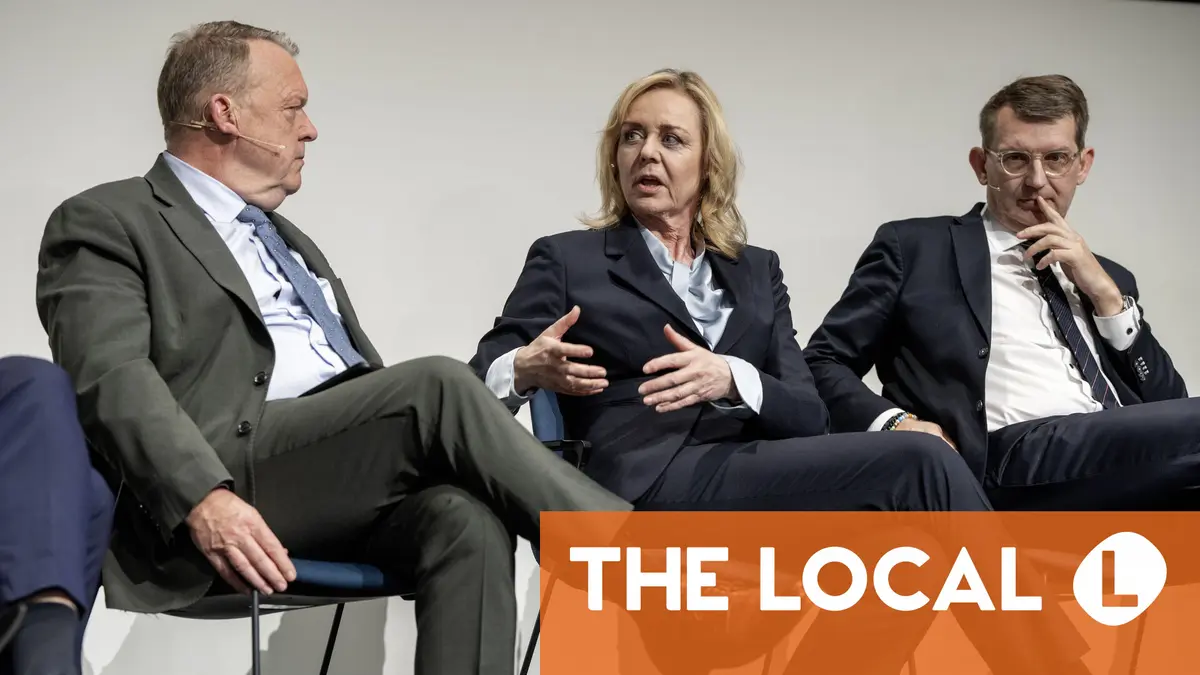
We don’t know, other than what Liberal leader Troels Lund Poulsen and Conservative leader Mona Juul wrote in identical statements on X. In these statements, Poulsen and Juul accused Frederiksen of blocking any attempt to form a government with the two right-wing parties.
They wrote that this is due to the fact that the Social Democrats no longer recognize a welfare agreement made back in 2006.
Advertising
What is this welfare agreement about?
The welfare agreement, known as Velfærdsforliget, is an agreement made by the then-Liberal and Conservative government with the Danish People’s Party, the Social Democrats and the Social Liberals on a number of welfare-related issues, such as cuts to student grants and cutting the length of time you’re able to claim benefits if you lose your job.
It also included a major change to the pension system, linking the pension age to life expectancy, which essentially means that the pension age rises as life expectancy rises.
“(Social Democrat leader) Mette Frederiksen has told us that the foundation for Denmark’s economy and welfare ‒ the life expectancy indexation, which is also known as the Welfare Agreement ‒ has expired,” Poulsen and Juul wrote on Tuesday.
“The fact that they are ignoring this issue ‒ which is completely central to the Danish economy ‒ is blocking the way for further government negotiations,” they added.
Advertising
Prior to the election, the Social Democrats announced that they want to change the welfare agreement so that the pension age will rise at a slower rate in the future.
Have the Social Democrats really stopped recognizing this agreement?
It appears so. According to the party, the agreement is no longer valid because the Moderates, one of the three parties in the outgoing government, alongside the Social Democrats and the Liberals, weren’t part of it.
Top Social Democrat Peter Hummelgaard wrote in a statement on Facebook that the Finance Ministry said that the Moderates are “technically not part of the agreement,” and added that the decision from the ministry also came as a surprise to the Social Democrats.
The Moderate Party was formed in 2021, fifteen years after the welfare agreement was made.
Meanwhile, Moderate leader Lars Løkke Rasmussen, who was a member of the Liberals for decades, including a stint leading the party as prime minister, told DR and TV2 on Tuesday that he believes his party is part of the agreement, as it was part of a coalition which upheld the agreement and that his actions and statements on the agreement in the past have been made from a belief that his party is included in it.
Why does this matter?
It matters because this appears to be a major barrier to negotiations to form a government spanning the centre, which Rasmussen and Frederiksen have both said they would be open to ‒ in Rasmussen’s case, a government spanning the center is his primary goal.
Advertising
Negotiations between the left-wing parties and the Moderates seem to have hit a roadblock, with Rasmussen refusing to turn up to discussions with the other parties. If that option is off the table, then a government spanning the center is the next alternative (theoretically there could be a right-wing government but there are a number of parties within the right-wing bloc which have refused to collaborate with each other, so it looks unlikely).
If the parties can reach a consensus on the Welfare Agreement, then that could mean that negotiations can continue, and it would raise the chances of Denmark’s next government spanning the center rather than being centre-left.
The Social Democrats have so far said that they are happy to reconfirm the Welfare Agreement, but they want to do this after a government has been formed, presumably so negotiations to lower the pension age are still on the table if the next government ends up being centre-left.
The Moderates, Conservatives and Liberals have, however, said that they want to confirm now that the agreement still stands.