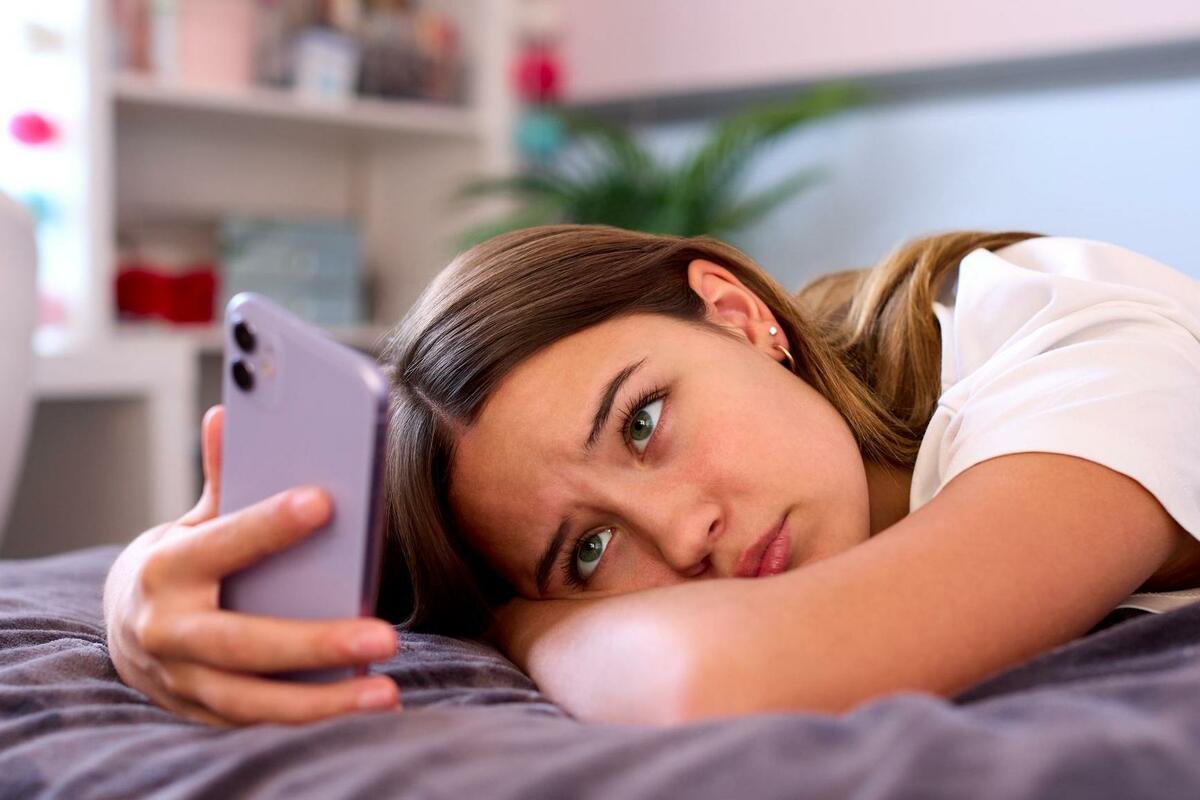
The UK has announced it will block social media for under-16s.
Prime Minister Keir Starmer said the ban would come into force in early 2027.
He said keeping children off social media was “the right step for Britain” and the best way to keep them safe.
Which platforms will be banned?
The ban will cover platforms such as Snapchat, TikTok, YouTube, Instagram, Facebook and X, the government said.
A detailed list has not been published.
However, the government said it would apply the ban to those networks “whose purpose is to facilitate social interaction and the publication of material”.
The measures will also require platforms to prevent children from live streaming, even on gaming platforms.
The government announced that functions that allow foreigners to communicate with under-16s will be blocked.
Nighttime curfew-like restrictions and cuts to under-18s are also said to be under consideration, with more details to be revealed in July.
AI chatbots as “romantic companions”, designed to simulate sexual relationships or role-playing with users, will be able to be used by over 18s.
AI chatbots in a broader sense will have to limit “intimate uses” for under-18s, they said.
Messaging channels like will not be banned WhatsApp and Signal.
Most social networking platforms already require children to be over 13 to create an account and use their services.
When will the ban on social networks be implemented?
The prime minister said the government plans to pass the regulations before Christmas, which would allow the measures to come into force in early 2027.
He said the government has already passed a law allowing it to do so.
How will it be implemented?
The measures that will be adopted do not mean that no child will ever be able to log on to social networks again, but it is important to act in advance, said Keir Starmer, the Prime Minister of Great Britain.
“They find a way around other laws.”
“But we don’t say, look, a teenager somehow managed to get a drink, so let’s not try to ban the sale of alcohol to children,” he said.
The government said it would use “highly effective age verification measures” to control those using social media.
This usually involves requiring companies to use technology that can accurately estimate or verify a person’s age, such as using a face scan or asking for an ID card.
From the regulator Ofcom was asked to do a quick study to find the best ways to check if someone is over 16.
Some platforms, including porn sites, are already required to verify age to prevent children from accessing adult content.
Ofcom has penalized several platforms for non-compliance.
They are concerned about tools such as virtual private networks (VPNs) being used to bypass the blockades.
The government said it would learn lessons from Australia, where children said they could still access sites that should have been blocked.
How did families, children and companies react?
Grieving parents and families are among those calling for a ban on social media for under-16s.
Lisa Kenevan, whose son Isaac died at the age of 13, said in the campaign that he was her driving force.
For BBC Breakfast she said that although parents have long wanted a ban, this announcement means that “we are now on the right track”.
Mariano Giannin, whose daughter Mia died aged 14 in 2021 after being the victim of cyberbullying, said he was left “speechless” by the post.
“I think it’s a change in the right direction, it won’t be easy, but it will be possible,” he said.
However, speaking ahead of the announcement, Ian Russell – whose daughter Molly took her own life aged 14 after viewing harmful content online – accused the government of being quick to introduce restrictions for political reasons.
Russell said “knee-jerk methods like bans” only cause more problems.
Overall, nine out of 10 parents support stronger action on children’s social media platforms, according to government figures.
However, some teenagers have expressed concern about how the ban on social media will affect their ability to connect with friends and express themselves.
George, who is 14, told BBC Radio 4’s Today show that people his age should be able to make their own decisions because “the time has passed when we need to be told what to do”.
Lily, 15, from Cumbria, said apps like TikTok allow her to “communicate more”, for example by posting videos of herself performing.
Of the affected platforms, only YouTube has commented so far.
They are worried, it said, that the ban will push children away from “selected, supervised and rewarding experiences and towards anonymous and less safe ones”.
BBC in Serbian is now also on YouTube, follow us HERE.
Follow us on Facebook, Twitter, Instagram, YouTube and Viber. If you have a topic suggestion for us, please contact bbcnasrpskom@bbc.co.uk
Download the application and follow the news


FOLLOW US ON

News