Have a electric vehicle It can represent multiple benefits for the person, but requires prior education on how to charge it, how to maintain it and how to get the most out of it.
“If we had a combustion car, it’s not just about changing keys, the user must be well educated in how to use it, because knowing how to drive is not enough.”
This is the conclusion reached by specialists in five different areas related to electric mobility who participated in the forum Electric mobility: Trends, challenges and opportunities for consumers and companies. This was a space designed by The Nation to talk about the challenges in the matter, but also to clarify the myths that exist around these vehicles.
The event was broadcast this Thursday on the YouTube channel of The Nationand had five panelists:
- Federico Rodríguez Quesada, from EV One, a workshop specialized in electric vehicles.
- Daniel Castillo, president and founder of ELCO Costa Rica, a company that develops charging infrastructure for homes, companies and public spaces
- Aramis Pérez Mora, researcher at the UCR School of Electrical Engineering, and who has study projects on electric mobility
- Mario Duran Ortizcivil engineer and consultant in urban transportation and electromobility
- Fresia Quirós Álvarez, engineering engineer Coopeguanacaste Electricitywho was present virtually
You can review the content of what they said here:
More and more electric vehicles
As of March, in Costa Rica they had registered 37,000 electric vehicles of all categories. During 2025, 17% of the cars sold were electric. And in February and March of this year, 20% was reached, according to data provided by Durán.
“The growth has been explosive. In 2017 we did not reach 1,000 electric vehicles, as of March of this year there are already 37,000. From 2022 to 2024 we were the country in America with the highest market rates,” said Durán.
The growth is not only seen in the Greater Metropolitan Area (GAM), but also in other areas of the country, such as Guanacaste. CoopeGuanacaste has five charging stations that run from Paquera to Playas del Coco and they are already thinking about new infrastructure. The cooperative went from seeing 3,000 recharges in 2023 to around 11,000 in 2025.
“Interest has grown very quickly and there are several actors working, not just the user. There are also the distribution companies, those who have chargers and accessories and the legislation. Planning must be comprehensive and complete,” Quirós highlighted.
Castillo highlighted the situation with an example: his company went from selling 10 chargers per month in 2019 to more than 800 per month currently.
Rodríguez pointed out that the buyers are not only young people, the owners of the vehicles he maintains are of all ages.
Pérez added that he has also seen how those who have an electric vehicle say they would not return to a combustion vehicle.
However, only 2% of the light vehicle fleet is electric. Much of that is due to the challenges and myths that persist.
The challenges of electric mobility
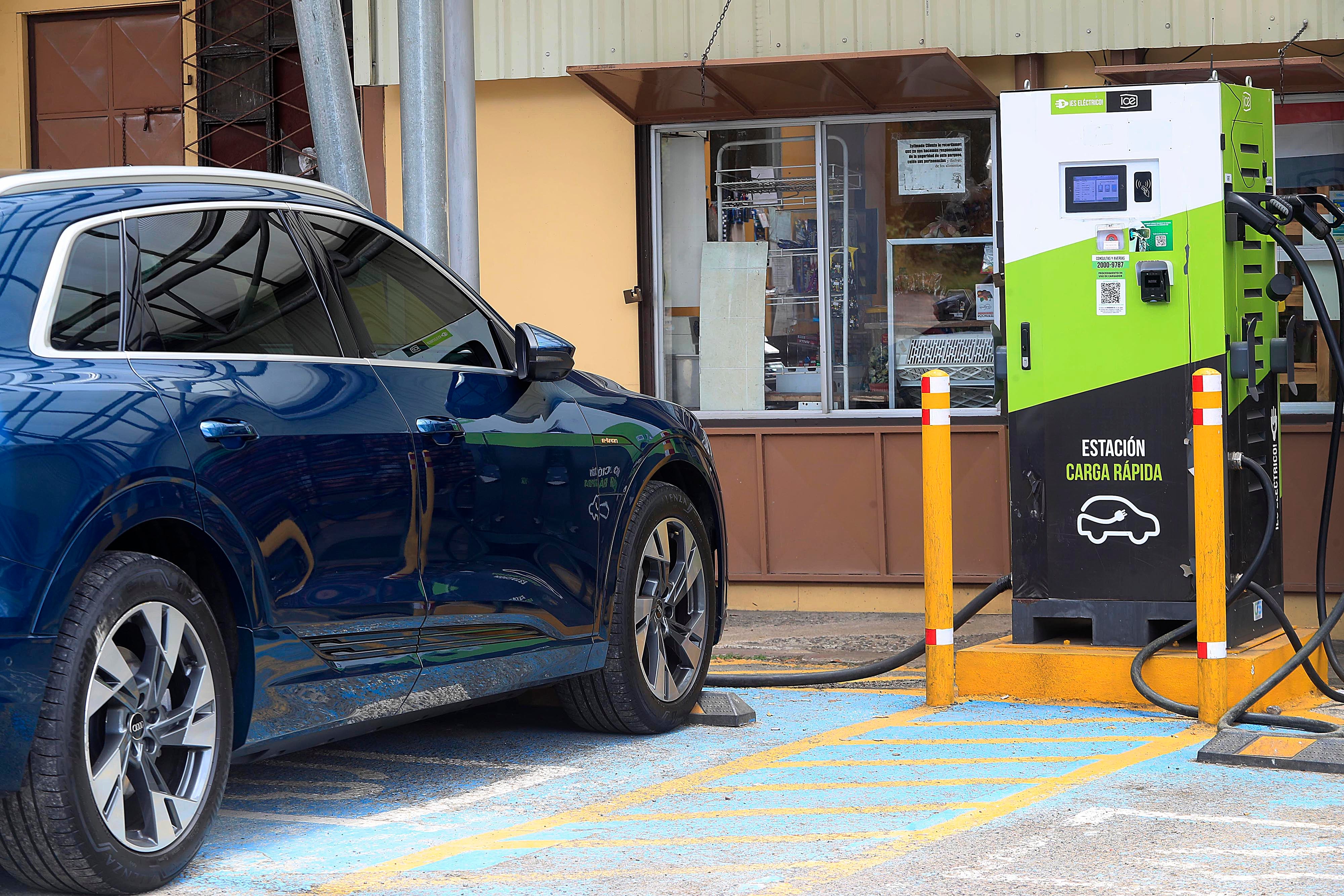
Such rapid growth in this type of automobile also created barriers. One of them, Durán pointed out, is that the electric vehicle fleet grew faster than the charging stations available on the roads.
“Fortunately, on April 14, a law was approved that will allow private individuals to invest in charging stations, which are not only fast charging on the road, but also in condominiums or shopping centers,” Durán said.
However, it is still not enough.
“Someone who does not have a way to charge at home should think three times before buying an electric car. People who do not have a garage and live across the street, or many who live in condominium towers do not have these facilities. Fast charging stations are necessary, especially for long trips. It is normal to see lines of cars at roadside stations. The infrastructure is insufficient,” Durán stressed.
Added to this is that in the South Pacific and the Caribbean there is little network of charging stations.
Castillo pointed out that it is important to have that load at the destination: that people leave with their car loaded, and can load at your final destinationwhether it is a hotel or a nearby shopping center. And that is something that is already being worked on to reach more and more places.
Rodríguez agreed with both: “the State has failed us in the maintenance and care of the stations. Terribly. It is not possible that we have stations that have been bad for three or four months.”
However, he stressed that more work must be done on education to plan the trip and load at the destination.
However, Pérez pointed out that there are populations with special characteristics, such as company route agents, who cannot always charge for hours, nor stay in hotels with charging stations, and find faults in roadside stations. There, Castillo said, the opportunity arises for charging points in restaurants and sodas.
Added to this is that in some rural areas the electricity is not so stable and there are places where there could be problems when charging, Durán said.
Rodríguez added that other challenges are related to the need for more fault diagnosis and maintenance technicians. Battery technicians will also be needed.
The myths
There are many myths that the panelists pointed out:
- The battery lasts only three years. This is not the case, it can last about 15 years, and when it is discarded from the car, it has a second life as an “energy store” in other uses. Even the agencies give eight years of guarantee.
- Which is maintenance free. Maintenance is less and can be cheaper, but it must have inspections.
- That Chinese brands are bad. Although there are all kinds of brands from the Asian country, most of them are very good, because the Chinese have led research in batteries for electric vehicles and these vehicles as such.
Educate the user

All the experts agreed that myths are dispelled with education to the user.
Pérez commented how different people have approached the UCR to teach them how to use this type of vehicles.
“Most of us think ‘I’ll buy the car and that’s it’, but there is necessary support at the beginning. At the University we realized that it was necessary, and we have proposed courses and talks,” he said.
Castillo added that for him the biggest challenge is the education of people, because many agencies and sellers do not explain to their clients how to use what they are buying: “people still do not learn how to manage their battery energy and how to manage charging networks.”
For Quirós, the lack of user education is also seen in the misuse of charging stations, which are often damaged.
“Many do not use them properly. If you have a combustion car, you go to a gas station and there is a person trained to give you fuel, but in an electric vehicle it is the user who must do that, without assistance,” he specified.
In addition, the user must educate themselves that it is not necessary to charge at 100% or even 80% to continue, there are those who will only need about 20 or 25 minutes to reach the destination, and with that they will be able to give space to more people who are waiting in line.