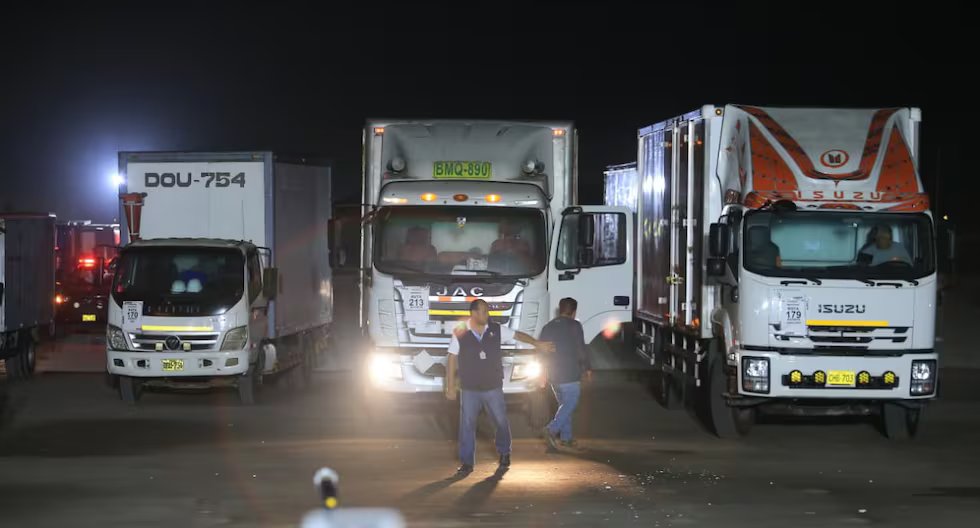
From the ONPE warehouses in Lurín, 434 transport units with electoral material and computer equipment left for the 2,269 voting locations in Metropolitan Lima and the Constitutional Province of Callao, mostly educational institutions, with a view to the April 12 elections.
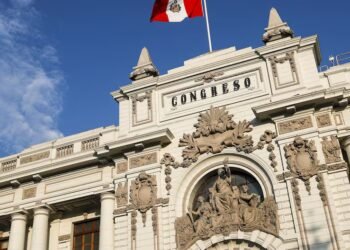
The establishments with the highest number of tables in Lima and Callao are: the Universidad Nacional Mayor de San Marcos (100 tables), the Universidad Ricardo Palma (80), the IE 005 Rosa de Santa María (70), the University of San Martín de Porres (65), the IE Emblemática Alfonso Ugarte (65), the Universidad Nacional Agraria (65), the IE Emblemática Alfonso Ugarte (61) and the IE Teresa Gonzales by Fanning (60).
In the Constitutional Province of Callao, the voting centers with the highest number of tables are: the Campolo Alcalde Stadium (46 tables), the National University Federico Villarreal (42), the National University of Callao (40) and the IE Liceo Naval de Corbeta Manuel Clavero Muga (34).

434 transport units with electoral material left the ONPE warehouses in Lurín. Photo: GEC.
It should be noted that, to facilitate voting for people with visual disabilities, the electoral body also distributed 30 thousand Braille templates nationwide.
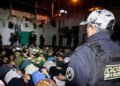
All the material was transferred since last night in a process that would last until around 6 am, with police guard, according to Piero Corvetto, head of the ONPE, who led the process. Each of the units had a routing number that indicated the voting location to which it was destined.
“Today a milestone has been marked because this is the largest electoral situation in the country. The magnitude of the operation is almost double what we had five years ago. None of this would have been possible without the support of the National Police of Peru and, in the interior of the country, the support of the Armed Forces.”Corvetto said.

Piero Corvetto, head of ONPE, led the process. Photo: GEC.
“At this moment we are carrying out a deployment, as you see, for all of Lima and Callao. We start tonight with the most distant destinations, such as Carabayllo and Ventanilla. Remember that we are in Lurín, but we are going to do everything possible to reach the furthest places from our capital and Callao”, he detailed.
He also stated that “This is a very important moment for us because it highlights the oversight of the National Elections Jury. We are progressively complying with our schedule”.
“I want to invite citizens to vote in an informed manner, not only knowing who to vote for, but also how to vote. It is also essential that board members receive training. I call on the responsibility of voters to go to the polls duly informed”he added.
“From the electoral bodies we do coordinated work so that citizens have all the necessary information to exercise their right to vote.”, he concluded.

Each of the units had a routing number that indicated the voting location to which it was destined. Photo: GEC.
In relation to the other regions of Peru, the ONPE reported that during the morning of March 28, the land and air transfer of electoral material to the Decentralized Offices of Electoral Processes (ODPE) in the interior of the country began.
The activity was carried out from the warehouses located at its headquarters in Lurín to the Jorge Chávez International Airport.
The electoral material consists of voting and reserve boxes, packages for the coordinator of the voting location, signage, signs, folding amphorae and voting booths.
When asked about the transfer of electoral material in regions, Corvetto stated that “We start with the most remote places. In this case, we prioritize communities like Pucallpa”.

To facilitate voting for people with visual disabilities, the electoral body also distributed 30,000 Braille templates nationwide. Photo: GEC.
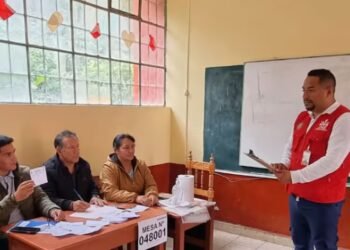
The National Elections Jury (JNE) recalled that citizens who do not go to vote this Sunday, April 12, or who do not set up the voting table (in the case of polling station members), will be subject to fines established in current regulations.
The economic sanctions – the institution detailed – will be applied according to the table of electoral fines, updated based on a classification by locality and poverty level established by the National Institute of Statistics and Informatics (INEI), as well as based on the Tax Tax Unit (UIT) in force for the year 2026.
In this context, the fines for not voting will be 110 soles for those residing in districts considered non-poor (2% of the UIT), 55 soles for poor districts (1% of the UIT) and 27.50 soles for districts in extreme poverty (0.5% of the UIT).
As for polling station members, both regulars and substitutes who do not comply with their civic duty will receive a single fine of 275 soles (equivalent to 5% of the UIT).
It should be noted that the voting location of some citizens could have changed. This is due to reassignments carried out in Metropolitan Lima, Arequipa and La Libertad, after verifying that some premises did not meet the necessary conditions or were in the process of remodeling.
All voters are recommended to reconfirm their voting location in advance by entering the ONPE electoral consultation website.