Nearly 300 people were under probation supervision in 2025, with almost half linked to violent or threatening offences.
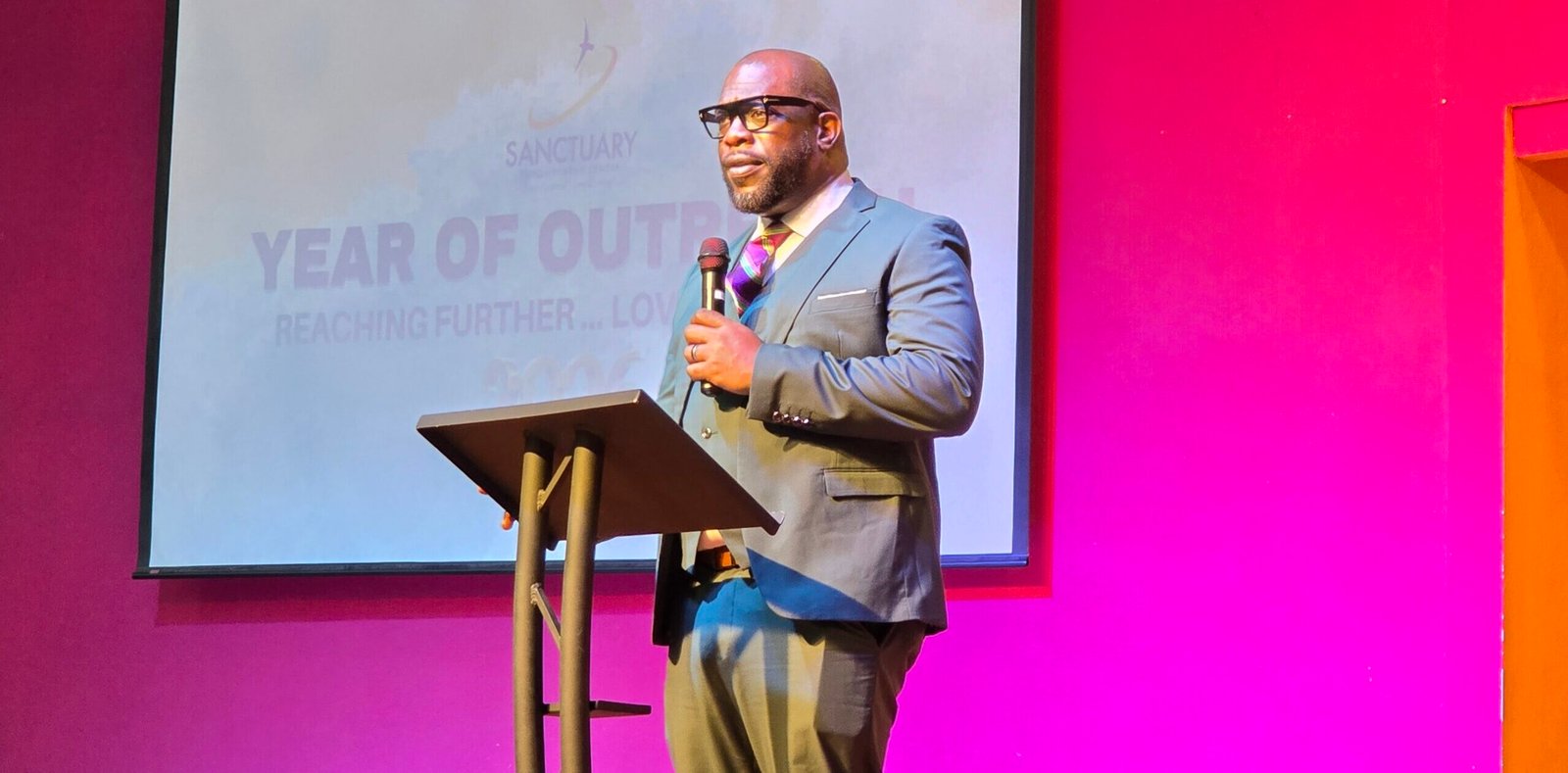
Minister of Home Affairs and Information Gregory Nicholls made this disclosure during the Barbados Probation Service’s 80th anniversary celebration at the Sanctuary Empowerment Centre on Country Road, St Michael, on Sunday.
He said the celebration comes at a challenging time for Barbados, given the number of young men, including teenagers, appearing before the courts.
Referring to the department’s 2025 statistics, he revealed: “Of those 295, 138 were placed on probation for violent or threatening offences against persons ranging from acts causing bodily harm to sexual offences and property-related crimes involving violence or threats.”
The minister stressed that behind the figures were young Barbadians whose futures remained uncertain.
“These are not the ones who are convicted; these are the ones who are placed on probation. These are our Barbadian children, our children, and the question before us is not simply how to punish them, it is what happens next.”
Nicholls said this was where the Probation Service played a critical role.
“The Barbados Probation Service is not the end of the road for these individuals. In many cases, it is the last credible off-ramp before things get worse.”
He outlined the department’s work through diversion programmes, pre-sentence reports, community supervision, counselling, life-skills programmes and mentorship initiatives.
“These are not soft options, they’re structured, evidence-based interventions that, when resourced properly, actually reduce reoffending.”
The minister also pointed to improvements in Barbados’ recidivism rate.
“Barbados has recorded some progress in bringing down its recidivism rate, and that does not happen by accident. It happens because someone is doing the non-glorious daily work of walking alongside people who are trying to turn their lives around.”
At the same time, the minister revealed that the department is under increasing pressure.
“Recent national discussions about our justice institutions have flagged a consistent concern, understaffing. The Probation Service is not exempt from that pressure.”
He noted that despite staffing challenges, officers continued to carry a substantial workload.
“The figures that this department produced in 2025 — 492 pre-sentence reports, 519 progress reports, 203 community service reports, and 117 domestic reports — reflect an institution that is delivering. That is not sustainable, however. But it does tell you something about the character of the people doing the work.”
Nicholls paid tribute to probation officers, saying their contribution often goes unnoticed despite the demanding nature of their responsibilities.
“Probation officers are not celebrated the way police officers or judges are. They work in the background, in the offices, in the courtrooms, in family homes, in the communities. They manage caseloads that are heavy. They deal with situations that are complicated and carry the weight of people’s crises in ways that are rarely publicly acknowledged.”
The minister also highlighted the department’s growth over the years, including the adoption of a modern case management system, training in alternative dispute resolution, and programmes such as the Community Pillars Mentorship Programme and prison aftercare services.
He maintained that further investment is needed.
“If we are serious about rehabilitation as a national strategy, and I believe we must be, then we have to be serious about resourcing the institution that delivers it. That means staffing. That means training. That means taking the well-being of our officers as seriously as we take the outcomes of our clients.”
Chief Probation Officer Dr Angela Dixon also praised the dedication of past and present staff members as the department marked eight decades of service.
“This milestone was not reached by chance. It was built through God’s grace, through the dedication of countless staff members across every generation, and through the unwavering support of partners and citizens throughout Barbados.”
She acknowledged the challenges probation officers face daily, saying their work extends far beyond what can be captured in a job description.
“We know what Monday morning feels like when our caseload is full, and the phone is already ringing. We know what it means to sit across from someone in crisis and find the right response when there’s no script.”
“What this work requires of you cannot be captured in a job description. It requires you to hold on to hope for people who have sometimes lost it for themselves, to see the person in front of you not for what they have done, but for what they can still become.”
Dixon said the service was entering a new phase in its development and urged staff to continue the work that has sustained the department for 80 years.