The entry of the Uzbekistan national team to the 2026 World Cup became a historical event not only for the country itself, but for the entire Central Asian football.
For the first time, a representative of the region made it to the final part of the main tournament on the planet. And now this success can no longer be perceived as an accident or a beautiful fairy tale: Uzbekistan has been working towards it for years, systematically changing football, developing players, strengthening the national team and creating conditions for results.
This example is especially important for Tajikistan. Until recently, it seemed that the World Cup was too far away a dream. But after expanding the tournament to 48 teams, after the success of Uzbekistan, the question is: what needs to be done to one day go the same way?
The main difference between Uzbekistan in recent years is its systematic approach. The country has built a clear vertical for the development of football players: children’s schools, academies, national training centers, youth teams, clubs, foreign players and the main team.
Players did not appear in the national team by chance – many went through youth tournaments, international competitions and gradually rose to the level of the national team.

Working with young football players also played a big role. Uzbekistan regularly achieved success at the junior and youth level, participated in the Olympic Games, and won major Asian junior tournaments. This means that the main team now has not just a group of strong players, but a whole base from which to choose.
Another factor is legionnaires. Abdukodir Khusanov became a symbol of the new Uzbek football after moving to the English Premier League. Eldor Shomurodov has been playing in Europe for a long time.
Abbosbek Faizullaev also became one of the main faces of the new generation. It is these players who give the national team a different level: they are accustomed to high intensity, pressure, speed of decisions and international competition.
Uzbekistan also managed to go through a difficult path psychologically. For many years the team was close to the World Championship, but constantly stopped at the decisive moment. She was even called one of the unluckiest teams in Asia. But in the end, this experience of defeat became part of future success. The team has learned not to break under pressure.
The coaching transition was also very important. Slovenian Srečko Katanec laid the foundation for the team, making it organized, disciplined and stable. After his departure for health reasons, the national team was headed by Timur Kapadze, a former national team player who knew the team’s internal atmosphere well. He did not break the system, but brought it to fruition.

This is what is important for Tajikistan to understand: coaching stability and continuity are of great importance. The national team should not have a situation where each new coach starts from scratch. There must be a single football line, which is continued by different specialists.
Today Tajikistan is at a similar stage, but at an earlier stage. The national team has already qualified for the 2027 Asian Cup, previously reached the quarterfinals of the 2023 Asian Cup, rose in the FIFA rankings and became more recognizable in Asia.
The team has leaders – Rustam Yatimov, Parviz Umarboev, Ekhsoni Panjshanbe, Zoir Juraboev, Shervoni Mabatshoev, Sheriddin Boboev. There is a new coach, Igor Angelovski, who has already led North Macedonia to the Euro. But this is not yet enough to qualify for the World Cup.
FirstWhat Tajikistan needs is to increase the number of players playing abroad. Not one or two players, but a whole group should play in stronger championships. This is the only way the team can get used to the pace of matches against Japan, Iran, Australia, South Korea, Uzbekistan, Iraq and other strong teams in Asia.
Second — strengthen the domestic championship. The Tajikistan Major League should become not just a tournament for local clubs, but a platform for training players for the national team. We need higher requirements for physics, speed, infrastructure, analytics, working with young football players and coaching education.
Third — develop youth teams. Uzbekistan has shown that the success of the main team begins not with qualifying for the World Cup, but with youth tournaments. If football players from the age of 16-17 play against the strongest teams in Asia, then by the age of 23-25 they are already ready for the pressure of adult football.
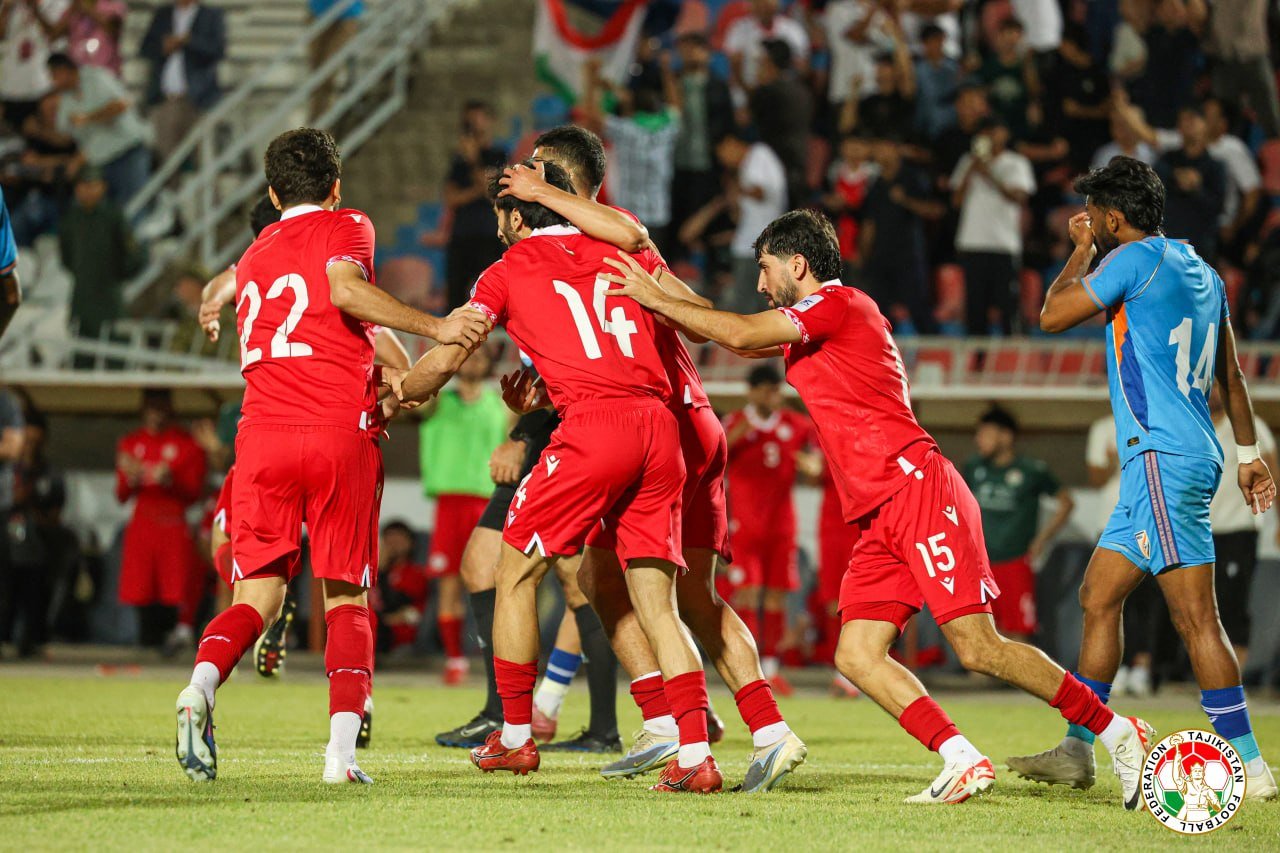
Fourth — play strong friendly matches. Tajikistan needs to meet more often not only with equal opponents, but also with teams of a higher level. Matches against India are useful for introducing a new coach to the team, but tests against Jordan, UAE, Oman, Qatar, Uzbekistan, Iraq, Saudi Arabia, South Korea and Japan are needed for growth.

Fifth — work on psychology. Reaching the World Cup requires not only skill, but also the ability to withstand pressure. Uzbekistan had been working towards this moment for a long time and managed not to flinch in the decisive game against the UAE. Tajikistan also needs to learn to play matches where the cost of a mistake is maximum.
Sixth — preserve the core of the team, but not be afraid of renewal. The current team has experienced leaders, but now we need to prepare those who will play in the next qualifying rounds. If you wait until the last minute, generational change can become painful.
The main lesson from Uzbekistan for Tajikistan is simple: they don’t qualify for the World Cup by accident. They get there through the system, patience, preparation, infrastructure, youth, strong foreign players and the right coaching choice.
Yes, Tajikistan’s path will be difficult. Competition in Asia is growing, and even the expansion of the World Cup does not guarantee a spot. But now Central Asia has an example that proves it is possible.
Uzbekistan has already opened the door. Now the question is whether Tajikistan can build the same road – not in one year, but through consistent work, which could one day lead the national team to its main football dream.