- The US and Iran have agreed on a peace deal that will be signed in Geneva on Friday.
- Oil prices fell after the announcement, while stock markets in Japan and South Korea rose significantly.
- Emmanuel Macron, Friedrich Merz and UN Secretary General António Guterres welcomed the agreement.
- However, experts warn that key controversial issues remain unresolved.
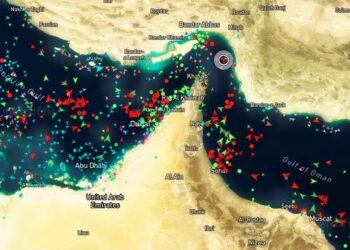
The USA and Iran confirm that there will be one on Sunday evening Agreement on the peace agreement came. The agreement is scheduled to be signed in Geneva on Friday and then come into force. The Strait of Hormuz will also be reopened in the future. Oil prices reacted immediately to the announcement and fell, and the Asian stock exchanges also reacted positively: the Japanese leading index Nikkei 225 rose by 4.6 percent half an hour after the start of trading, and the South Korean Kospi rose by 5.8 percent at the same time. Heads of state and experts also spoke up – or not:
No reaction from Israel
There was initially no reaction from Israel, which started the war together with the USA on February 28th but is skeptical about the negotiations. It was initially unclear who would represent Iran at the signing on Friday. US Vice President JD Vance told Fox News that the White House was still clarifying who would attend: “I definitely plan to be there, but it’s possible that the president himself could be there.”
Macron insists on rapid implementation
French President Emmanuel Macron has called for rapid and full implementation of the US-Iran deal. It must enable the urgent and unconditional reopening of the Strait of Hormuz; France was ready to accompany this through the international naval mission set up jointly with Great Britain, Macron announced during the night.
Merz congratulates Trump
Chancellor Friedrich Merz (CDU) welcomed the agreement between the USA and Iran on a framework agreement to end the Iran war. “The agreement can pave the way for a recovery of the global economy and a stabilization of the region,” said Merz on Monday night. At the same time, the Chancellor called for “what was agreed to be implemented in a targeted manner.”
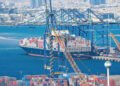
The Strait of Hormuz, which is important for global trade in oil and liquid gas, must be “permanently and unrestrictedly opened to free shipping,” emphasized Merz. In addition, further negotiations “in the next few weeks would have to ensure that Iran verifiably ends its military nuclear program”. There should also be “no further attacks against Israel and other neighbors in the region”.
UN chief: Agreement is a “decisive step”
UN Secretary-General António Guterres praised the agreement between the USA and Iran as a “decisive step” towards a peaceful, lasting solution to the conflict. Guterres said he would like to thank everyone who contributed and hopes that those involved will now use this moment to make even more effort to achieve a final settlement of the conflict. The United Nations would be available to support at any time.
Qatar: “Consolidating a sustainable peace”
The Gulf state of Qatar has described the framework agreement between the USA and Iran as an important step towards “solidifying a sustainable peace”. This would “promote economic growth regionally and internationally,” the Qatari Foreign Ministry said, according to the state agency QNA. The USA and Iran have shown themselves determined to “resolve differences through negotiations and peaceful means”.
Bundesbank President: “Months until oil markets relax”
The President of the German Bundesbank, Joachim Nagel, is dampening hopes of a quick relief in inflation and on the oil markets. There are now signs of a ceasefire and an opening of the Strait of Hormuz, Nagel said at the “Euro Finance Summit” in Frankfurt.
“Nevertheless, even if the Strait of Hormuz becomes navigable again soon, it will take months until the oil supply returns to normal,” said Nagel. “Especially as production facilities in the region have been partially damaged or put out of operation and reserves are becoming smaller.”
Expert: “…not even the beginning of the end”
Experts, however, warn against premature optimism. “Even if it holds, the difficult questions remain: Iran’s nuclear program, support for proxies, missiles and drones, and domestic repression,” said Richard Fontaine of the Center for a New American Security think tank. The points left out of the framework agreement were exactly the ones that led to war in the first place, he wrote on Platform X.
The framework agreement is therefore by no means the end of the war, not even “the beginning of the end”. But it could be a first step in the right direction, says Fontaine.
Karim Sadjadpour from the Carnegie think tank also said that he did not see the agreement as an end to the war. The war in Lebanon in particular will continue to be a source of tension, he told CNN.
Israel and USA attack Iran – Tehran hits back
More articles on the topic:

Daniela Wyler (wy) has been working from abroad for 20 minutes in the news desk as a night shift since 2023.