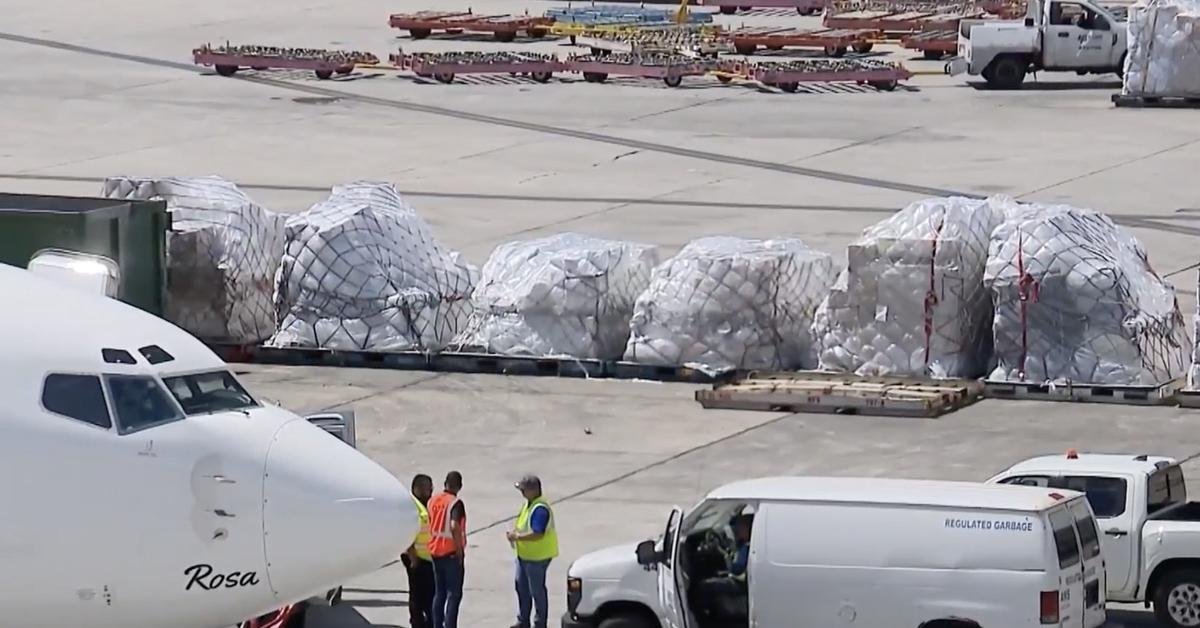
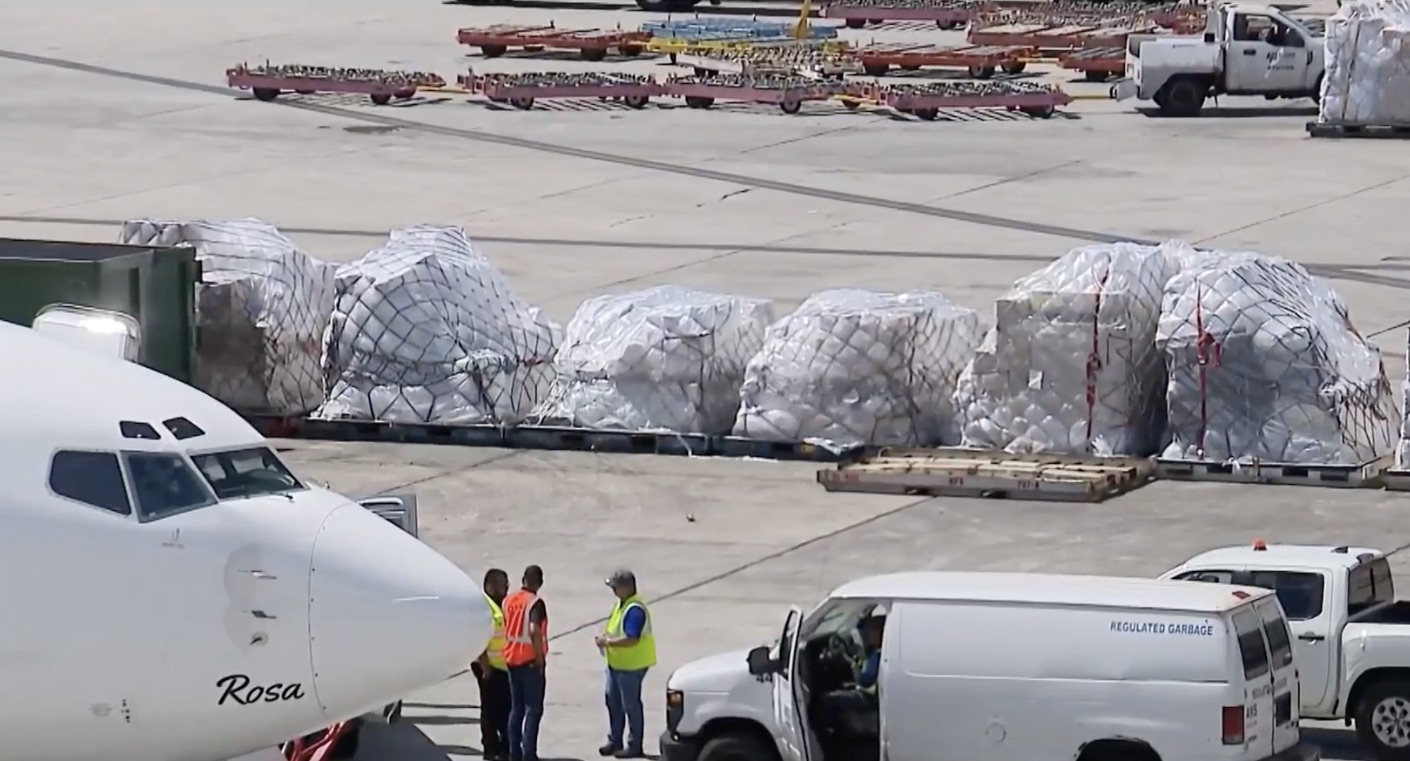
Madrid/A shipment of 700 hygiene kits and 700 food packages arrives this Tuesday in Havana from the United States, as part of the Donald Trump Government’s promise to send up to $100 million in humanitarian aid to the island. It is the first within the framework of that “historic commitment,” according to the State Department. in a statement.
The text makes it clear that the delivery, aboard a 7Air Cargo company plane, is intended “for the Cuban people, who suffer the consequences of the kleptocracy, brutality and economic incompetence of the communist regime,” and remembers that the packages will be delivered through the Catholic Church and Cáritas Cuba. The agreement, in fact, says the statement, is based on the success of the previous aid delivery, after the passage of Hurricane Melissa, also managed by the Catholic organization.
Before the press, in a cargo warehouse at Miami International Airport, the American authorities They noted that the assistance responds to the “deterioration of humanitarian conditions in Cuba, marked by shortages of food, medicine, fuel and other essential services.”
The assistance responds to the “deterioration of humanitarian conditions in Cuba”
Precisely in an interview given to Roberto Cavada, a Cuban exiled in the Dominican Republic, on June 24, Miguel Díaz-Canel said that US aid worth 100 million dollars, promised in May by the Trump Administrationdid not include food and medicine. A week later, State Department officials came forward about this. These, in statements to the independent media Strong Coffeethey rejected the Cuban president’s comment categorically and announced that Shipments would begin this month of July.as has actually happened.
“We can confirm that the aid is ready to be sent and that the illegitimate regime of Miguel Díaz-Canel has been delaying approvals,” the source said. Asked about the content of those shipments and Díaz-Canel’s statement, the official added: “That is totally and absolutely false. The shipments offered by the State Department include food, as was demonstrated during the inspections carried out in the humanitarian aid phases after Hurricane Melissa, and this can be verified by the Catholic Church and other NGOs.”
The US Embassy in Cuba had said on June 17 that 60 of the 100 million announced will be managed by the Catholic Church and the remaining 40 by other NGOs. The agreement was finalized in a meeting held between the head of the diplomatic mission, Mike Hammer, Sean Callahan, president of Catholic Relief Services, and Carmen María Nodal Martínez, director of Cáritas Cuba.
The US Embassy in Cuba had said on June 17 that 60 of the 100 million announced will be managed by the Catholic Church and the remaining 40 by other NGOs.
“In these meetings, the coordination to distribute humanitarian aid for ordinary Cubans was addressed, with the aim of guaranteeing that support reaches those who need it most effectively,” indicated a note issued from the US embassy.
In October 2025, after Hurricane Melissa passed through eastern Cuba, Marco Rubio offered aid to the Cuban regime valued at three million dollars. After a tug of war between the parties, mainly over how the distribution would be organized, the shipments began to arrive on January 14 and their distribution was already carried out by Catholic Relief Services and Cáritas, which have remained in charge of all the remaining shipments.
The organizations have encountered serious logistical problems due to the lack of fuel, to the point that the Archbishop of Miami, Thomas Wenski, told the Washington Post that it was inevitably necessary to reach agreements with the Cuban regime to transport aid from Havana to Santiago by boat. According to Strong Coffeehis source admitted that this was a topic that had been discussed. “Of course, both humanitarian aid and oil and energy issues have been topics on the negotiating table,” he said.
According to Cáritas, for the moment 82% of the donations have been delivered to the affected territories, reaching some 8,800 families in Santiago de Cuba, Holguín, Las Tunas, Bayamo and Guantánamo.