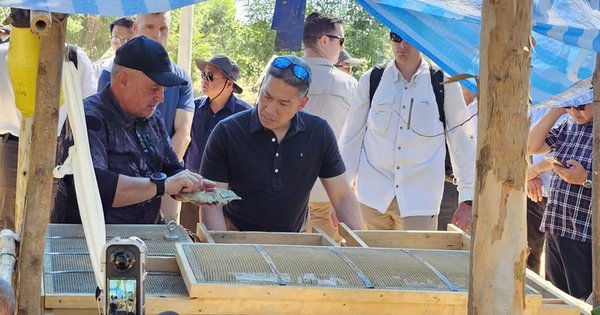
Acting U.S. Secretary of the Navy Hung Cao (L, 2nd) visits the site in Quang Tri Province, north-central Vietnam, where efforts are underway to locate Americans missing in action during the war. Photo: Quoc Nam / Tuoi Tre
Acting Secretary Cao visited a search site in Truong Ninh Commune, Quang Tri, where U.S. personnel, with support from Vietnamese counterparts, are continuing efforts to locate Americans who went missing in wartime.
The remains of several people aboard a U.S. aircraft that crashed during the war are believed to be located in the area.
Local residents have also been mobilized to assist with the operation.
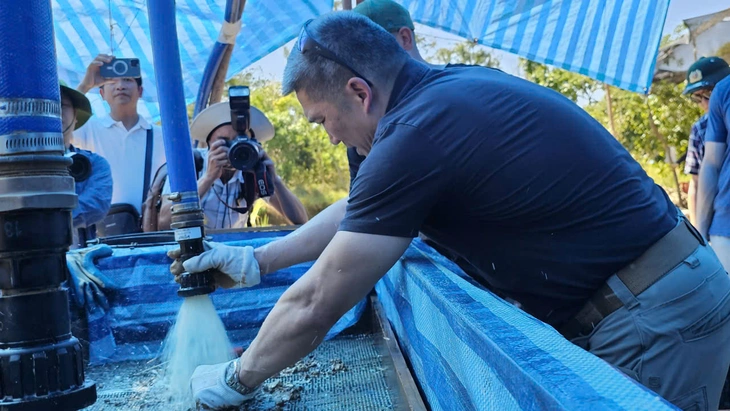
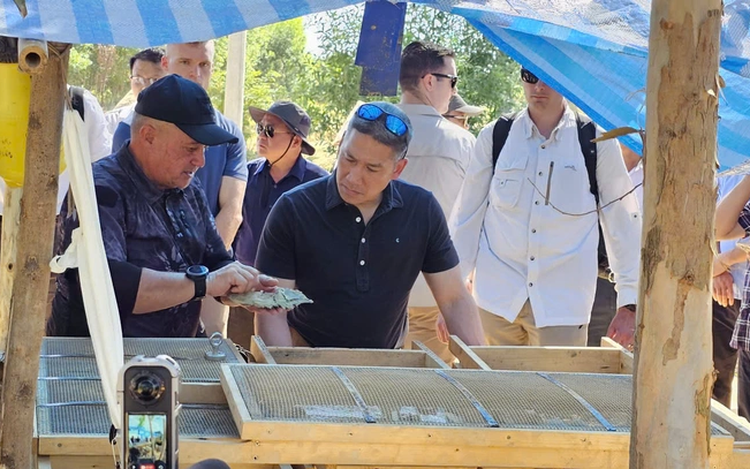
Acting U.S. Secretary of the Navy Hung Cao takes part in manually screening excavated soil and rocks in the search for the remains and personal effects of missing Americans. Photo: Quoc Nam / Tuoi Tre
Every section of land has been carefully surveyed using specialized equipment and excavated to depths of several meters across an area covering several hundred square meters.
Soil removed from the site is manually sifted through a screening system in an effort to locate traces of those who were on the downed aircraft. Several artifacts have already been recovered.
Cao personally inspected each stage of the search operation and took part in manually screening excavated soil and rocks.
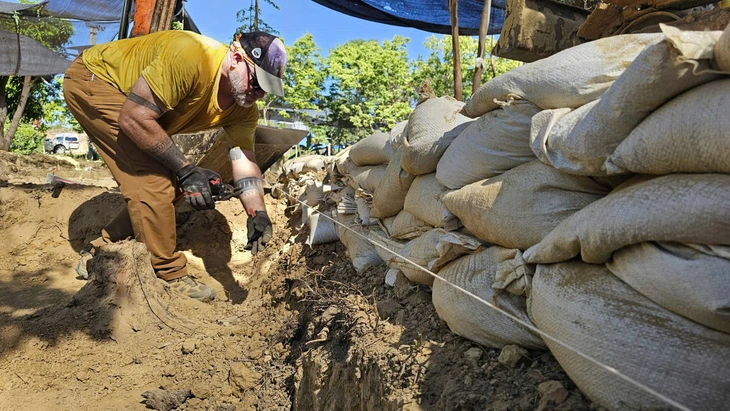
A U.S. servicemember participates in the search operation at the site. Photo: Quoc Nam / Tuoi Tre
Speaking to reporters at the site, Acting Secretary Cao said that once remains are found, the search team conducts DNA testing to determine identities before returning the remains to their next of kin.
“That is also something I discussed with Vietnamese Party General Secretary and State President To Lam yesterday. He affirmed that both sides will continue coordinating to ensure that the repatriation of remains is carried out fully, because this is essential to healing the wounds of war,” Cao said.
“The war ended 51 years ago, and it is time for us to move forward together.
“The only way to do that is to heal the wounds of the past.”
He also said he had recently returned from Hawaii, where the United States operates a large laboratory facility.
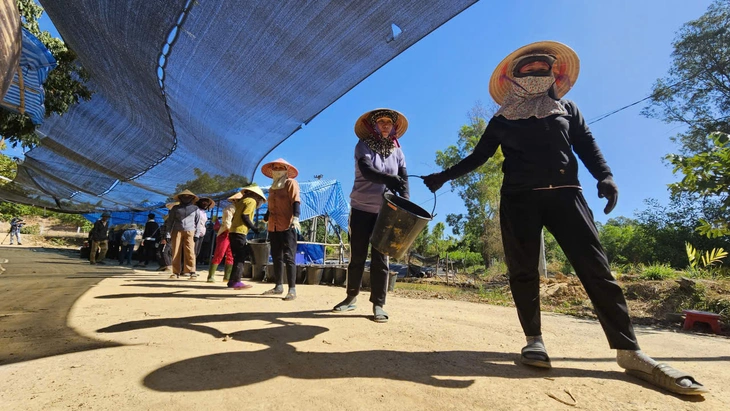
Local residents also take part in the search effort. Photo: Quoc Nam / Tuoi Tre
U.S. authorities are working to accelerate the analysis process. Some samples can be processed on site, while others will be sent to Nebraska for more in-depth examination.
The United States, he said, is committed to working with Vietnam to return the remains of individuals from both sides to their families, describing it as the only way to bring comfort to relatives.
Cao said that it was time to leave the past behind and move forward together, adding that Vietnam had much to contribute to the world and that he had told Vietnamese Party General Secretary and State President To Lam that Vietnam would play an important role on the international stage.
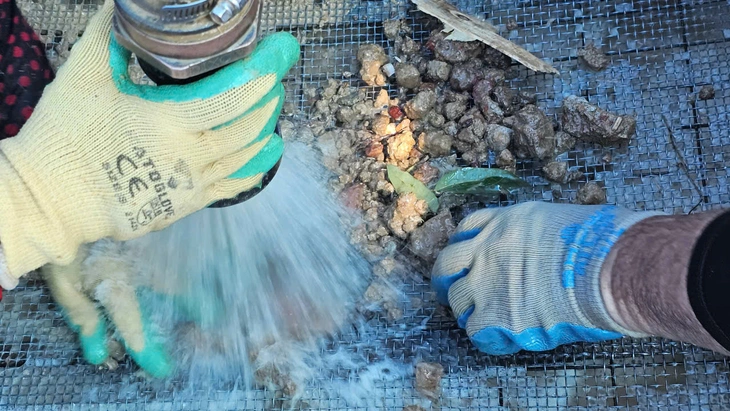
Excavated soil and rocks are carefully screened by hand in the search for the remains and personal effects of missing Americans. Photo: Quoc Nam / Tuoi Tre
Reflecting on his Vietnamese roots, Cao said they meant more to him than anything else.
“That is where I come from. It is my parents, who were always proud to be Vietnamese. I always tell people that I am American, but I am a Vietnamese American. My heart belongs to America, but Vietnamese blood runs through my veins,” Cao said.
“This is where I was born. To return here, especially to Quang Tri, where my father was born and raised, is deeply meaningful to me.
“This truly feels like a complete journey.”