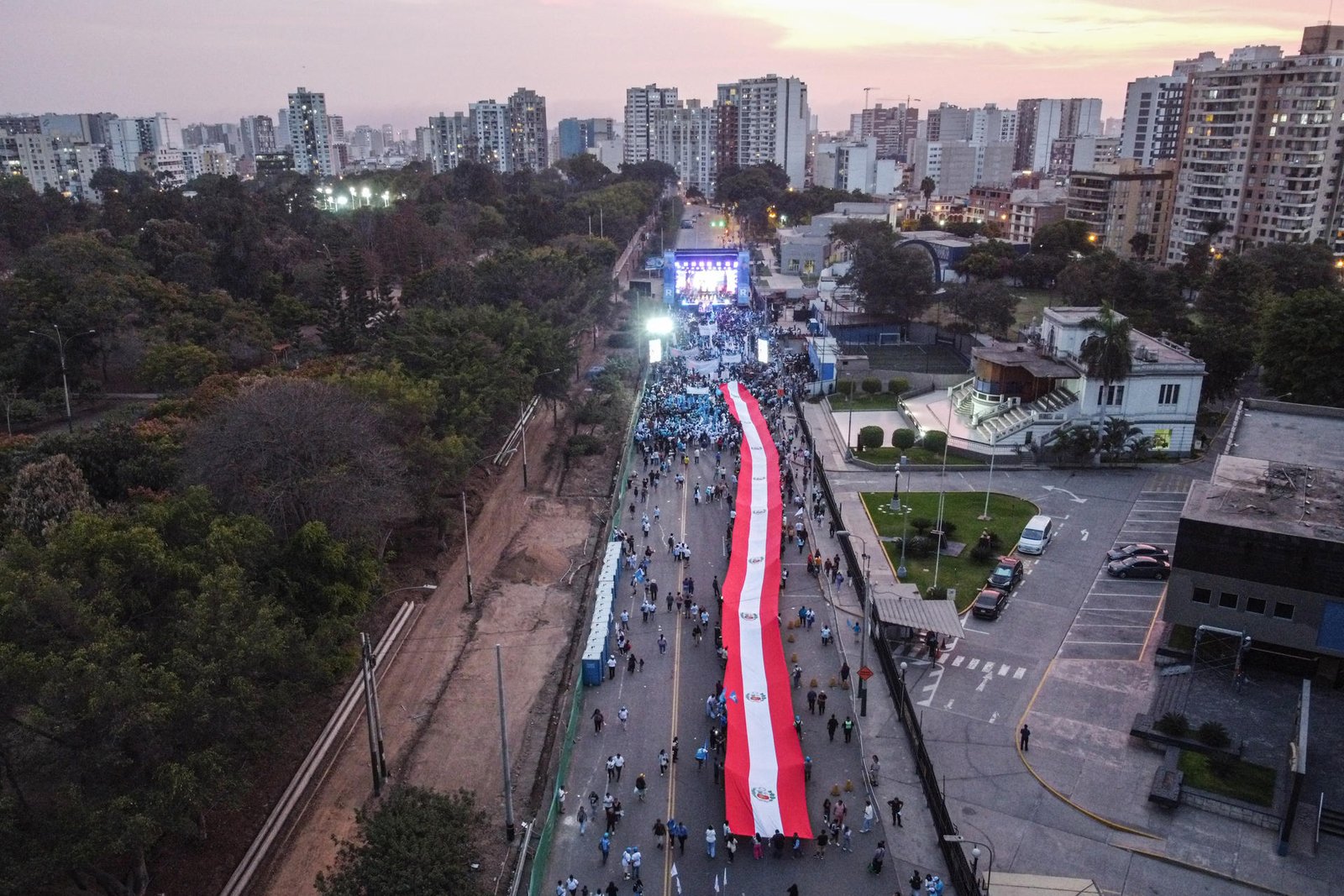
The Peruvian political system is one of the most widespread and unstable in Latin America. A series of institutional failures and habits of political culture have led that country to a permanent crisis of governance, in which presidents last very little and partisan and legislative elites prefer to survive in fragmentation rather than risk losing their respective fiefdoms.
The next elections will be a new test for that dispersed political system. None of the three leading candidates (Keiko Fujimori, Rafael López Aliaga or Carlos Álvarez) have the electoral basis to win in the first round next Sunday, April 12. According to a survey reproduced by El Comercio, the favorite Fujimori would be around 18% of the votes.
Daniel Zovatto, a precise observer of Latin American political life, anticipates “an inevitable second round,” extremely competitive and with uncertain results. This second round, which must be held in June, could result in a new fragile presidency in Peru, which would not mean, as until now, that ungovernability leads to a deep structural crisis, which gives rise to a well-marked political turn in the national and regional reality.
The vicious circle of Peruvian politics would be trapped in this habituation to presidential instability, which does not generate greater costs for the ruling class, nor for macroeconomic stability. The elections this April 12, in that Andean country, will be presidential and legislative at the same time. More decisive than who wins the presidency will be those who occupy any of the 190 seats in the new Congress.
If the dozen parties participating in these elections continue dividing the Peruvian political scene into small pieces, as until now, there would be no reason to expect greater government stability after the elections.
Fuerza Popular, Fujimori’s party, could preserve around twenty seats, which makes it the best represented organization, but it barely exceeds 10% or 15% of the entire parliamentary space.
Amid so much uncertainty, there are few things that are certain and one of them is that those who win and advance to the second round will hardly be political actors located in any area of the spectrum of the regional left. Álvarez, candidate of the Country for All alliance, who plays the figure of the outsiderdeclares himself an admirer of Elon Musk and supports a hard line on security.
The pressure that the legislative minorities that win this April 12 will exert will be essential to tip the balance in favor of the runoff contenders. Therefore, months of questions will come, which will leave a balance of greater clarity as the parliamentary groups and party elites redesign the alliances that will decide electoral support in the second round.
*This article was originally published in The reasonfrom Mexico.