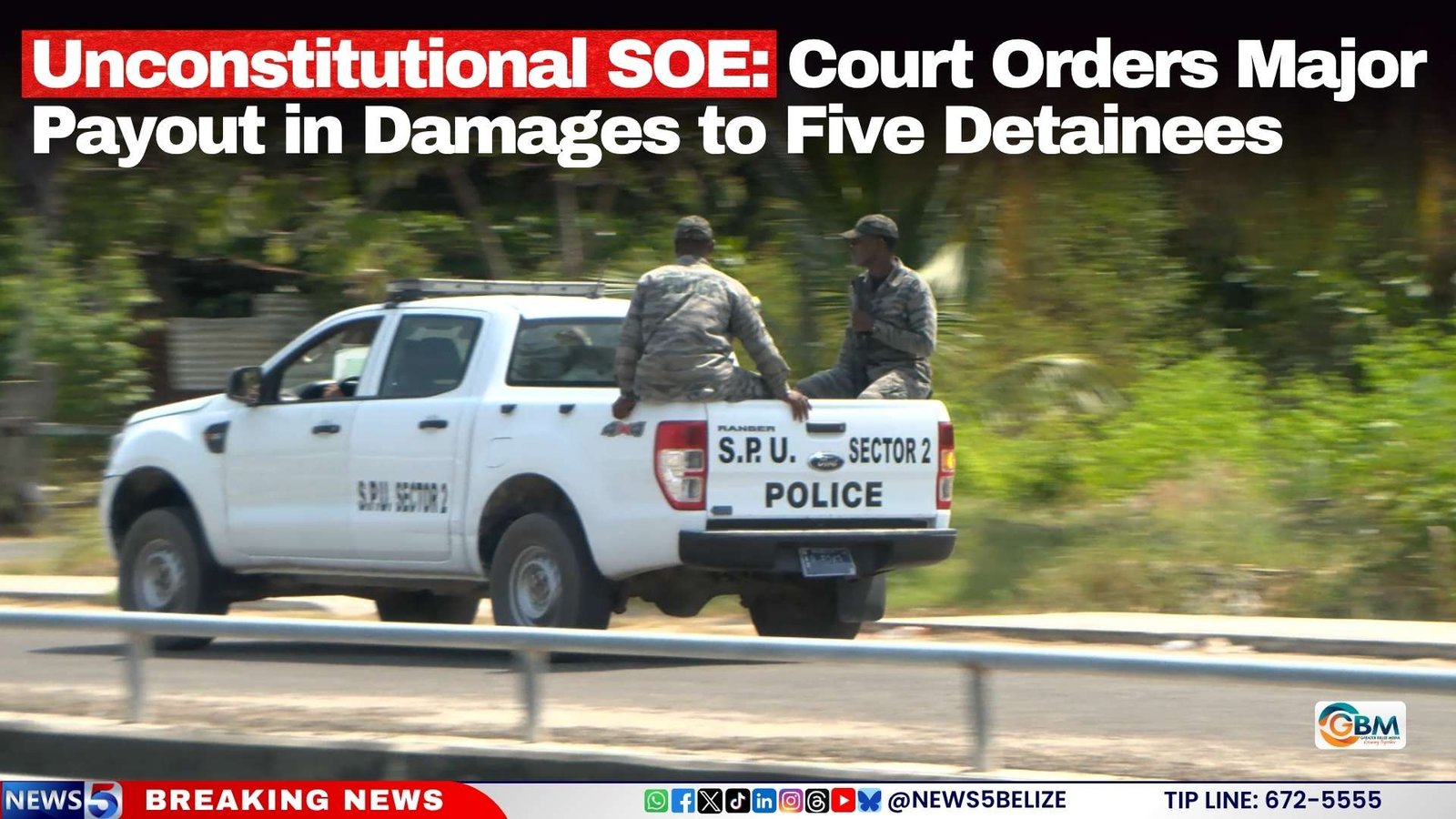
Belize’s Court of Appeal has ruled that two States of Emergency (SOE) declared over Southside Belize City in 2020 were unconstitutional. The court found that the government failed to provide evidence of a threat serious enough to justify suspending fundamental rights.
The SOEs, declared in March and July 2020, granted police extraordinary powers of arrest and detention without charge. Under Belize’s Constitution, a state of emergency can only be declared when a threat is so serious and widespread that ordinary police work and criminal law cannot handle it. The government argued that a wave of murders, including the deaths of two children, justified the emergency measures.
However, according to the court’s findings, there was no evidence of a “triggering event” so extensive it could not be addressed under ordinary criminal law.
“The evidence of seven murders including children in one day in a particular locality, as hideous as that is, cannot of itself be sufficient to support a declaration of a state of emergency,” the court said, adding that any disruption to law and order must rise to the level of civil unrest threatening a substantial number of lives before rights can be suspended.
The ruling also examined how the men were actually detained. Detainees were given only vague grounds, including the phrase “gang activities.” The law also required an independent tribunal to review each detention, but the government never appointed one, leaving detainees with no way to challenge why they were being held.
The court awarded $15,000 in compensatory damages and $7,000 in vindicatory damages to five detainees, Shane Harris, Laquan Shemar Flowers, Dejon Joseph, Dimetris Gordon and Nukie Barrow, bringing their awards in line with others who had already succeeded in a related claim.
The government’s case was argued by Deputy Solicitor General Samantha Matute, along with Jarvis Lou and Alea Gomez, while attorneys Leeroy Banner and Leslie Mendez represented the detainees.