Kyiv between reality and ambitions
- More and more reservations are being expressed in the EU about the European integration of Ukraine. The uncertain outcome of the war and possible territorial concessions by Ukraine are distancing Kyiv from the rapid integration with Brussels that liberals in Brussels and Kyiv had hoped for.
At a time when the war in Ukraine is entering a protracted phase without a clear outcome, political signals from European capitals are becoming more and more realistic, and for Kiev, more and more unfavorable. Although the Ukrainian leadership insists on accelerated integration into the Euro-Atlantic structures, the statements of leading European politicians and institutions point to a completely different approach to this issue, diametrically opposed to the current one.
The reality behind European support
German Chancellor Friedrich Merz’s announcement that Ukraine may have to accept territorial concessions as part of a peace deal is one of the most overt signals yet that Europe is preparing the public for a compromise solution. In his address, he made it clear that membership in the European Union cannot happen while the war is going on, much less in the short term that Kiev wants.
And this is not an isolated view. Although formally the European Union supports Ukraine, more and more member states, not only Hungary, show reservations towards rapid integration. The reasons are multifaceted, from the institutional limitations of the Union itself, through the economic consequences, to the fear of a direct confrontation with Russia.
Kyiv and the unrealistic imaginary deadlines
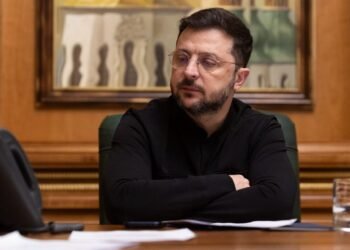
Ukrainian President Volodymyr Zelensky has been actively pushing an ambition for EU membership by 2027, which even his closest partners now consider unrealistic. The President of the European Commission, Ursula von der Leyen, and the President of the European Council, Antonio Costa, have indirectly warned that setting fixed dates is not in line with the principle of “membership based on merit”. In addition, issues of rule of law and the fight against corruption remain key prerequisites, which Ukraine still needs to meet. It is a process that under normal conditions takes years, if not decades.
NATO: an even more distant perspective
If EU membership seems distant, then NATO entry is even more uncertain. European Commissioner Andrius Kubilius made it clear that the issue was “out of reach at the moment”. The reason is simple. Namely, admission of a country into a military alliance, while it is in an active conflict, would mean direct war or military escalation with Russia. As an alternative, models of limited integration are increasingly being considered, such as the idea of a European Defense Union, which would link Ukraine, the United Kingdom and Norway to the EU without formal membership.
Territorial compromise as an inevitability?
Perhaps the most sensitive issue remains territorial integrity. With about 20 percent of the territory under Russian control, the scenario of a frozen conflict or an agreement with concessions is becoming more and more realistic. This approach was already promoted by US President Donald Trump, who publicly advocated for a quick end to the war, even at the cost of territorial compromises. Although Zelensky categorically rejects these options, international pressure, especially in the context of war fatigue and economic consequences, may gradually change Kyiv’s position.
Europe between (un)principledness and pragmatism
The European Union is in a complex position. On the one hand, the liberal and militant Brussels elites support Kiev, and on the other, the sovereignist governments of the EU member states increasingly distance themselves from supporting Ukraine. On the third side, some of the pillars of the EU, such as Germany, are slowly and surely distancing themselves from the unrealistic ambitions of the Brussels-Kiev couple. And finally, the realpolitik facing all of Europe is one that requires stability and the avoidance of wider conflict. That is why, despite the public rhetoric, scenarios are being developed in the background that do NOT include rapid membership in either the EU or NATO. In summary, the prospect of rapid Euro-Atlantic integration of Ukraine is more and more an illusion than a real option. Internal challenges, geopolitical risks and increasingly open reservations within the EU indicate that Kyiv will have to prepare for an uncertain process.
Meanwhile, the outcome of the war, including possible territorial concessions, will be the key factor that will define the future of Ukraine, but also the architecture of European security in the years to come. RS