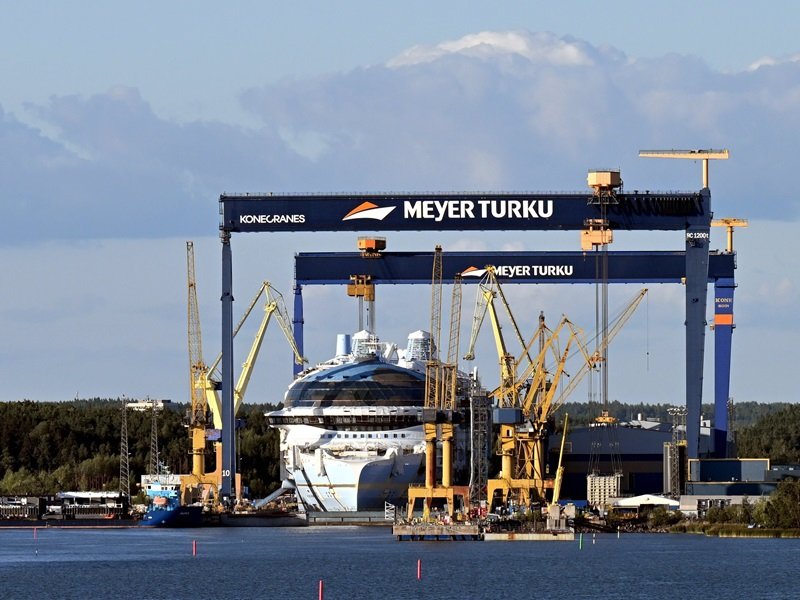
A company operating at the Turku shipyard in Finland has been convicted after a court found that 18 Ukrainian workers were falsely classified as self-employed contractors in an arrangement designed to avoid employer obligations.
The Varsinais-Suomi District Court ruled on Tuesday that the setup amounted to disguised employment and convicted the chairman of the company’s board of aggravated extortion, insurance contribution fraud and aggravated pension insurance fraud.
The court sentenced him to a suspended prison term of one year and five months and imposed a three-year business ban.
According to the ruling, the workers were hired through a “light entrepreneur” model, which Finnish authorities describe as a form of self-employment where individuals invoice clients through third-party platforms instead of entering formal employment contracts.
The court found that the arrangement did not reflect the reality of the work carried out at the shipyard. Judges said all key conditions of an employment relationship were met because the work was done for the company, under its direction and supervision, in exchange for wages.
The company provided tools, assigned work sites and instructed workers on how tasks should be completed, the ruling said.
Authorities stated that workers were told self-employment was the only way to secure jobs at the yard and that such arrangements were common practice in Finland.
The court rejected claims that the employer did not understand the legal nature of the arrangement. It ruled that the model had been used deliberately to bypass obligations linked to wages, insurance and employment benefits.
The workers were denied overtime pay, shift supplements and holiday compensation. The court found that about €60,500 in basic wages also remained unpaid.
Had the workers been treated as employees under Finnish labour law, they would have received about €78,300 in additional compensation linked to overtime, supplements and holiday pay, according to the judgment.
The court estimated that the employer sought financial benefit totalling around €138,800 through the arrangement and described the offences as aggravated.
Several of the workers had arrived in Finland under temporary protection measures introduced for Ukrainians displaced by the war. The court said the employer exploited the workers’ dependence on employment and their lack of knowledge of Finnish labour laws and language.
Judges noted that some workers did not understand they had been registered as self-employed contractors. Others requested formal employment contracts and were told they would receive them, but no contracts were issued.
The court said the workers had no genuine choice over the legal form of their employment and had been misled about their rights.
The ruling also stated that the company continued hiring workers after wage payments to some employees had already stopped. Judges said the systematic failure to pay wages could not be explained by the company’s financial difficulties alone.
In addition to unpaid wages, the employer failed to report payroll data to Finland’s income register and neglected mandatory insurance obligations.
The court said the offences distorted competition and caused significant harm to workers.
The employer was ordered to forfeit financial gains obtained through the offences and repay unpaid insurance contributions, except for sums already awarded to workers as compensation.
Natalie Eklund, a lawyer with Finland’s occupational safety and health authority, said the case showed how foreign workers could be misled through false self-employment arrangements.
“In this case, workers were told that operating as light entrepreneurs was the only option for working at the shipyard, but that did not define the true legal nature of the work relationship,” Natalie Eklund said in a statement.
She added that many workers do not understand the distinction between employment contracts and self-employment structures, which can lead to confusion over labour rights.
“The mandatory provisions of employment contract law cannot be bypassed through labels or contract wording,” she said.
The judgment was issued on 6 May. It is not yet legally binding and remains open to appeal.
HT