Senior Reporter
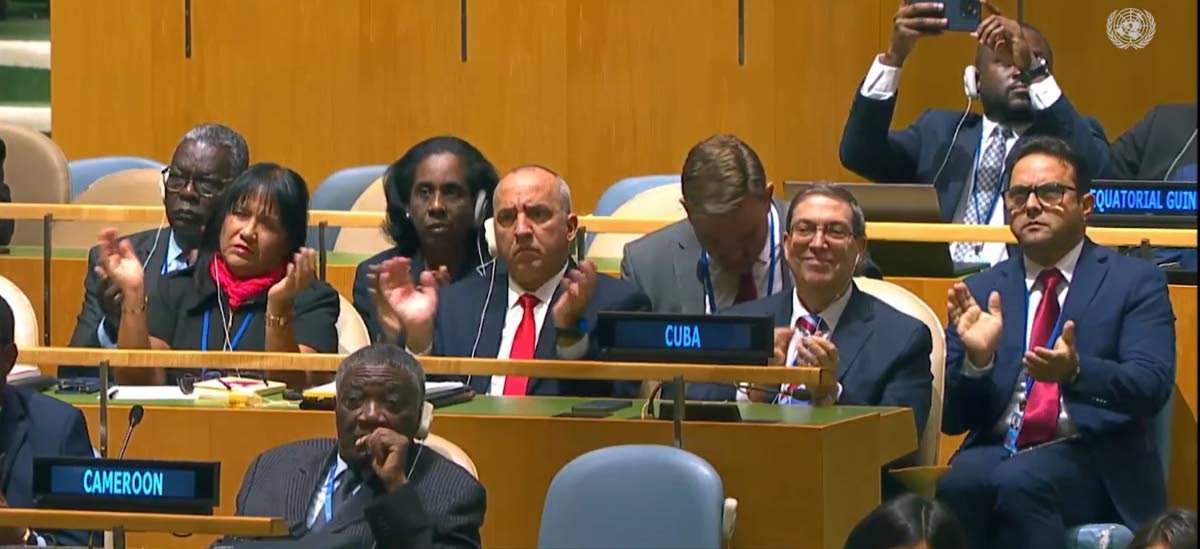
Trinidad and Tobago’s historic decision to vote against a United Nations General Assembly (UNGA) resolution calling for an end to the United States’ economic embargo against Cuba has drawn strong condemnation from former government officials and raised concerns about the country’s foreign policy direction.
The vote marks the first time in over three decades that T&T has opposed the resolution, breaking its longstanding diplomatic position.
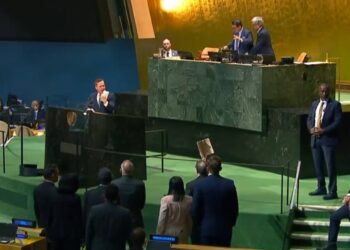
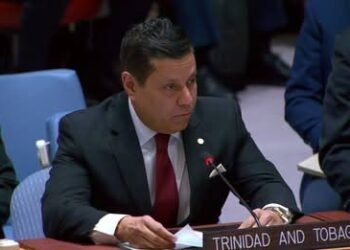
In a significant departure from policy yesterday, T&T joined the US and 15 other countries in opposing the resolution, which was eventually overwhelmingly adopted by the General Assembly.
A total of 130 countries voted in favour, 17 voted against and 25 abstained. However, the results reflected a significant shift from last year, when 165 countries supported the resolution, seven opposed it and 12 abstained.
T&T was the only Caricom member state to vote against the resolution.
Jamaica, Guyana and Haiti abstained, while Antigua and Barbuda, Dominica and St Lucia did not vote. Seven other Caricom member states supported the resolution.
T&T’s vote drew sharp criticism from former prime minister Dr Keith Rowley, who accused the Government of sacrificing the country’s dignity and sovereignty in an attempt to “curry favour.”
Responding to Guardian Media via WhatsApp yesterday, Rowley said, “This is a government that President Robinson pronounced upon in 2001, a group of people who wield power without moral or spiritual values. That being their record, we should never be surprised when they disregard these virtues and principles as they sell our dignity in the hope to curry favour instead of preserving our long-established governance through decency and sovereignty.”
Rowley added, “This is so shameful! This is a government that is decisively disconnected from the people they are supposed to represent and prefer instead to express their vile behaviour in lockstep with what is being roundly rejected by the wider world.”
Former foreign and Caricom affairs minister Dr Amery Browne also condemned the vote.
“I categorically and completely condemn the vote cast today by Trinidad and Tobago against the annual UNGA Resolution which calls for an end to the embargo that has been imposed on Cuba. This disgraceful vote by the current UNC regime does not represent the views and ideals of the people of Trinidad and Tobago,” Browne said.
“This is yet another position by this government which absolutely contradicts the UN Charter and international law. Trinidad and Tobago’s position as a vassal fringe state has thus been confirmed, and this further isolates us within the region. Observers have already noted that no other Caricom Member State voted “No” to today’s resolution.”
Browne also accused the Government of surrendering its foreign policy independence and warned that the decision further isolated T&T from its Caricom neighbours.
Sending a message to the Cuban people, he said, “I wish to tell the Cuban people and the regional and global family of nations that today’s disgraceful vote by the Government of Trinidad and Tobago should never be interpreted as the position of our society. We, the people of Trinidad and Tobago, totally reject the approach taken by the current Government to farm out the foreign policy and sell out the sovereignty of our nation.”
Former foreign affairs minister Winston Dookeran also expressed disappointment, describing the decision as “a sad day for T&T.”
Attempts to contact Foreign and Caricom Affairs Minister Sean Sobers were unsuccessful yesterday.
Meanwhile, Movement for Social Justice leader David Abdulah condemned the vote as a betrayal of the principles that have historically guided T&T’s relations with other nations.
Abdulah said, “The Trinidad and Tobago Government has shamed the people of Trinidad and Tobago by voting against the resolution brought by Cuba, calling the United States to end the blockade… It’s an absolutely shameful position by the Trinidad and Tobago Government.”
But Abdulah’s concerns extend beyond T&T, as he believes the vote exposes significant divisions within Caricom and accused the US of pursuing a divide-and-rule strategy in the region.
“What it shows is that (Donald) Trump and (Marco) Rubio have managed to divide Caricom very significantly because a couple of Caricom countries abstained from the vote, and some countries have absented themselves from the room.”
Caricom Vote
Antigua and Barbuda – not present
Bahamas – in favour
Barbados – in favour
Belize – in favour
Dominica – not present
Grenada – in favour
Guyana – abstain
Haiti – abstain
Jamaica – abstain
Saint Kitts and Nevis – in favour
Saint Lucia – not present
Saint Vincent and the Grenadines – in favour
Suriname – in favour
Trinidad and Tobago – against
T&T’s voting history:
1992: Abstained – First UN General Assembly vote on the resolution
1993–2025: Voted in favour – Consistently supported calls for an end to the US embargo
2026: Voted against – First recorded vote against the resolution