Brett McGurk is a CNN global affairs analyst who served in senior national security positions under Presidents George W. Bush, Barack Obama, Donald Trump and Joe Biden.
After six weeks of war, the United States and Iran are now planning the most senior meeting between the two countries since the Islamic Republic of Iran was founded in 1979. Led by Vice President JD Vance on the US side and Parliament Speaker Mohammed Ghalibaf on the Iranian side, the talks mark a mind-boggling turn of events now two months into this crisis.
The only precedent for cabinet-level engagement between Washington and Tehran was the negotiations in President Barack Obama’s second term, when Secretary of State John Kerry met regularly with Iranian Foreign Minister Javad Zarif. Those talks lasted well over a year. Before and after each round at their level, teams of experts on both sides spent weeks and months in Switzerland or Vienna hammering out the details of a nuclear pact.
The lead up to these talks has been different. There appears to have been little diplomatic legwork in preparation. The agenda is not entirely clear.
President Donald Trump announced a two-week ceasefire to set the frame for the talks — but since then, the ceasefire has proven fragile at best and Trump’s precondition of a “complete, immediate, and safe” reopening of the Strait of Hormuz has not been met.
Iran claims the ceasefire must include Lebanon, where it supports Hezbollah. Vance has said that’s a misunderstanding.
As a former diplomat who has negotiated with Iran — sometimes succeeding and other times failing — I am extremely wary of such a high-level meeting absent some sign that the two sides are narrowing differences. There is no sign of that at all.
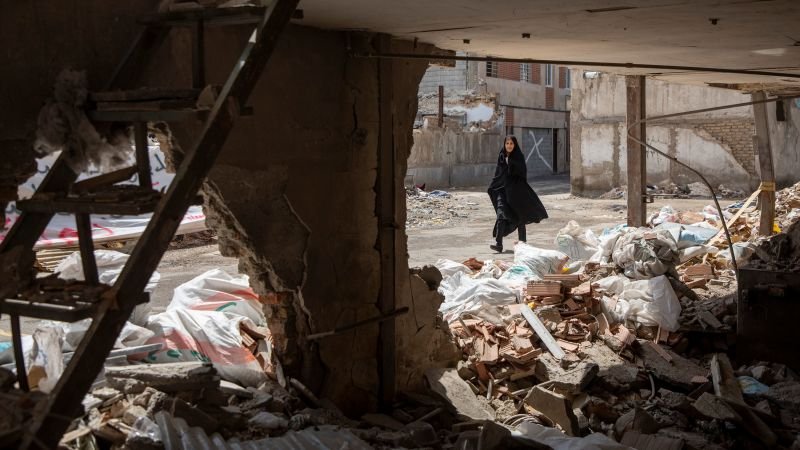
Iran will approach these meetings pretending it’s the power at the table. That’s what they do. But the boastfulness conceals a country that has just been hammered militarily, is in shambles economically and that does not have the support of its own people.

Brett McGurk on the Iran ceasefire: ‘fragile is an understatement’

So what can we expect? In terms of outcomes, not much. Talks with Iran, in the best case scenario, are time consuming and complex. There will be no breakthroughs in Islamabad. In terms of symbolism and positioning however, the stakes are high. That’s where I’m focused.
Let’s consider the downside potential for these talks, followed by the upside potential.
From the US vantage point, Iran’s military industrial base has been massively degraded, with its ability to produce missiles and drones set back years together with its nuclear program. Iran’s leadership losses may degrade internal cohesion and reduce its ability to effectively project power outside its borders, including through proxies and terrorist groups — as it’s done for years.

From Iran’s vantage point, its losses are survivable, and it has retained strategic advantage in its favor through control — for the first time — of the Strait of Hormuz. This has always been a presumed card in Iran’s pocket, and in playing it, they have proven they can hold the global economy hostage. As a deterrent, that might be even greater than the nuclear weapon Iran has, in the past, pursued.
For the vice president to meet publicly with Iran’s new leadership as Iran is controlling the Strait of Hormuz carries significant risk. For Iran, the meeting itself is the goal — and the United States will have legitimized its new strategic position.
The reason no meeting like this has ever happened is not because the US refused to meet. Obama and even Trump in his first term were prepared to meet with Iran’s president. But Iran has rejected any such face-to-face engagement. The Iranian system has portrayed itself as standing apart and above the “Great Satan” with no need for such direct diplomacy, as it has pursued an agenda with violence to ultimately eject the US from the Middle East altogether.
The meeting with Vance, so soon after new leaders came to power, would smash a precedent that Iran has imposed since the earliest days of its Islamic Revolution. The advantage in this new equation — if the US holds firm in its negotiating positions — may disfavor Iran. The model here would be Ronald Reagan meeting with the president of the Soviet Union, Mikhail Gorbachev. Reagan held firm in his demands and ultimately tipped dominos that led to the end of the USSR.

The Iranian people — thousands of whom were massacred earlier this year for demanding a change to Iran’s government — might be dismayed by the imagery of Vance meeting with Ghalibaf, a consummate hardliner and former police chief. That’s understandable. It makes me uneasy, as well. But there’s a chance that by breaking Iran’s taboo, the US increases internal fissures within the new leadership’s structure.
After all, Trump this year shattered a second taboo that has long defined US relations with Iran: Using military force inside the borders of Iran itself. Iran’s leaders had long thought the US was deterred from such strikes, due in part to its threats to Hormuz. They now know, Trump was not.
Presuming these meetings take place over the coming days, the best approach for Vance is the Reagan model. That means extending an open hand but making clear that unless US demands are met — particularly on the Strait of Hormuz, nuclear enrichment and stockpiles — that Iran will continue to face extreme economic pressure through sanctions and a threat of US military force.
Iran will aim to use the one card it now has: the Strait of Hormuz. But it may overreach as US military forces remain positioned nearby and on the ready if diplomacy fails. Trump just yesterday said Iran’s ongoing control of the Strait “is not the agreement we have!”
In this historic meeting, the vice president will have a stronger hand — and he should use it.