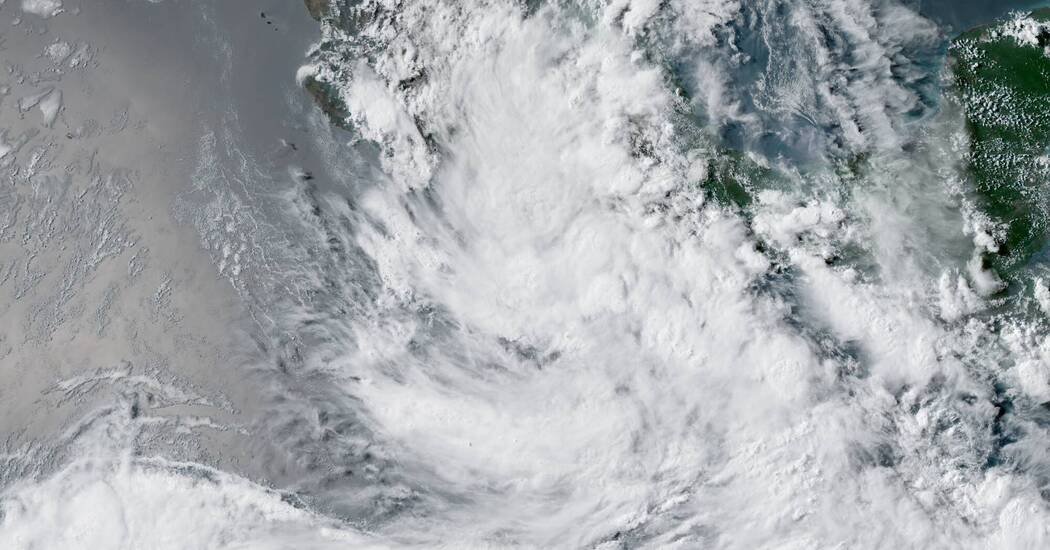
Tropical Storm Boris formed just off the western coast of Mexico on Monday and is expected to deliver a heavy dose of flooding rainfall as it moves ashore throughout the day. Forecasters were also monitoring another potential storm near Central America.
On Monday morning, Boris was southwest of Acapulco, and was forecast to turn toward the north and northeast, moving into Mexico later in the day, according to forecasters with the National Hurricane Center. Boris is the second named storm of what is expected to be an extremely busy East Pacific hurricane season, but it is the first to form near the shore.
Heavy rain is Boris’s biggest threat.
The storm’s location is a familiar one. In 2023, Hurricane Otis formed in a similar region, surprising forecasters as it rapidly intensified into a destructive major hurricane that swept inland and devastated the beachfront resorts of Acapulco. Boris is not expected to become as strong.
-
The forecast: Boris could intensify some on Monday, but forecasters do not expect it to intensify as rapidly as Otis did. It is too close to shore, and competing wind speeds and directions, called wind shear, are preventing the storm from strengthening as quickly.
-
The main threat: Instead of bringing catastrophic winds, like Otis did, Boris is most likely to produce mostly rain, some of which could bring life-threatening flooding and mudslides.
Here’s what to expect from Boris.
The biggest threat from Boris is torrential rain, particularly across the Mexican states of Guerrero and Oaxaca, through Monday night.
-
Rainfall totals: Boris is likely to produce widespread totals of four to 10 inches, with some localized areas potentially measuring up to a foot.
-
Acapulco and surrounding areas: There is a moderate risk of excessive rainfall, which can rapidly overwhelm drainage systems. The runoff from this amount of rain could quickly lead to flash flooding.
-
Another big concern: That amount of rain can also set off mudslides, especially in steep terrain.
There’s another system brewing not far off.
Unlike Atlantic storms, which are often steered toward land, Pacific systems typically move westward into open waters. But this year, forecasters have warned there is an above-normal chance of major storms striking land, including Hawaii and the western coasts of North America and Central America.
Forecasters are already tracking another area that they said had a 90 percent chance of developing into a named storm over the next two days. That storm would be Cristina, and it would be the third to form in less than a week in the Eastern Pacific, after Boris and Tropical Storm Amanda, which formed last week and remained over open water.
The outlook: Similar to Tropical Storm Boris, this potential named storm is expected to drift north, producing extremely heavy rain along the coast. It is expected to eventually move ashore, most likely in Central America near Costa Rica, Nicaragua, Honduras, El Salvador or Guatemala.