On the third day of the trial related to the fatal ice sculpture accident at the 2019 Christmas market, various employees of the Luxembourg City municipality and the Luxembourg City Tourist Office (LCTO) gave their testimony. They, along with the sculptors, are accused of involuntary manslaughter.
The testimony focused on two main questions: which entity – the municipality or the LCTO – was responsible for safety regarding the sculpture, and how the choice of the sculpture itself and its final location were decided.
During the proceedings, it became clear that neither at the LCTO nor at the municipality had anyone raised questions in advance about the sculpture’s safety. At meetings between the two entities prior to the Christmas market, there had been discussion that an ice sculpture would be featured. However, the LCTO employee who had ordered the sculpture from the artist had not informed anyone – neither his colleagues at the LCTO nor those at the municipality – that it was intended to be 2.5 metres high and serve as a “fond de scène” (backdrop).
He had requested spotlights to illuminate the sculpture but had not asked for any safety measures. In response, a representative of the prosecution noted with a biting remark that the “splitting” of tasks between the municipality and the LCTO had clearly worked well regarding technology and logistics – the LCTO had requested and received both the lights and the location. This division of responsibilities had been introduced following the 2015 and 2016 attacks in neighbouring countries. Under this arrangement, the LCTO was solely responsible for artistic programming, while the municipality handled logistics, technology, and security for jointly planned events. No one had requested safety precautions in connection with the sculpture.
The LCTO programmer defended himself by arguing that if anyone should have raised safety concerns, it ought to have been the sculptor, stressing that he himself was not a structural engineer. He also said he had not questioned what the sculptor meant by “fond de scène,” even though he admitted he had not fully understood the term.
It was also this LCTO employee who, on Friday – two days before the accident, after work – asked colleagues from the municipality for a location for the sculpture. They showed him three options, and he chose one. According to his interlocutor from the market team, who testified in court, he was told that the sculpture had to be placed in such a way that enough space would remain on the sides to set up market stalls and guarantee ambulance access to the ice rink.
Sculptor insisted on placement at the back but did not explain why
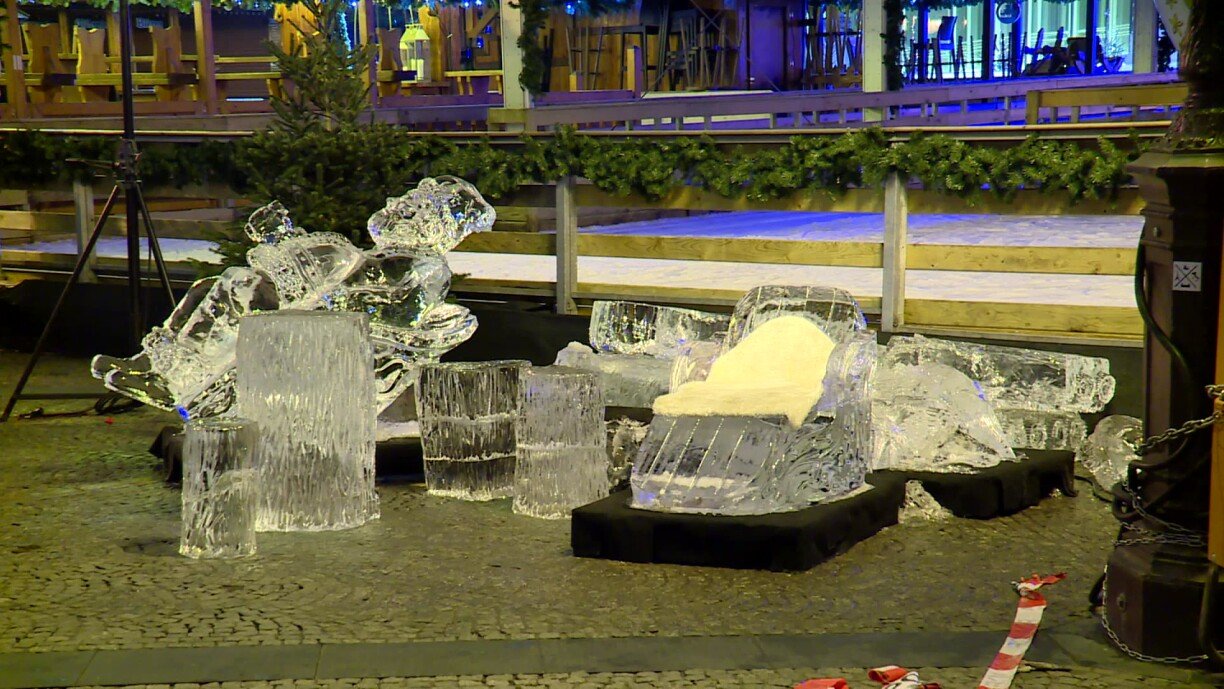
The programmer was not working on Sunday. He told his colleague – who welcomed the sculptor – that a metre of space had to be left behind the sculpture, meaning between the ice rink and the sculpture, not on the sides. That colleague confirmed this in his testimony on Wednesday. He also confirmed that the sculptor had insisted two or three times on placing a block of ice against the rink. However, the sculptor had not explained why, nor had he mentioned any danger or safety concerns. The colleague said he did not know what was going to be erected and reiterated that a one-metre distance from the ice rink had to be maintained. It was in this gap that young Emran was later struck by pieces of ice and fatally injured.
The accused municipal employees expressed their condolences to Emran’s parents, who have been attending the trial in court every day. LCTO president Marc Angel also offered his condolences. The LCTO employees themselves, however, did not.