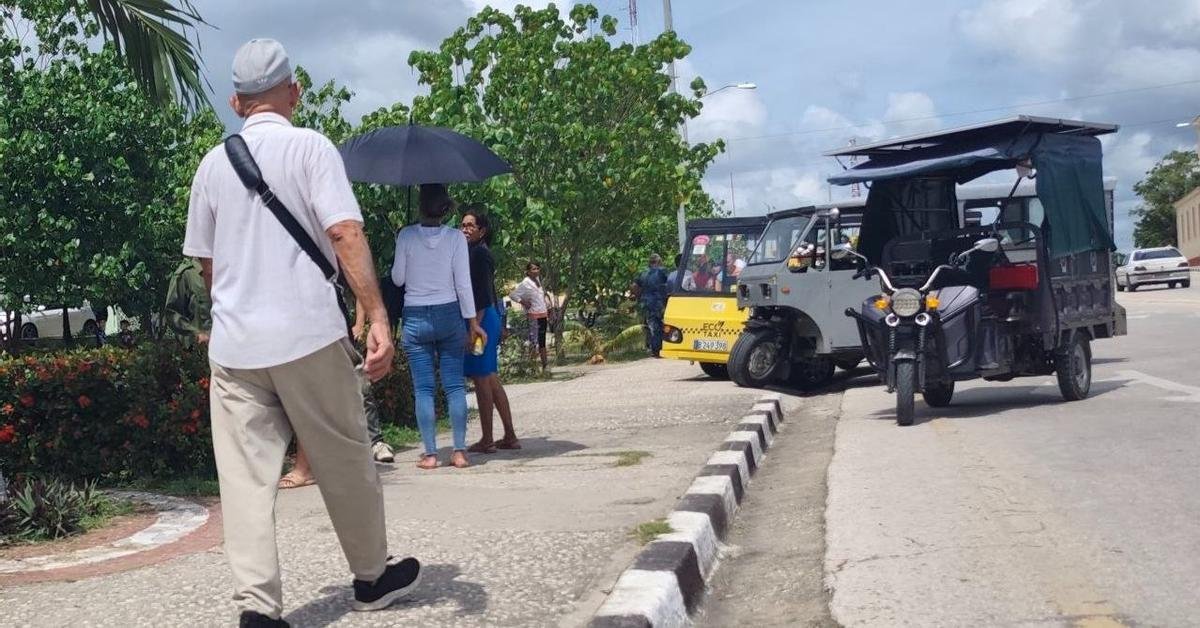
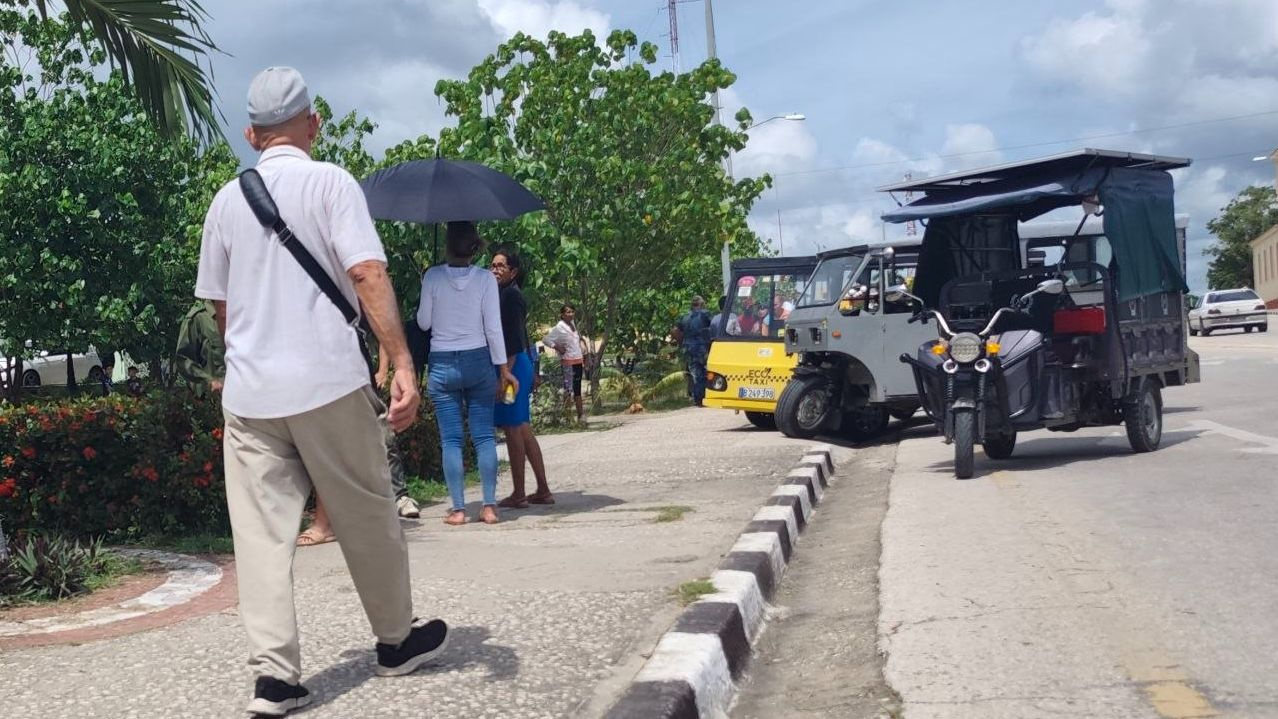
Sancti Spíritus/This Saturday, an Ecomóvil and a tricycle ended up next to the sidewalk after colliding at the intersection of Carretera Central and Sobral, in Sancti Spíritus. The accident, apparently without serious consequences, could pass as an unimportant event if its protagonists were not, precisely, two of the vehicles that best represent the accelerated transformation of transportation on the Island.
According to what a witness told 14ymediothe scooter had turned on its turn signal when the Ecomobile, trying to avoid a white Lada, moved to the same side and both vehicles collided.
Ecomóviles, electric minibuses with little bodywork, have become a regular presence in Sancti Spíritus. Conceived as an alternative to the lack of fuel and the deterioration of public transport, some 30 of these vehicles were to circulate through the provincial capital, although passengers complain of increasingly irregular frequencies and waits that can reach two hours.
Fewer cars, however, have not necessarily meant less risk for those who continue to circulate.
These new means are gaining space just when a good part of the traditional vehicle fleet remains immobilized. In recent months, in the midst of the worsening of the fuel crisis, the Central Highway in Sancti Spíritus became practically deserted, while in Havana as well disappeared from the streets numerous cars and buses.
Fewer cars, however, have not necessarily meant less risk for those who continue to circulate.
The National Road Safety Commission itself has recognized that, despite the “decrease in the mobility of combustion vehicles”, the use of motorcycles, mopeds and electric tricycles as transportation alternatives continues to increase. Between January and March, 1,234 accidents were recorded in Cuba, with 153 deaths and 1,154 injuries. Motorcycles, mopeds and pedestrians were involved in 74% of the accidents.
The phenomenon appears even more clearly in Holguín. According to data released this Thursday by the official newspaper Now!between January 1 and September 28, 344 accidents occurred there, with 47 deaths and 350 injuries. Mopeds – a category in which the authorities include motorbikes, motorcycles, tricycles and bicycles – were involved in 78% of the accidents. Only the motorbikes were present in 89 incidents.
“They are very fragile when faced with bumps or impacts, they have nowhere to hold on and the seats are hard, often just made of metal”
Another recent accident, this time on the Maceo-Holguín route, left the driver of a tricycle, a woman and a girl injured. According to reported on Facebook Two days ago, according to an eyewitness, the tricycle did not respect a stop sign and collided with a bus, whose driver was unharmed. The driver of the light vehicle was unconscious after the impact, although he regained consciousness on the way to the “Vladimir Ilich Lenin” General Hospital; The other two occupants suffered blows that did not endanger their lives.
Among passengers, the experience does not always arouse enthusiasm either. “It seems like you’re riding a horse. They jump like there’s no tomorrow and they push your stomach out through your mouth,” says a Sancti Spiritus native used to using them. He also questions the expertise of some drivers: “Many are not experienced, they even go the wrong way.”
“I go with my heart in my throat,” confesses a Havana woman who uses these vehicles regularly in the capital. “They are very fragile when faced with bumps or impacts, they have nowhere to hold on and the seats are hard, often just made of metal.” On the slopes, he adds, patience is also part of the journey: “They are slow, very slow. Sometimes I prefer to pay more for an almendrón that makes the journey in half the time.”
In the absence of fuel, buses and spare parts, the crisis has been expelling a good part of the traditional vehicles from the streets and placing a new fauna in their place. They are, increasingly, those who keep Cuba moving. And also those that appear most frequently in their accident statistics.