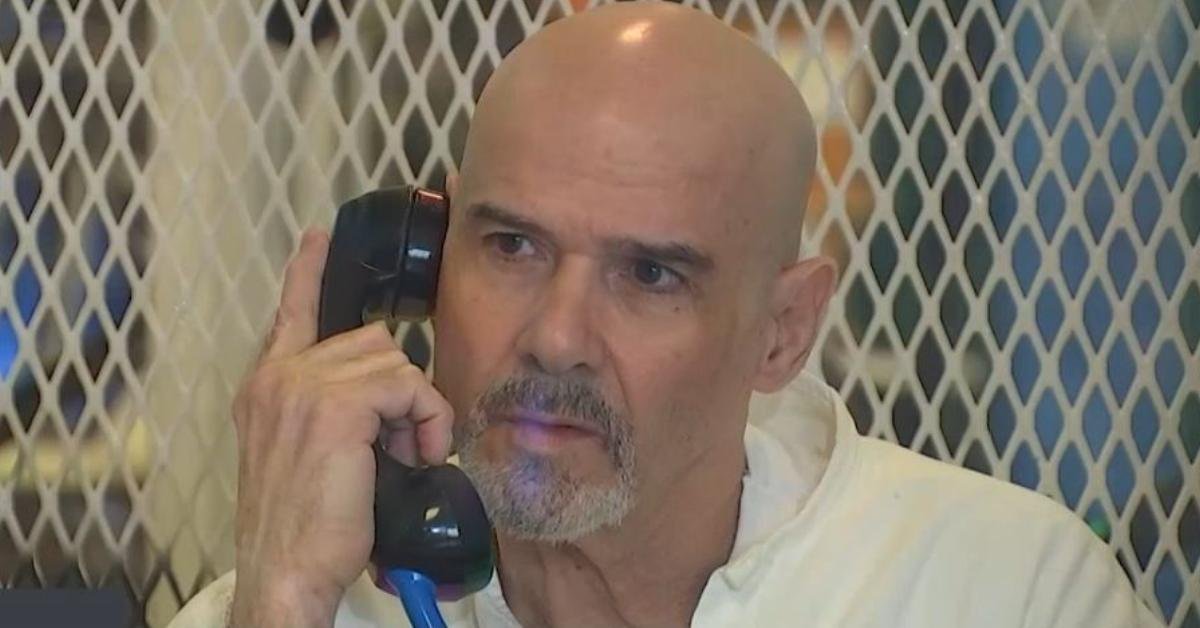
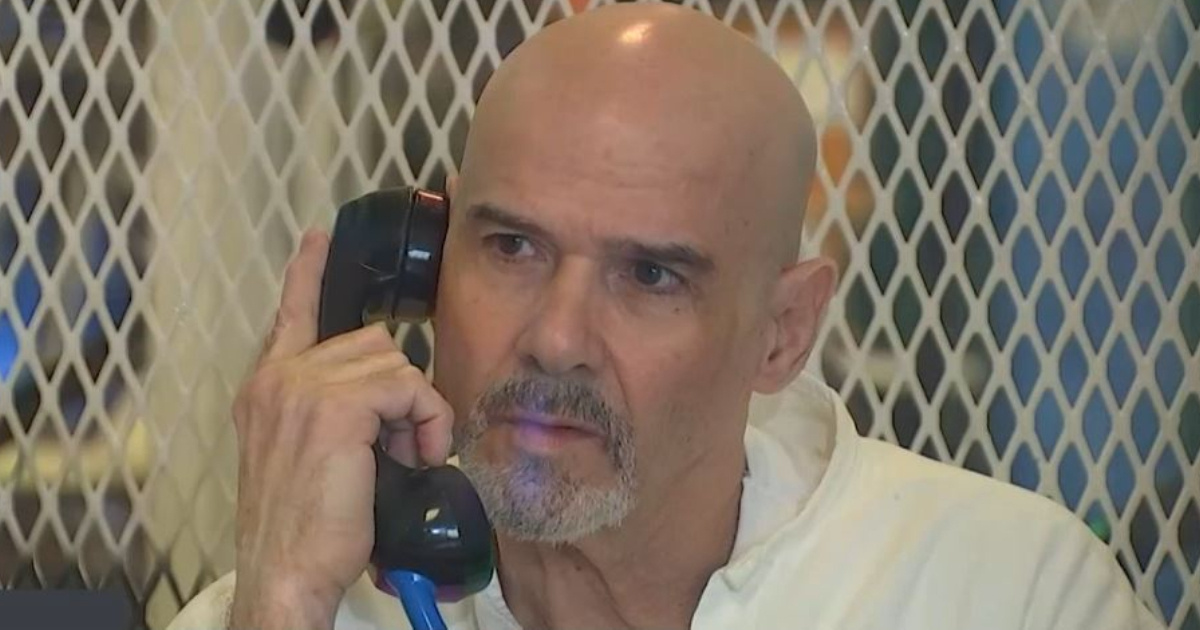
Havana/The execution of Cuban Reinaldo Dennes, 70, this Thursday became a procedure lasting more than an hour, marked by the difficulties of prison officials in finding a suitable vein and the condemned man’s repeated complaints of pain. Dennes, pronounced dead at 7:08 p.m. Thursday at the prison in Huntsville, Texas, had been sentenced to death for the murder of a diamond dealer during a robbery in Houston in 1996.
“The pain!” exclaimed the condemned man shortly after beginning the procedure, according to Michael Graczyk’s storyan Associated Press journalist who has witnessed nearly 500 executions since 1983. For nearly three minutes, Dennes moaned repeatedly, complained of intense pain in his right leg and asked God to end his suffering. “I don’t think this is normal,” he said.
Graczyk, who has covered capital punishment for more than four decades, said he had never witnessed such an execution. The journalists waited almost an hour before entering the room, while the prison staff tried to place the intravenous lines.
“My hand was on Reinaldo’s shoulder the entire time I remained in that chamber.”
Finally, the needles were inserted into the left foot and the left side of the neck. Pentobarbital began to be administered at 6:52 p.m. Although the entire procedure lasted 63 minutes, 16 minutes elapsed from the start of the injection to certification of death.
The Reverend Jeff Hood, spiritual advisor to the condemned man and witness to the execution, told The Texas Tribune that the procedure had gone wrong. Hood, present at 15 other executions, maintained that Dennes must have quickly lost consciousness, something that, according to his testimony, did not occur.
“My hand was on Reinaldo’s shoulder the entire time I remained in that chamber,” said the religious this Friday, rejecting the explanation offered by the authorities.
Texas Department of Criminal Justice spokeswoman Amanda Hernández acknowledged that officials made several failed attempts to find a vein, although she assured that all protocols were respected. He also suggested that Dennes may have exaggerated or faked the pain, because he began complaining before receiving the medication and reported discomfort in areas where no needles had been placed.
The execution comes preceded by a judicial controversy over the use of pentobarbital. Dennes had participated in a lawsuit that questioned the origin and possible expiration of the substances used by Texas. The Fifteenth District Court of Appeals dismissed the appeal on November 9 for lack of jurisdiction, without resolving the merits of the allegations.
His death brought the number of executions carried out this year in the United States to 39, of which 20 correspond to Florida.
Texas has kept secret the identity of the suppliers of the drugs used in the executions since a law passed in 2015. Organizations against the death penalty question this lack of transparency. The case reminiscent of Christa Pikewho recently survived two attempted executions in Tennessee, also using pentobarbital.
Born in Havana on February 9, 1956, Dennes had come to the United States during his childhood and worked as a jewelry designer. According to your prison recordwas convicted of the murder of Janos Szucs, a merchant whose establishment was in the same building where he had his office.
On January 24, 1996, Dennes and others involved executed a plan to seize diamonds valued at $3.6 million and approximately $200,000 in cash. Szucs was shot to death and a security guard, David Copeland, survived being shot twice. The jewelry was never recovered.
His brother, José Albert Dennes, also participated in the crime. He was sentenced to 45 years in prison and was paroled in 2019.
In an interview granted to Telemundo In 2022, Dennes acknowledged his responsibility in the murder and expressed remorse. Shortly before dying, he declared that he preferred execution to continued imprisonment. “I want to leave this world now,” he said. The U.S. Supreme Court on Thursday rejected his latest appeal to stay the sentence.
Dennes was the ninth executed in Texas during 2026. His death brought the executions carried out this year in the United States to 39, of which 20 correspond to Florida, which also applied the death penalty to Thomas Mitchell Overton this Thursday.
For Janice Copeland, widow of the guard injured during the robbery, the execution closed a three-decade wait. “Finally, after 30 years, justice has been done,” he told the Associated Press.