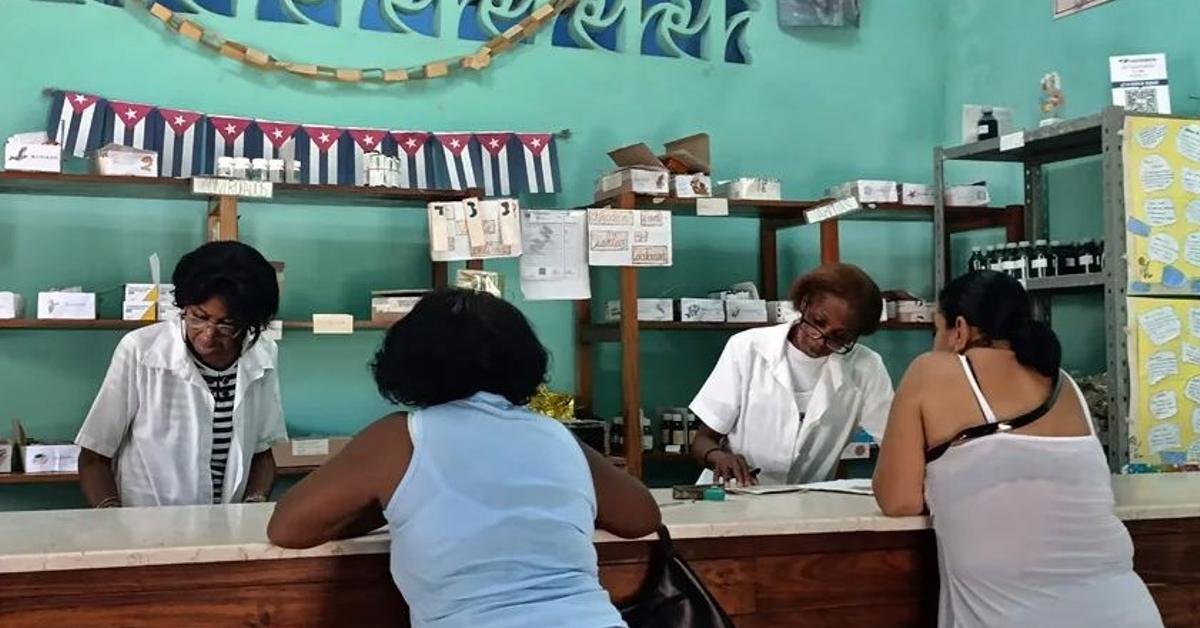
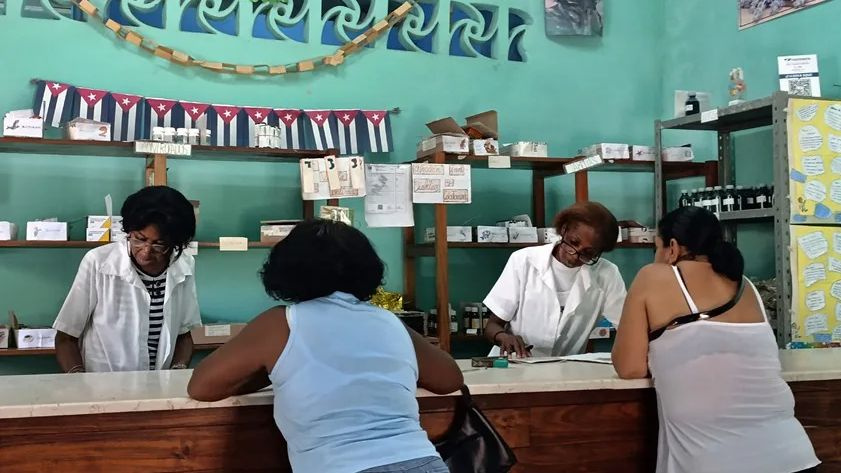
Madrid/Cienfuegos already has eight private pharmacy projects, seven in the main municipality and one in Aguada de Pasajeros, as reported this Friday by Dr. León Rayas, head of the provincial Department of Medicines and Medical Technologies, during a workshop of the Provincial Pharmacy and Optical Company.
The meeting took place on the eve of Pharmacist’s Day and served to highlight – once again – how the 176 “economic transformations and social” approved this year by the Cuban Government.
According to the doctor, the Departments of Development and Non-State Economic Actors of the provincial Government have met with interested parties and owners of MSMEs who could expand their businesses in the sector. Some projects are newly created and will have the pharmacy as their main activity; others will add the service to other existing ventures.
Since August, the National Directorate of Medicines and Medical Technologies of the Ministry of Public Health has issued the first indications. Among the conditions, León Rayas specified that each project must contribute 10% of its profits to a health institution. Depending on its location, the money will go to Primary or Secondary Care units, with the supposed purpose of reinforcing the low coverage of the state pharmacy network.
The money will go to Primary or Secondary Care units, with the supposed purpose of reinforcing the low coverage of the state pharmacy network.
Businesses will be able to retail all products except those for exclusively hospital use and narcotics and the like. They will also not be able to compete with the national industry, so they will only market imported medicines. Yes, they will be able to offer parapharmacy items for the care of the sick, such as wheelchairs, crutches and others.
Once the project is approved, a Ministry commission grants the operating license. Managers must contract with Medicuba or BioCubaFarma regarding imports, and manage the health registration of each product with the Center for State Control of Medicines, Equipment and Medical Devices (Cecmed).
The official also clarified that the new pharmacies cannot be installed in the premises of the state community pharmacies: those interested have to look for a space outside the health system.
The opening is based on Decree 160/2026, published last julywhich eliminates a general prohibition that limited these activities to the state sector, and considers them “authorizable or conditional”, that is, possible after obtaining licenses from the Ministry of Public Health. The decree also includes opticians, care and rehabilitation services.
By September, Public Health had reviewed 36 private pharmacy projects and 14 received approval to continue their procedures.
By September, Public Health had reviewed 36 private pharmacy projects and 14 received endorsement to continue their procedures. Cristina Lara, national director of Medicines and Medical Technologies, then confirmed that no non-state establishment will be able to import medicines on their own and that they will be able to go to the Medicines Marketing and Distribution Company (Emcomed), which offers a health license, warehouses, transportation and personnel.
This newspaper has been reporting for years the shortage of medicines in Cuba, which has fueled a parallel market and private drug sales establishments. This is the case of a store in Regla, in Havana, that has been selling medicines for two years with well-stocked shelves and high prices: 2,000 pesos for some vitamins and 1,000 for a tablet of pills.
Although the store went viral on social networks as the “first private pharmacy” in Cuba, an employee told this newspaper that this fame had brought him more problems than benefits, and it was not clear whether it had a license. At the same time, the Minsap had declared that no non-state-run pharmacy had begun to provide services to the public.
The formalization of the pharmaceutical market attempts to alleviate the chronic shortage in the state sector, which has its pharmacies undersupplied and its patients without timely treatments. The opposing doctor Eduardo Cardet ha warned that The new private pharmacies do not guarantee the quality of the medications and their prices leave out the majority of patients who need them most.