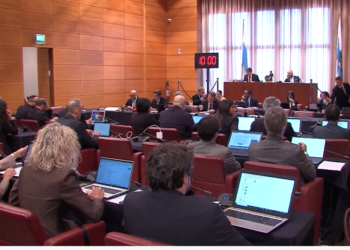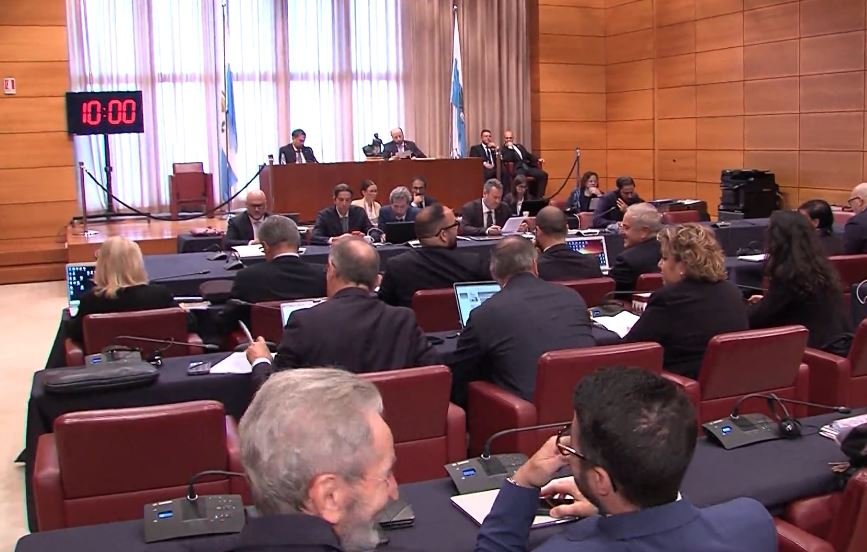
SAN MARINO – The investigation into alleged money laundering involving the state company Giochi del Titano reignites the political debate on controls, the effectiveness of anti-money laundering measures and the company’s governance. The matter was at the center of the communications paragraph in the Council, during which the Secretary of State for Finance Marco Gatti reported on developments and measures taken to ensure the company’s operational continuity.
The State Congress was informed on September 30 by the State Games Authority and on October 1 by the Titan Games Board of Directors. To address the situation, the Board of Directors temporarily reorganized company responsibilities.
The general director, Dr. Caronia, declared his non-involvement in the disputed facts and the correctness of his actions, suspending himself from his duties. The Board of Directors confirmed the suspension of the employment relationship and entrusted the role of interim general manager to Ivan Frisoni. The responsibility for anti-money laundering (RIA) was instead temporarily assigned to the president of the Board of Directors, with the support of an external consultant.
Independent audit of controls
In his speech, Gatti recalled that the company has international certifications ISO 37001:2016, relating to anti-corruption management systems, and ISO 27001:2022, dedicated to information security. A Supervisory Body has also been active since 2013, while the internal audit is managed by the Milanese company PK Consulting. There are also periodic checks and mandatory biannual training for employees on anti-money laundering and countering the financing of terrorism (AML/CFT).
Despite these tools, the Government deemed it necessary to launch an independent audit, entrusted to an external professional with no previous relationship with Giochi del Titano. The audit will have to evaluate the effectiveness of existing controls, identify any critical issues and provide useful elements for a future organizational reorganization.
According to what Gatti reported, the company’s operations on the market continue without declines.
Discussion in the Council on the effectiveness of supervision
In the council debate, different positions emerged on political responsibilities and the adequacy of control systems.
Enrico Carattoni (RF) raised questions about the effectiveness of supervision, judging it unacceptable that alleged illicit activities, with movements of large sums of cash up to 8 million euros, could have continued for years in a sector subjected to controls without the alert systems intervening promptly.
The intervention of Gian Carlo Venturini (PDCS), who invited us not to anticipate the judiciary’s assessments and to guarantee business continuity. To support the need for a balanced analysis, he also recalled the banking events of the past relating to CIS, Cassa di Risparmio and Asset Bank, currently under criminal scrutiny.
Michela Pelliccioni (Gruppo Misto) recognized the formal value of ISO certifications, however asking for more rigorous governance rules, with criteria similar to those applied to the banking sector, including the Fit and Proper regulation and measures to prevent conflicts of interest. It also raised the issue of the resources and expertise available to the Financial Intelligence Agency (AIF) and the State Games Authority to ensure effective supervision.
Mirko Dolcini (D-ML) finally criticized the lack of clear answers on the prospects of the matter and the developments of the investigation.
The discussion leaves open questions about the effectiveness of the controls and any necessary organizational changes, while the judicial investigation continues.