
In a confusing political statement, Zoltán Tarr announced that he would appoint Judit Grósz as ministerial commissioner to consolidate responsibilities in the public media sector. In a brief analysis, Magyar Nemzet summarizes the most problematic aspects of the statement by the Minister for Social Relations and Culture.
The Minister for Social Relations and Culture’s plan to restructure public media raises numerous questions; since the details are unknown, it can only be viewed as a political declaration of intent and is riddled with legally dubious statements.
Zoltán Tarr announced on his social media page that Judit Grósz will serve as a ministerial commissioner to coordinate tasks in the public media sector.
The representative’s task is to create the conditions for the balanced operation of public media and subsequently to coordinate the related professional and societal consultations. A priority task will be to coordinate the review of public media operations.
“As part of her duties, she coordinates the process by which the interim leadership puts an end to political propaganda, initiates financial and operational audits, and begins institutional consolidation. This will continue until the independent director, selected through a public tender, takes over the management of the public media,” the minister wrote.
The very question of the legal basis on which Tarr appointed the ministerial representative for the reorganization of public media is problematic, since
the minister has no duties whatsoever in connection with public media beyond the drafting of laws, nor is she permitted to have any.
This is clearly stated in the Media Act, and the Statute Regulation also contains no such task, nor can it possibly contain one.

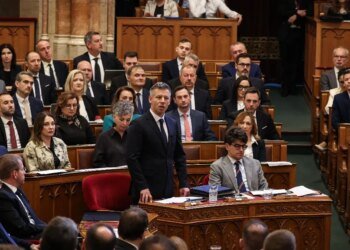
Zoltán Tarr. Photo: MTI/Illyés Tibor
Since the minister has no authority whatsoever over public service media, the statement that Judit Grósz, as the minister’s representative, will consolidate tasks related to public service media is baffling. Nevertheless, the question arises as to which “tasks” the minister had in mind and what he meant by “related to public service media.” What did Tarr actually mean when he spoke of public media? Public media is, in fact, a rather complex structure consisting of several organizations with their own legal personality. Furthermore, public media is subject to parliamentary oversight and does not fall within the government’s jurisdiction. The minister’s statement also did not address who would carry out these specific “tasks,” as the ministerial representative will merely “coordinate” them.
Tarr also announced that following the financial and operational audit, a public tender would be issued for the management of public media.
This raises several questions as well. For example, it is not yet clear exactly what kind of investigation the minister was referring to, who would order it, and who would conduct it. An important principle is that neither the government nor the minister can order an audit, since—as already mentioned—all public media organizations are directly or indirectly subject to parliamentary oversight. Parliament may request an unscheduled audit from the Court of Auditors.

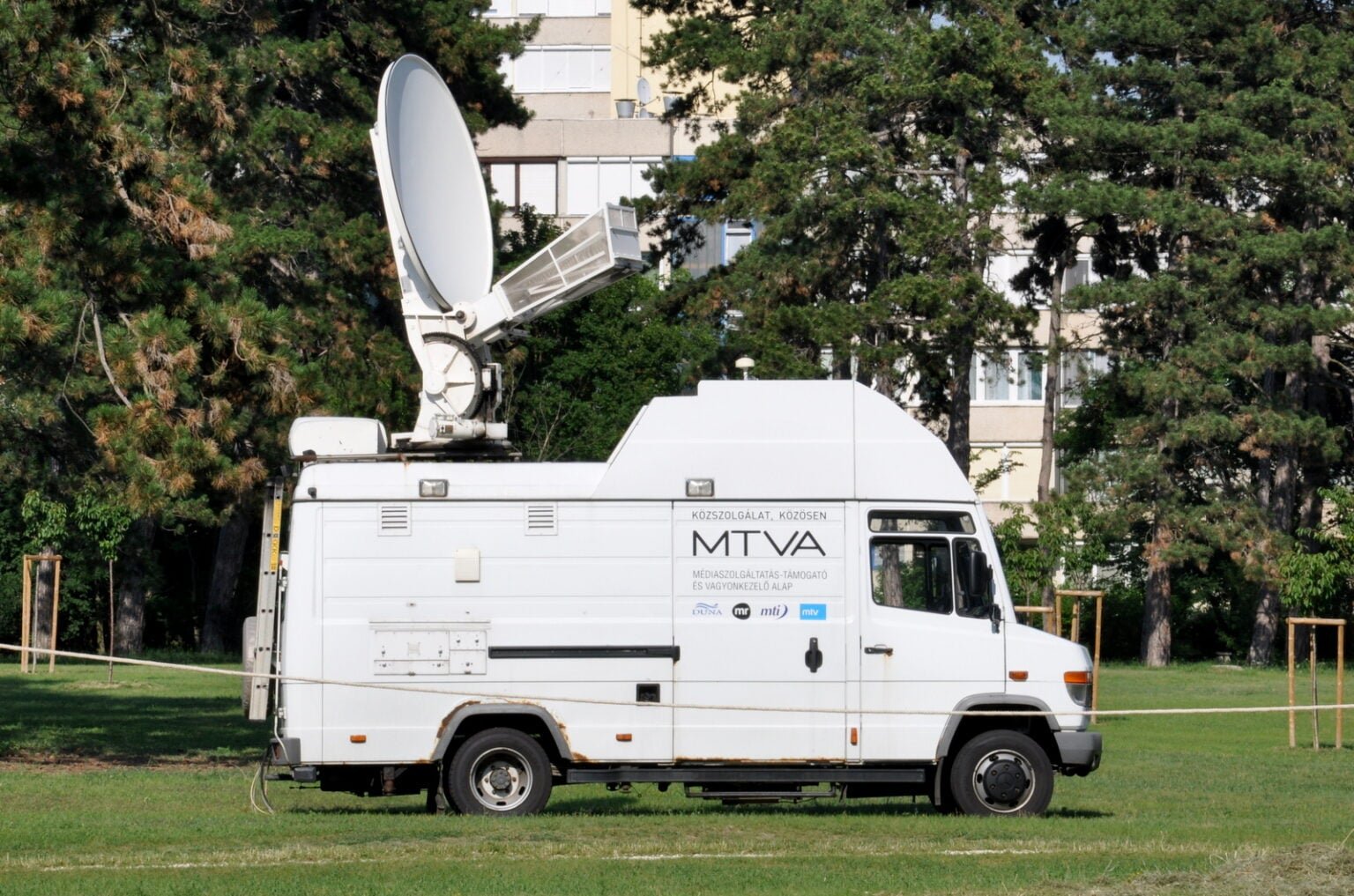
Graph: MrSilesian/Wikimedia Commons
It is also unclear which agency or individual would conduct a public tender for the leadership of public media; the use of the singular form is likewise puzzling, as this is not a single organization, unless the plan is for public media to operate under a single institution in the future. All of this, however, requires a change in the law, as the current Media Act contains no provision that would allow for a tender.
The “transitional leadership” mentioned by Minister Tarr also raises further questions.
It is not known how long this transition will last, and this solution would also be legally questionable, as every organization currently has leadership
that is in accordance with the legal order and regulations and acts with full authority. Under current legal provisions, the head of an organization must and can be replaced if this is necessary due to the termination of a legal relationship.
According to press reports, a bill aimed at completely restructuring public media is expected to be submitted to parliament shortly, and it may provide answers to the key questions outlined above.

Via Magyar Nemzet; Featured photo:VinceB/Wikimedia Commons