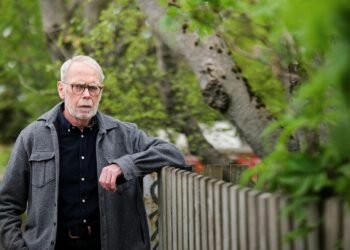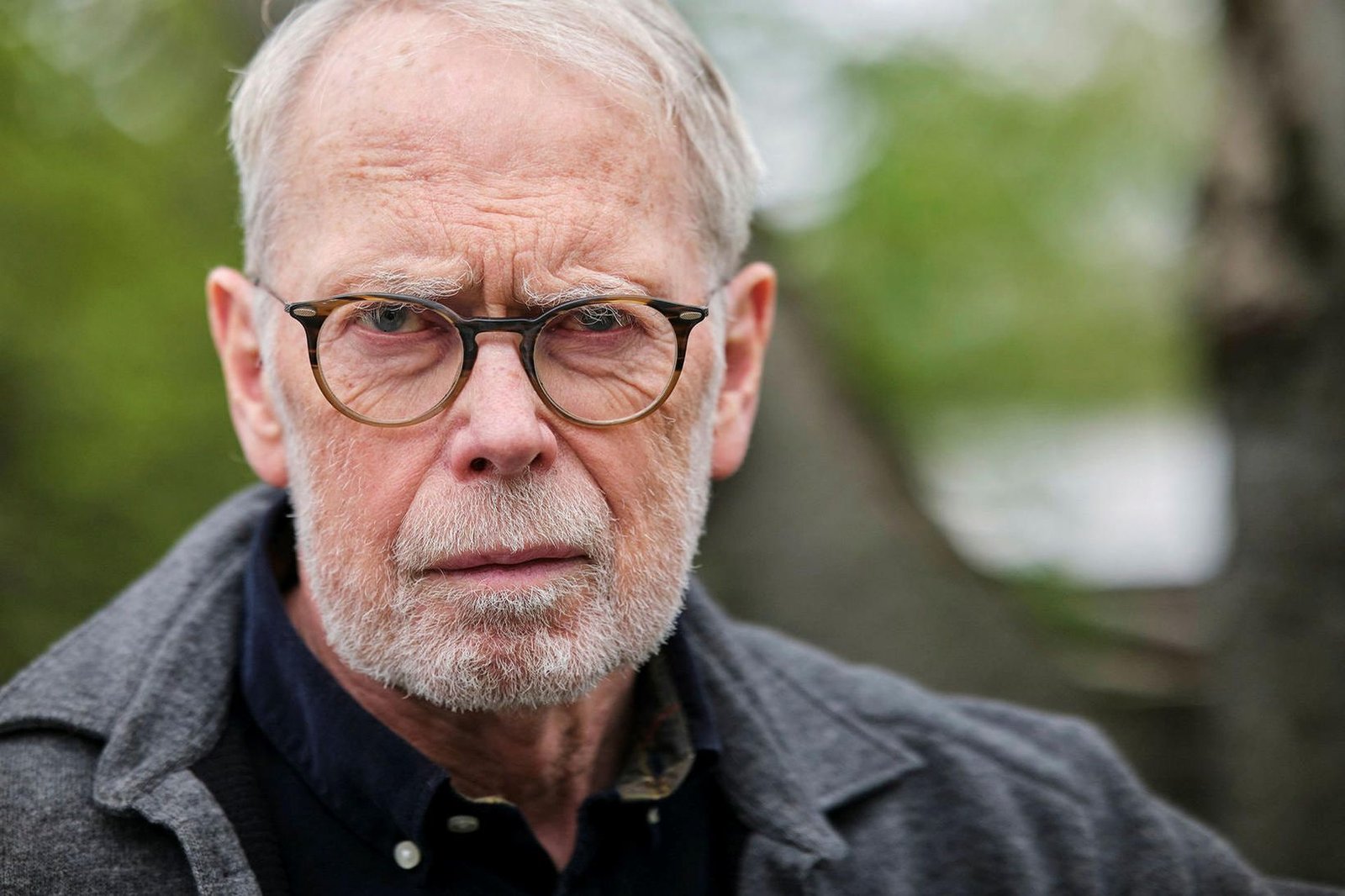
“It surprised me. I haven’t been thinking much about film production in the last few years. The last premieres were in 2013. Since then I’ve been busy writing, first film scripts and then books. The reason for the honorary award is perhaps that after I decided to devote myself to filmmaking, for almost fifty years I have stuck to it. Almost on all fronts, as a writer and director and also as the chairman of the Society of Filmmakers and later as managing director of the Film Fund,” says Þorsteinn Jónsson, director and winner of the Icelandic Film and Television Academy’s honorary award this year, wondering if the recognition surprised him.
Þorsteinn accepted the award just now, when the Edda Award was presented at a ceremony, which he receives for his decades-long contribution to Icelandic film art.
“This is of course an honor and I see this as recognition of what I have accomplished and no less of the work of those who have worked with me and taught me,” adds Þorsteinn, but he decided to follow the film path at a young age, or immediately after finishing high school.
“I was lucky enough that Þorgeir Þorgeirson hired me as an assistant and I got to carry the gadgets for him, a 35 millimeter Arriflex with a battery that was like a small car battery and a tripod. Þorgeir was my first teacher and emphasized the importance of the documentary film. Then I got a job as an editor at Sjónvarpið, which had just been founded, and after that there was no turning back.”

Þorsteinn receives the award for his decades-long contribution to Icelandic film art.
mbl.is/Anton Brink
Studied abroad
Þorsteinn was born in Reykjavík in 1946. In 1968, at the age of 22, he went to Prague to study filmmaking, which was the heyday of Czech films. Thorsteinn had just arrived in Prague when the Russians invaded Czechoslovakia, so he witnessed those world-historical events. In his novel Spring days in Praguewhich was published in 2023, he recalls his memories of that time and vividly describes the mixed atmosphere when the Russian invasion was imminent.
After studying in Prague and further studies in Japan, Þorsteinn made a series of documentaries together with Ólaf Hauk Símonarson, including the films Fish under a rock, Life goal, Ash Wednesday, Useful and fun and Daily bread. Þorstein’s movies should also be mentioned, which are three in number; Period, period, comma, dash (1980), The nuclear power plant (1984) and The Cloud Palace (1994).
A detailed interview with Þorstein will appear on the culture pages of Morgunblaðinn as well as on the mbl.is culture website tomorrow, Saturday.