Tegucigalpa, Honduras.
Although the three years of intervention by the Public Order Military Police (PMOP) in the country’s 25 penitentiary centers allowed relative governance of the prisons, complaints of human rights violations continued, according to official records and testimonies collected by LA PRENSA Premium.
The National Commissioner for Human Rights (Conadeh) documented 458 complaints in 2025, a figure that maintains the trend of recent years.
The main complaints point to restrictions on access to justice, violations of due process, abuse of authority and cruel, inhuman or degrading treatment within prison facilities.
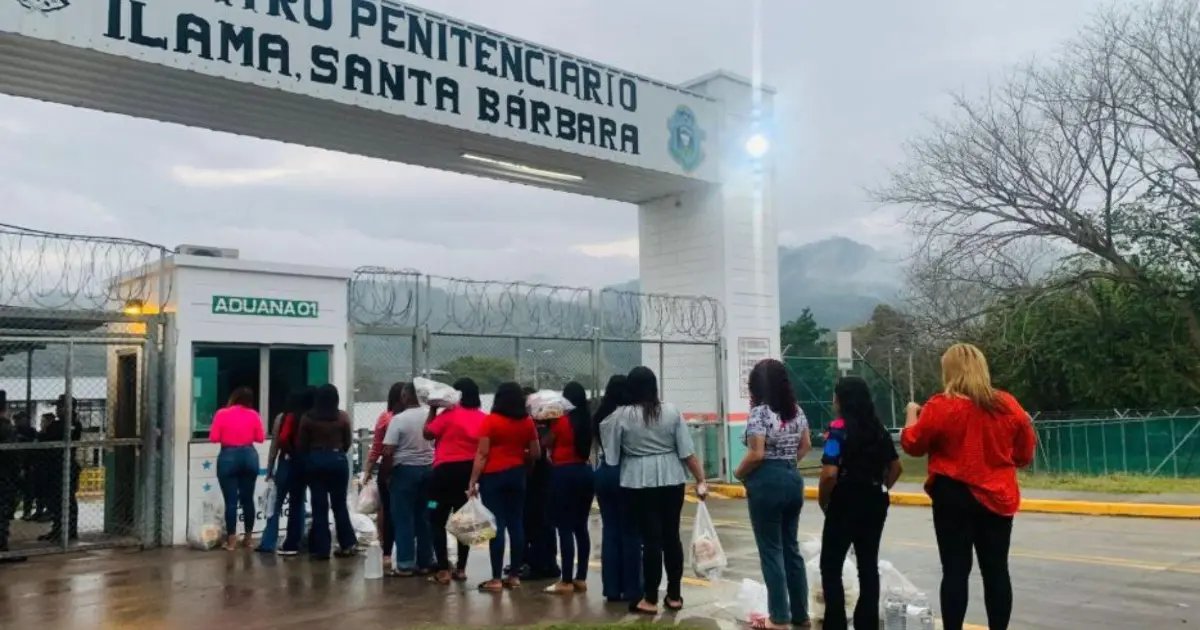
This medium learned that a large part of the registered complaints are related to unusual searches carried out by the military on women deprived of liberty, as well as visitors – including older adults, women and children – a situation attributable to the lack of scanners in prisons, equipment that, until recently, was practically non-existent.
The military intervention was established after the brutal massacre at the National Women’s Penitentiary for Social Adaptation (Pnfas), which occurred on June 20, 2023, which left 46 women dead.
The military authorities tried to recover governability with a heavy hand, according to some experts “in the Bukele style”, which has led to various human rights complaints from both those deprived of liberty and their families in recent years.
Another of the questions directed, since then, to the military authority was regarding the lack of clarity in the transition process towards the civil administration of the National Penitentiary Institute (INP), as established by law.
However, on May 1, the Government decided not to extend the military intervention in the prison system and dissolved the Intervening Commission, giving way to the appointment of an acting non-military commander: retired general Walter Iván Amador.
However, Amador himself clarified to the media that the withdrawal of the military from penitentiary functions will be a gradual process.
Testimonials
LA PRENSA Premium collected crude testimonies from people deprived of liberty and family members who visit them in prisons, who reported having been subjected to degrading processes by the military authorities.
“The last time they made my grandmother squat to verify that she had nothing stuffed in her private parts, after the third squat she couldn’t get up and they said that then she wasn’t going to get in, I picked her up and told them—the military—not to be so wild, that they had never done that,” said Scarleth (not her real name to protect her identity).
The woman said that she reported what happened to Conadeh and that, upon leaving the inspection indignantly, she realized that the same thing was happening with other elderly women, who were subjected to unusual practices “for the amusement of the military.”
Another of the testimonies collected by this medium indicates that, continuing with the search, the soldiers undress the babies who are going to enter the facility, remove their diapers and check their private parts to apparently verify that they do not carry prohibited substances.
“For me this happens for two reasons, first because these men (the military) are not trained to deal with people and the other reason is because several scanners are not useful, why don’t they fix them and have to subject you to these practices? They are inhuman, rude,” said Mrs. María Fuentes, a lady who has been subjected to and has witnessed these actions on repeated occasions.
Isabel (another fictitious name), 35 years old, also decided to share her experience with LA PRENSA Premium. The woman explained that nothing suspicious happened during her first conjugal visits to her husband. Normally they have only checked her bra, but last time the protocol was very different.
“During the conjugal visit, they stripped me completely, completely, completely,” she said with a broken voice. “When I entered they told me to take off everything, so I stayed in my underwear, but then the soldiers ordered me to also take off my jacket and bra. I stayed frozen, paralyzed, not knowing what to do… I didn’t say anything,” she said.
“ “There is a very fine line between a security record and a practice that may constitute cruel, inhuman or degrading treatment.”
Joselin Padilla, Conadeh defender
“They only told me to hurry up, not to waste their time, that there was a long line outside, so I undressed and they looked at each other and then sent me away. At that moment you feel that you lose all dignity, that you stop being a person,” he added.
“When I left the marital home I realized that I had not been the only one. Other women were also upset, affected by the same thing,” she said.
But the practices are not exclusive to visits, “things look worse inside,” say the testimonies collected by this medium. “Here it is terrible, they strip us naked and make us squat to ensure that we have not put anything in our private parts, while they insult us,” confided a prisoner.
LA PRENSA Premium learned about the cases in detail, but omits their description for reasons of prudence and respect for the victims.
“Afterwards, the soldiers put on gloves and begin to check our private parts one by one, without changing the glove they use, they insert their fingers into us as if to search for something,” he added.
According to the complaints, these practices occur normally in the Ilama prison, Santa Bárbara, known as “El Pozo”; in “La Tolva”, in Morocelí, El Paraíso; in the Támara prison; and in PNFAS, in the capital
This media tried to schedule an interview with the then commissioners Othoniel Gross, Erwin Lara and Raúl Fuentes before their separation, to consult about these complaints, but despite insistence through public relations there was no response.
Legal framework
The complaints collected by this means and by organizations in defense of human rights contrast with what is established in national regulations, since the Law of the National Penitentiary Institute (INP) expressly prohibits practices that violate human dignity.
Its article 4 establishes that “it is prohibited to subject persons deprived of liberty to torture and to any cruel, inhuman or degrading treatment or other treatment detrimental to their dignity. Those who execute, order or tolerate such actions will be subject to the sanctions provided for in the Penal Code.”
Likewise, article 8 obliges the penitentiary system to guarantee access to legal assistance, precisely one of the rights most reported as violated in registered complaints.
Even more specifically, article 87, paragraph i), prohibits subjecting prisoners to military regimes, while article 114 establishes that all searches and seizures must be carried out with respect for human dignity.
“All searches and searches that are carried out to preserve general security in penitentiary establishments and that are carried out on the inmates, their belongings and premises they occupy, must be carried out with respect for human dignity and strict adherence to the Law and the regulatory provisions that are established,” mentions article 114.
However, official testimonies and figures suggest a significant gap between what the law dictates and what happens in practice. This, despite the fact that, in his appointment, the former head of the Intervening Commission, Colonel Othoniel Gross, assured that “unrestricted respect for human rights will continue, that is the most important thing that we are going to maintain.”
Gross was appointed in January 2026, after the departure of Colonel Ramiro Muñoz from the presidency of the INP and the PMOP. At the beginning of March, Muñoz took over as the new director of the Anti-Drug Trafficking Directorate (DLCN).
For his part, the newly appointed director of the INP expressed that “humanized control will be maintained, respecting all national and international rules, international treaties, but also firm control.”
Failures
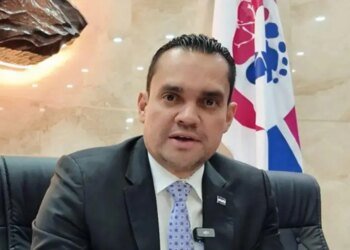
“It is extremely worrying to receive complaints about intrusive and invasive searches in penitentiary centers, taking into account that the majority of visitors are women, children and older adults, among other vulnerable groups,” said Joselin Padilla, officer of the Conadeh Ombudsman’s Office for Persons Deprived of Liberty.
In conversation with LA PRENSA Premium, the interviewee said that “we understand that in penal centers it is necessary to implement security measures to prevent the entry of illicit or narcotic drugs, but these processes must be attached to criteria of necessity and proportionality, in addition to international standards of respect for human dignity,” she added.
Conadeh has referred several cases to the Public Ministry, while insisting on the need to repair various scanners to avoid invasive physical inspections. “The call is to the INP to have the intention of repairing the scanners, since this is an alternative means to intrusive searches,” he said.
Furthermore, he stressed that, despite the partial recovery of penitentiary governance, historical problems such as overcrowding, lack of basic services and the weak guarantee of due process still persist.
For Dina Meza, director of the Association for Democracy and Human Rights (Asopodehu), the reported practices reflect serious failures by the State in compliance with its international obligations.
The defender questions the passive role of the National Mechanism for Prevention against Torture (Conaprev), which she accuses of not carrying out inspections or issuing timely reports.
“In the prisons there is torture at night, they pour water and a lot of things on them, including tear gas they leave in the cells, it is an atmosphere of terror inside the prisons,” he stated.
She also denounced the lack of access to human rights organizations and the stigmatization of those who try to document abuses, as well as the absence of protocols that guarantee the dignity of women and the LGBTIQ+ population.
Meza insisted on the need for independent oversight and for the State to be accountable to international bodies.
In contrast, criminologist Gonzalo Sánchez defended the measures implemented under military control, arguing that they respond to a historical need to stop the entry of weapons and drugs.
“It has been a custom that they have always introduced drugs and weapons using even private parts. These searches seek to avoid that,” he said.
From his perspective, the complaints respond to the discomfort of those who previously operated with greater freedom within prisons and he considers that the “strong hand” has been effective in reducing internal risks and that the approach should be maintained.
This medium learned that, last February, the INP acquired 16 new generation scanners, which – according to reports – have been progressively installed in various prisons, although the authorities have not specified which ones.
These are six body scan type devices, 100/100 spectrum devices and six mobile scanners, which incorporate high resolution systems and artificial intelligence.
The victims hope that this will not continue the abuses in the visit review protocols. Furthermore, they point out that, inside the facilities – where these devices do not intervene – the torture against people deprived of liberty seems to intensify and become increasingly cruel.