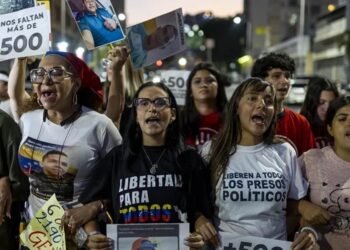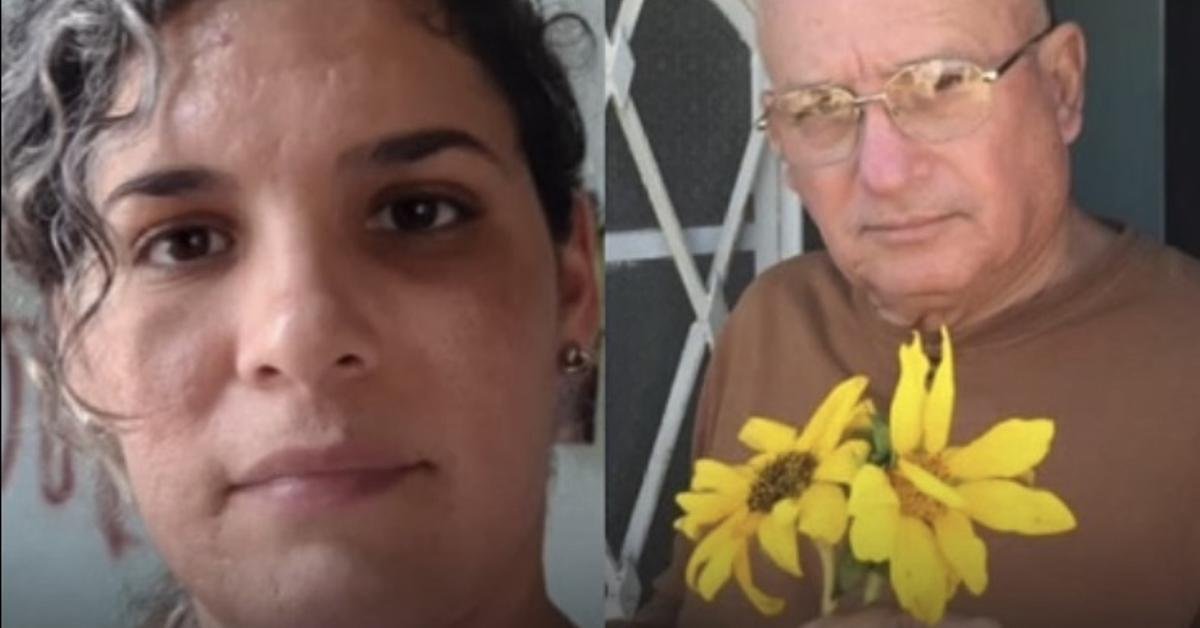
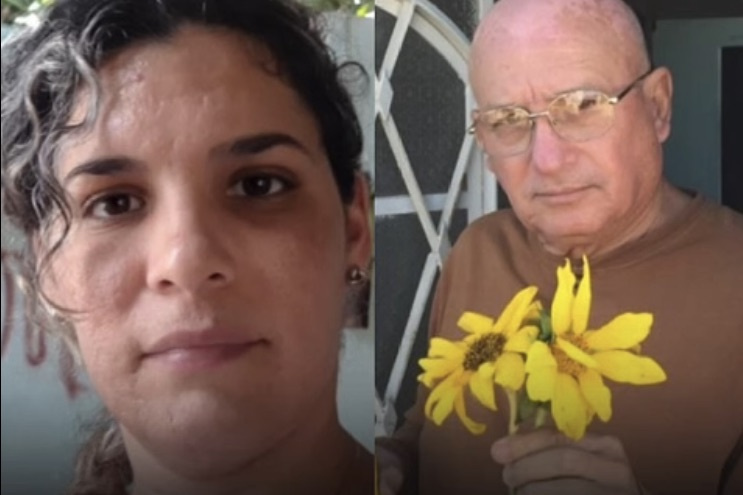
Madrid/This Wednesday, more than three months after preventing him from doing so, the authorities of the Agüica prison, in the municipality of Colón (Matanzas), allowed Félix Navarro and his daughter, Saylí, both political prisoners, to have a meeting. The young woman was transferred from the La Bellotex women’s prison in Matanzas, where she is serving an eight-year sentence for public disorder, contempt and assault, the same crimes for which her father was sentenced to nine years.
Félix Navarro’s wife and Saylí’s mother, Sonia Álvarez Campillo, found out about the permitted visit just when she went to visit her husband, along with Iván Hernández Carrillo, according to what he stated in statements to Radio Martí. “They allowed Sonia to enter and a soldier met her there and told her that Félix was fine. Sonia told her that she wanted proof of life, that she wanted to see Félix, and she responded that they couldn’t bring him because she was visiting her daughter,” said the activist. It would be Sayli, the guards told him, who would report on the father’s state of health.
The last time they allowed him to meet, Hernández Carrillo continued, was in November, when it is a right they have every 45 days. “They had already had three visits that corresponded to him and they had not given him one,” he denounced.
The activist also said that Navarro is no longer in the punishment cell to which he was transferred after the brutal beating he received last Thursday.
The activist also said that, at least apparently, Félix Navarro is no longer in the punishment cell to which he was transferred after the brutal beating he received last Thursday. If that were the case, Hernández Castillo reasoned, “they would not have allowed him the visit.”
The beating was reported to the Inter-American Commission on Human Rights (IACHR) by Cuba Decide, which presented an urgent appeal for the facts. According to the story of Juan Carlos Vargas, director of Cuba Decide, Martí Newsthe attack occurred after a family visit, when the opponent was intercepted by prison officials, handcuffed and beaten while he was in a defenseless state.
Both Navarro – who was part of the Black Spring prisoners in 2003, is 72 years old and is suffering from several health problems – and his daughter were arrested on the morning of July 12, 2021, when they appeared at the Police Unit of the Matanzas municipality of Perico to inquire about the fate of those detained the day before, after the historic 11J demonstrations.
Precisely this Thursday, Prisoners Defenders (PD) published its monthly report on political prisoners, which again set a new record in March. With 44 new prisoners of conscience last month, the figure rises to 1,250 (36 more than those counted in february). The number of women and minors detained has also grown “significantly”, denounces the Madrid-based NGO, which shows “a relevant increase in repression also against vulnerable groups and a devastating impact on entire families.”
With 13 new political prisoners, the number of women stands at 145, and the number of people who were detained while they were minors, 33. Two of them entered in the month of March: Jonathan Muir Burgos16 years old, and Kevin Samuel Echevarría Rodríguez, 15. Both were arrested in Morón, Ciego de Ávila, after the massive protest in which the protesters came to take the headquarters of the Communist Party, last March 13.
Among the almost 200 detainees in the context of the events in Morón, 12 political prisoners have been confirmed, all of them “without an arrest warrant or judicial protection.”
Kevin Samuel was arrested days after the protests and “subjected to interrogations in custody,” details the organization, “being accused of having participated as one of the organizers of the protest, despite the fact that there is evidence that the demonstrations were peaceful.” As for Jonathan – son of the evangelical pastor Elier Muir Ávila, harassed for years by the regime, and for whose imprisonment the IACHR has requested explanations –, PD highlights the “extremely serious” accusation that he faces, sabotage, “a charge that in Cuba is usually brought before military courts.”
Among the almost 200 detainees in the context of the Morón events, the NGO reports, they have confirmed the deprivation of liberty of 12 new political prisoners, all of them “without an arrest warrant or judicial protection and the majority through violent operations carried out by State Security agents, known as Black Berets, which configures a systematic pattern of planned repression against peaceful protest.”
Javier Larrondo, president of Prisoners Defenders, refers to this in a video sent to the media. “In addition to the repression and torture and the record numbers of political imprisonment, the sentences are extremely severe; 217 protesters have been punished for sedition to an average of 10 years, and the convicted minors on the list endure sentences of five years on average,” says the activist, who adds another notable number from the report: 447 political prisoners who “suffer from diseases caused or aggravated by the conditions of confinement, torture, and the systematic and deliberate denial of medical care.”
The organization has carried out a study on the prisoners who could die “if they are not released from prison immediately” and they number them at 32. If they are not released, they warn, “they could die in less than 12 months or suffer irreversible damage: 21 with very serious illnesses, 4 mothers with children in a situation of forced orphanhood and 7 with serious mental illnesses, potentially suicidal.”
Abuse, transfers to punishment cells, removal of food and belongings, as well as threats have increased in prisons.
In addition to the circumstances surrounding the political prisoners, PD points out the intensification of repression by the regime, which “treats as an enemy” anyone who dares to show discontent, which is also growing in the country. In this regard, he cites the case of Anna Sofia Benitezknown on social media as Anna Bensi, whose critical videos on TikTok, Instagram and YouTube have turned her and her mother “into direct targets of the authorities.”
The most recent report from the Cuban Observatory for Human Rights (OCDH), also published this Thursday, is along the same lines. The organization, based in Madrid, denounces that “while the Cuban regime denies to the international press the existence of political prisoners and announces a pardon that has only benefited common inmates, in the island’s prisons there is a violent attack against prisoners of conscience.”
Thus, the OCDH documents, mistreatment, transfers to punishment cells, the removal of food and belongings, as well as threats and the placement of common prisoners in their cells to attack political prisoners have increased in prisons.
Among the most serious cases, the NGO highlights those of Duannis León Taboada, sentenced to 14 years, Ángel Jesús Véliz Marcano (six years) and Liosnel López Arocha (12 years), all of them sentenced for demonstrating on 11J.