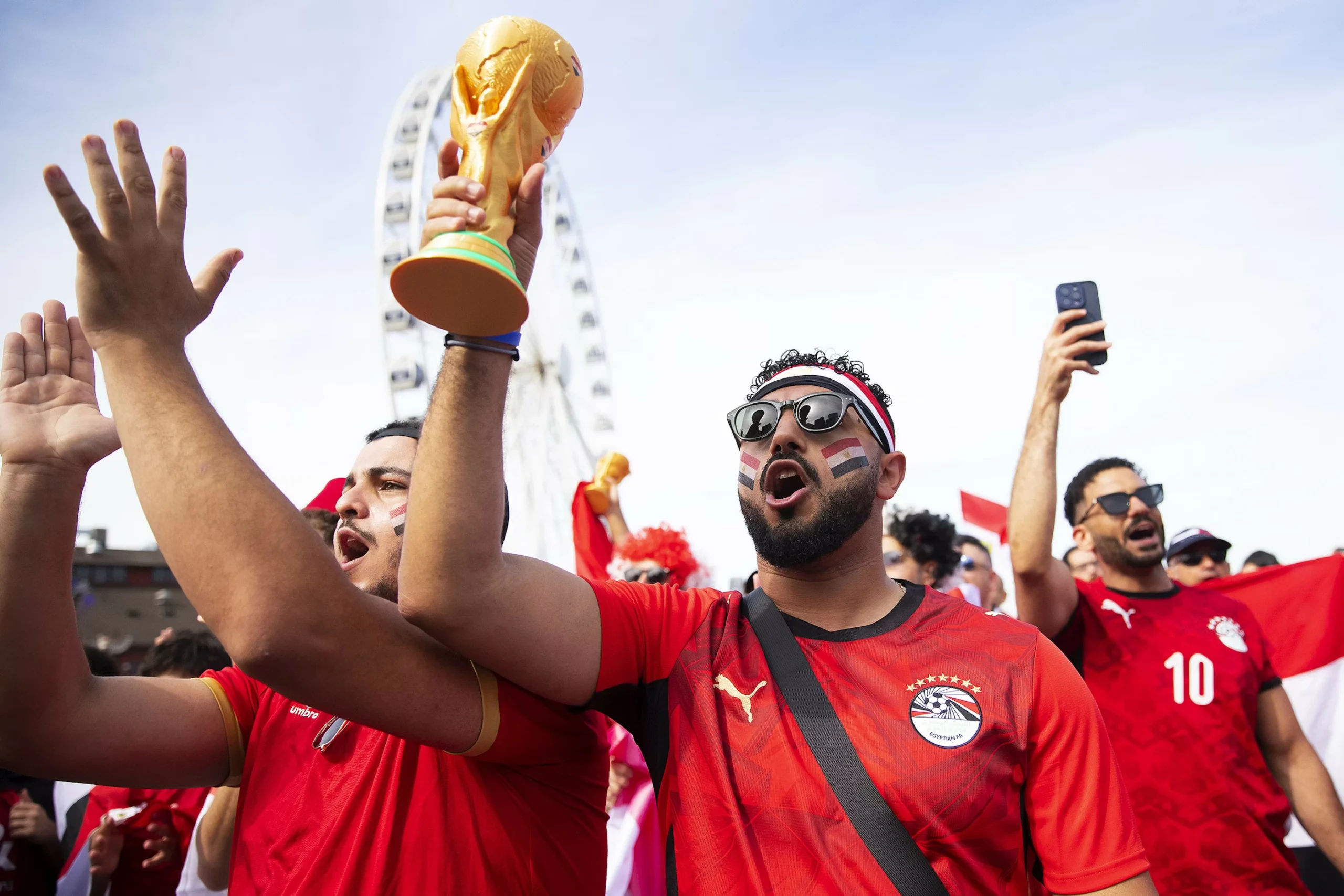
The eight Arab teams participating in the 2026 World Cup entered the tournament amid widespread optimism about achieving a historic presence, after recording an unprecedented number of finalists. However, the first round of the group stage ended without any Arab victory, an outcome that reflected a clear discrepancy in performance levels and results.
In the current version, the Arabs are represented by Morocco, Algeria, Egypt and Tunisia on the African continent, along with Saudi Arabia, Qatar, Jordan and Iraq on the Asian continent. The decision of the International Federation of Association Football (FIFA) to increase the number of participating teams from 32 to 48 teams contributed to increasing the number of seats allocated to Asia and Africa, which allowed an unprecedented Arab presence, and witnessed the first appearance of Jordan in the finals, compared to the second participation of Iraq and Qatar, and the fourth participation of Egypt.
Despite the absence of victories, Arab results varied between heavy setbacks and relatively positive results.
The confrontation between Morocco and Brazil topped the attention of the round, due to the artistic and historical value it carries, as it brought together the Brazilian team, which was crowned with five world titles, and the Moroccan team, which achieved a historic achievement by reaching the semi-finals of the 2022 World Cup as the first African team to achieve this.
Qatar saved its start from loss after equalizing against Switzerland with a late goal scored by defender Boualem Khoukhi, in a result that gave the Qatari team a valuable point after its difficult first participation on home soil in the 2022 edition. On the other hand, the Tunisian team suffered the harshest Arab loss in the opening round, falling to Sweden with a score of 1-5.
The round witnessed other positive indicators, after Egypt advanced over Belgium with a goal by Imam Ashour before conceding a friendly fire equalizer through Mohamed Hani, while the Saudi team came out with an important point against Uruguay after being close to victory after taking the lead with a goal by defender Abdel-Ilah Al-Omari in the 41st minute, before the Uruguay team equalized the score in the 81st minute through Maximiliano Araujo.
But the Arab results declined at the end of the round, as Iraq lost to Norway 1-4 in its second participation in the history of the World Cup after the 1986 edition, while Algeria suffered a severe defeat against Argentina, whose captain Lionel Messi excelled by scoring three goals. As for Jordan, it began its first appearance in the finals by losing to Austria with a score of 1-3.
Thus, the Arab teams concluded the first round with a limited score of three draws and five defeats, leaving their hopes pinned on the second and third rounds of the group stage in order to enhance their chances of qualifying for the knockout rounds.
The eight Arab teams participating in the 2026 World Cup entered the tournament with widespread optimism for a historic presence, having recorded an unprecedented number of qualifiers for the finals. However, the first round of the group stage ended without any Arab victories, reflecting a clear disparity in performance levels and results.
The Arab representatives in the current edition are Morocco, Algeria, Egypt, and Tunisia from Africa, alongside Saudi Arabia, Qatar, Jordan, and Iraq from Asia. The decision by FIFA to increase the number of participating teams from 32 to 48 has led to an increase in the number of slots allocated to Asia and Africa, allowing for an unprecedented Arab presence, and marking Jordan’s first appearance in the finals, while Iraq and Qatar made their second appearances, and Egypt made its fourth.
Despite the absence of victories, the Arab results varied between heavy setbacks and relatively positive outcomes.
The match between Morocco and Brazil topped the round’s attention due to its technical and historical significance, as it brought together the Brazilian team, which has won five World Cup titles, and the Moroccan team, which achieved a historic milestone by reaching the semi-finals of the 2022 World Cup as the first African team to do so.
Qatar salvaged its start from defeat by equalizing against Switzerland with a late goal scored by defender Boualem Khoukhi, a result that earned the Qatari team a valuable point after its difficult first participation on home soil in the 2022 edition. In contrast, the Tunisian team suffered the harshest Arab defeat in the opening round, losing to Sweden 1-5.
The round also saw other positive indicators, as Egypt took the lead against Belgium with a goal from Imam Ashour before conceding an equalizer through an own goal by Mohamed Hani, while the Saudi team earned an important point against Uruguay after coming close to victory, leading with a goal from defender Abdulilah Al-Amri in the 41st minute, before Uruguay equalized in the 81st minute through Maximiliano Araújo.
However, the Arab results declined again at the end of the round, as Iraq lost to Norway 1-4 in its second World Cup appearance since 1986, while Algeria suffered a heavy defeat against Argentina, where their captain Lionel Messi shone by scoring three goals. As for Jordan, it began its first appearance in the finals with a loss to Austria, ending with a score of 1-3.
Thus, the Arab teams concluded the first round with a limited tally of three draws and five defeats, leaving their hopes hanging on the second and third rounds of the group stage to enhance their chances of qualifying for the knockout stages.