
Madrid/Next year, the United States will allocate at least $75 million of public money to Cuba. The Homeland Security, Department of State and Related Programs Appropriations Act for the year 2027 was approved this Tuesday by the committee by 35 votes in favor and 27 against, although it must still go through Congress and the Senate before President Donald Trump signs it.
It does not seem likely that the amounts planned to “support democracy” on the Island will change, since the amount is exactly the same as the previous year. However, it does represent a higher percentage, since the funds have decreased from the total 50,000 million in 2026 to 47,320 this fiscal period, which ends in September of next year, 6% less in total.
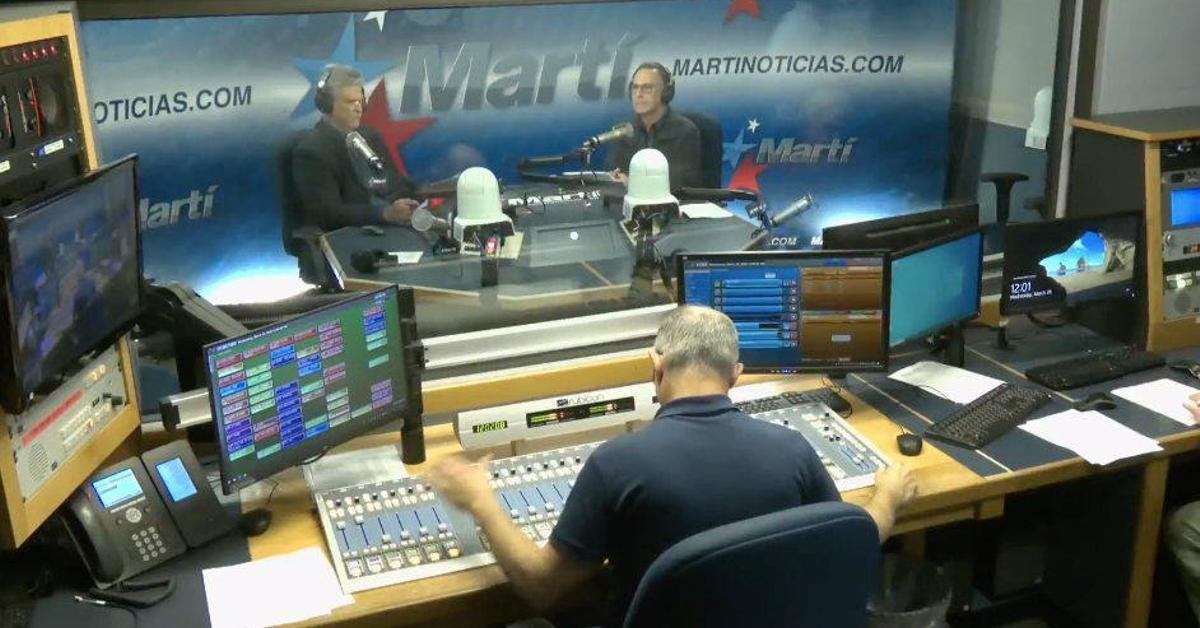
The two main allocations planned in relation to Cuba are divided into two parts. On the one hand, 35 million dollars will be allocated to programs that promote democracy and strengthen civil society on the Island through the National Foundation for Democracy (NED), including support for political prisoners. The rest goes to the Office of Transmissions to Cuba (OCB) for two concepts: One, 35 million dollars, for the production of information via radio, internet and television, of which 5.2 million can be retained until the next fiscal year.
The second concept is an additional five million for the development of special programs on the Island, which come from the international communication activities item, whose total value is 540 million.
This money can also be used for “capital improvements for broadcasting, which may include the purchase, rental, construction, repair, maintenance and improvement of facilities for the transmission and reception of radio, television and digital media; the purchase, rental and installation of equipment necessary for the transmission and reception of radio, television and digital media, including to Cuba, as authorized; and global physical security.”
The second concept is an additional five million for the development of special programs about the Island, which come from the international communication activities item, whose total value is 540 million.
In addition to these subsidies, the law specifies the limits when allocating public money to Cuba, which do not change substantially. The use of federal funds to revoke Cuba’s designation as a state sponsor of terrorism is strictly prohibited. It is also prevented from eliminating or reducing the “black list” of Cuban entities managed by the State Department, closing any avenue that allows, facilitates and encourages transactions with companies and people that are part of it, particularly anyone linked to the Armed Forces or the intelligence services.
Private entities are also affected by the restrictions, since natural and legal persons who maintain any economic or commercial relationship with the Army or the Ministry of the Interior of Cuba are sanctioned. Included in this section are those who participate in activities that benefit the international commercial operations or the generation of income of both ministries, companies controlled by them (any of Gaesa) and those who collaborate to help them avoid the sanctions imposed.
The exemptions also appear in the document, which outlines the sale of agricultural products and medical supplies authorized by law and the payments corresponding to the lease and maintenance of the naval base in Guantánamo Bay, in addition to the expenses of the Embassy in Havana, the processing of authorized remittances and aid to independent civil society.
The bill recalls that all these measures are subordinated to a possible regime change that allows free elections in Cuba.
The bill recalls that all these measures are subordinated to a possible regime change that allows free elections in Cuba.
Among other sections dedicated to the Island, the one referring to international medical missions stands out. The bill requires that, within 90 days after its entry into force, the Secretary of State present a report on the countries and international organizations that directly pay the Government of Cuba for the work of medical professionals, considered in the text as “forced labor and human trafficking.” The document must be public, although it may contain classified information and inclusion in it will entail direct consequences for those linked to the process, including a veto from entering the United States.
In addition, countries and organizations that appear in the report for two consecutive years will lose access to economic and security assistance funds included in the budget, a measure that can only be avoided by ceasing payment to the regime for medical services.
Finally, the document includes two more specifications related to the Island, one is the prohibition of the use of funds for “activities that contravene executive orders related to border security,” and the other is the inclusion of economic incentives for the capture of people linked to the downing of the Hermanos al Rescate planes.
Mario Díaz-Balart, president of the subcommittee responsible for the law, said this Tuesday that the document has been prepared with a policy of “responsible spending, with a clear focus on national security” in mind. In addition, he stated that work has been done defending the idea of putting the interests of the United States first and veiledly disqualified anyone who questions the proposed accounts. “If you are a friend or ally of the United States, this bill supports you. If you are an adversary or are getting too close to our adversaries, then you will not like this bill.”