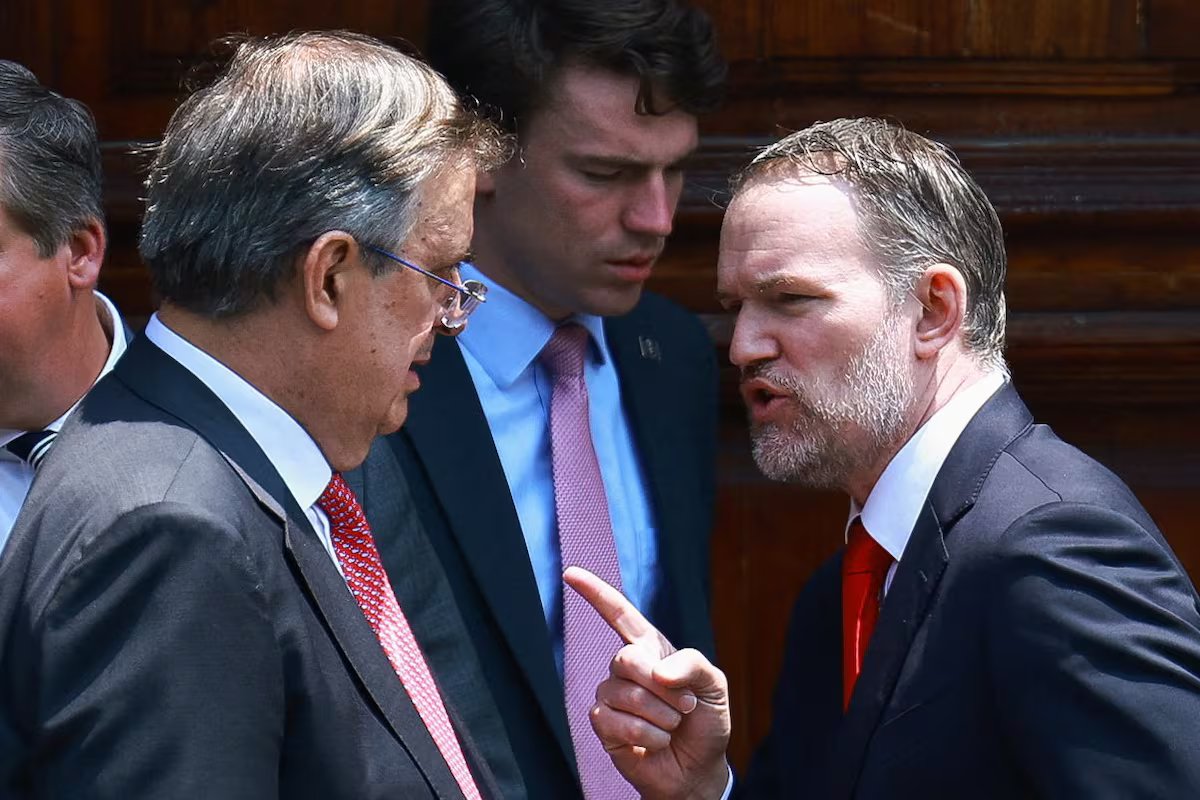
A brief statement of just 150 words has served the United States to inform that it does not renew “in its current form” the great trade agreement with Mexico and Canada (TMEC). “However, the Agreement remains in force pending the resolution of these issues or until its termination,” said the United States Trade Office (USTR).
Washington says it prefers to conduct annual reviews of the pact, a strategy that threatens to disrupt markets by adding uncertainty for companies operating on both sides of the border. The solution that the White House proposes to companies to eliminate this uncertainty is for them to invest in the United States in what is considered an exercise in economic nationalism.
“The United States will continue to dialogue with Mexico and Canada to address the deficiencies of the agreement and our trade deficits with these countries,” said the department led by Jamieson Greer in the note. “However, the Agreement remains in effect until these issues are resolved or until its termination. As previously announced, the United States will meet with Mexico the week of July 20 for a third round of bilateral negotiations related to the joint review of the USMCA.”
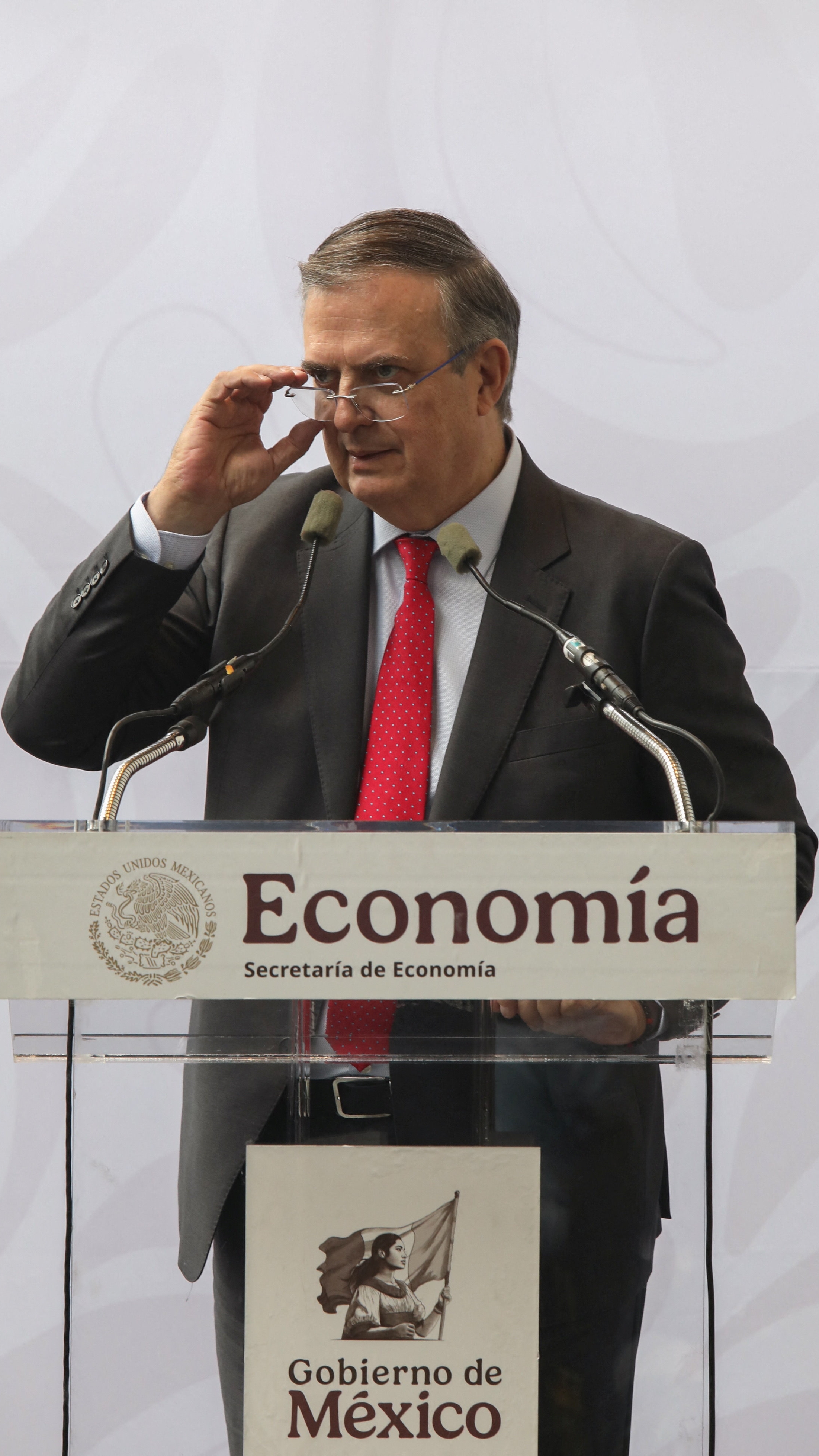
02:39
Ebrar talks about the US decision not to renew the T-MEC
The news It was known this Wednesday, July 1 when the deadline for the USMCA review expired. The commercial representatives of the three countries, Jamieson Greer on behalf of the United States, Marcelo Ebrard, commercial representative for Mexico; and Canadian Dominic LeBlanc, held a virtual meeting by videoconference to try to advance talks on the application of the treaty, the extension of the deadline and the next steps of the agreement.
After Greer’s announcement, which has gained influence within Trump’s circle, optimism in Mexico diminished. The Mexican Secretary of Economy, Marcelo Ebrard, declared minutes after the videoconference that the Latin American country still has room to save the trade relationship in North America. “The United States is not in the position to extend it for another 16 years. We are going to go down the path of annual review for the next 10 years, which is the validity of the treaty.”
“We are not in a hurry, but we are not interested in there being uncertainties either and that is why we have to try to reach an agreement on many issues,” explained the Mexican in a short video published on his social networks. Ebrard assured that the annual reviews will allow the three partners to vent pending issues and disagreements on the part of each of the parties. “The United States feels that it has lost jobs, particularly in some manufacturing, and we have the issue of the deficit pending,” the Mexican acknowledged as part of the pending issues in the negotiation with the Trump Administration.
Before the call, Mexican President Claudia Sheinbaum insisted that the permanence of the USMCA largely benefits the United States. “The treaty benefits the United States because it reduces the prices of products,” the president argued in her morning press conference. Sheinbaum has also drawn on the unity of the region and the strength of the economic bloc compared to other competitors in the world. “As North America, the three countries together, we can compete better against other regions of the world,” he added.
Tariffs changed the relationship
A senior Commerce Department official explained that trade relations between the United States and the rest of the world changed last year when Donald Trump decided to impose unilateral tariffs. “Our deficit with Canada has been reduced by approximately a quarter in the last year and a half. Our trade with Mexico has increased largely due to the effect of our tariffs with the world, with many supply chains that have returned to the United States,” explained the senior Commerce official. “The treaty is subordinated to a certain extent to the president’s robust trade policy,” US sources point out.
While the three-way negotiations continue, the trade agreement will remain in force for another decade as long as the United States or another of the two countries that signed the agreement decide not to withdraw. Instead of reviews being scheduled every six months, they will be every year, opening the door to tough negotiations every few months, throwing uncertainty into supply chains across North America. “The reality is that, if Canada and Mexico fully sign up for what is needed, then the situation is different,” said the US Department of Commerce.
The automobile sector is expectant because it is one of the most exposed to this agreement, with manufacturing and assembly plants on both sides of the three borders.
The senior US official revealed the different nature of the negotiations with Mexico and Canada. While talks are progressing at a good pace with the Government of Claudia Sheinbaum, US authorities assure that there are more obstacles with Canada. “Mexico has been very constructive in this. It has made proposals on reducing the deficit, so we have been formally negotiating with them bilaterally to address and resolve many bilateral problems,” the official explained, hinting that the negotiations will become bilateral with its neighbors to the north and south.
Bilateral relations
“Canada is in a different position. Along with China, it was one of the few countries in the world that responded to the United States following the president’s historic trade actions to eliminate the US trade deficit and relocate manufacturing here, and they have also failed to address many of the non-tariff barriers and trade challenges they have had in recent years,” warned the senior US official familiar with the trade negotiations.
Canadian representative Dominique LeBlanc expressed his opinion on the meeting in a statement: “We agree on the importance of continuing our conversations and identifying ways to ensure that the trade and investment frameworks between Canada, the United States and Mexico continue to drive the prosperity and competitiveness of North America. For Canada, this includes substantive conversations with the United States on how to address sectoral tariffs applied to Canadian steel, aluminum, automobiles and lumber.”
LeBlanc assured that Canada maintains “a position of strength” to preserve and strengthen the USMCA. “At a time of global economic uncertainty, Canada is a stable, reliable and trustworthy partner. We have the energy and natural resources the world needs, a world-class workforce and a predictable business environment that attracts the largest investment in decades,” he added.
In force since 2020
The Trade Agreement between Mexico, the United States and Canada (USMCA) was signed under Donald Trump’s first term in 2020, but it provided for a review of the agreement as of July 1 of this year. At that time, the Republican defined the pact as “the best agreement he has ever made.”
The treaty has a total validity of 16 years, until 2036, but any of the three countries can leave the agreement with three months’ notice. The USMCA has been an important trade agreementaffects a volume of trade valued at nearly two trillion dollars a year between the three countries, which replaced the North American Free Trade Agreement (NAFTA), in force since the 1990s. Since the three North American states signed the first trade agreement, economic relations between them have strengthened and maintain an integrated structure in sectors such as the automobile industry and many others throughout North America, with millions of jobs, which would be difficult to undo.
In any case, the United States does not close the door on requesting official withdrawal from the agreement, a step that must be announced six months in advance. “Just because it has a 10-year term, it doesn’t mean you have to wait those 10 years to conclude the agreement,” warned the senior US official. “The president also reserves his right, in accordance with the law, to withdraw from the agreement, even before 10 years,” he added while specifying. “Today’s conclusion is that the president (Trump) has changed the trade dynamics between the United States, Canada and Mexico under the new trade and tariff policies.”