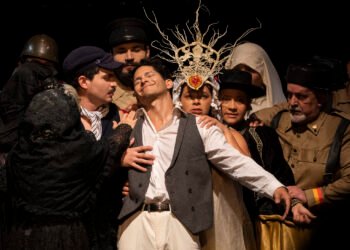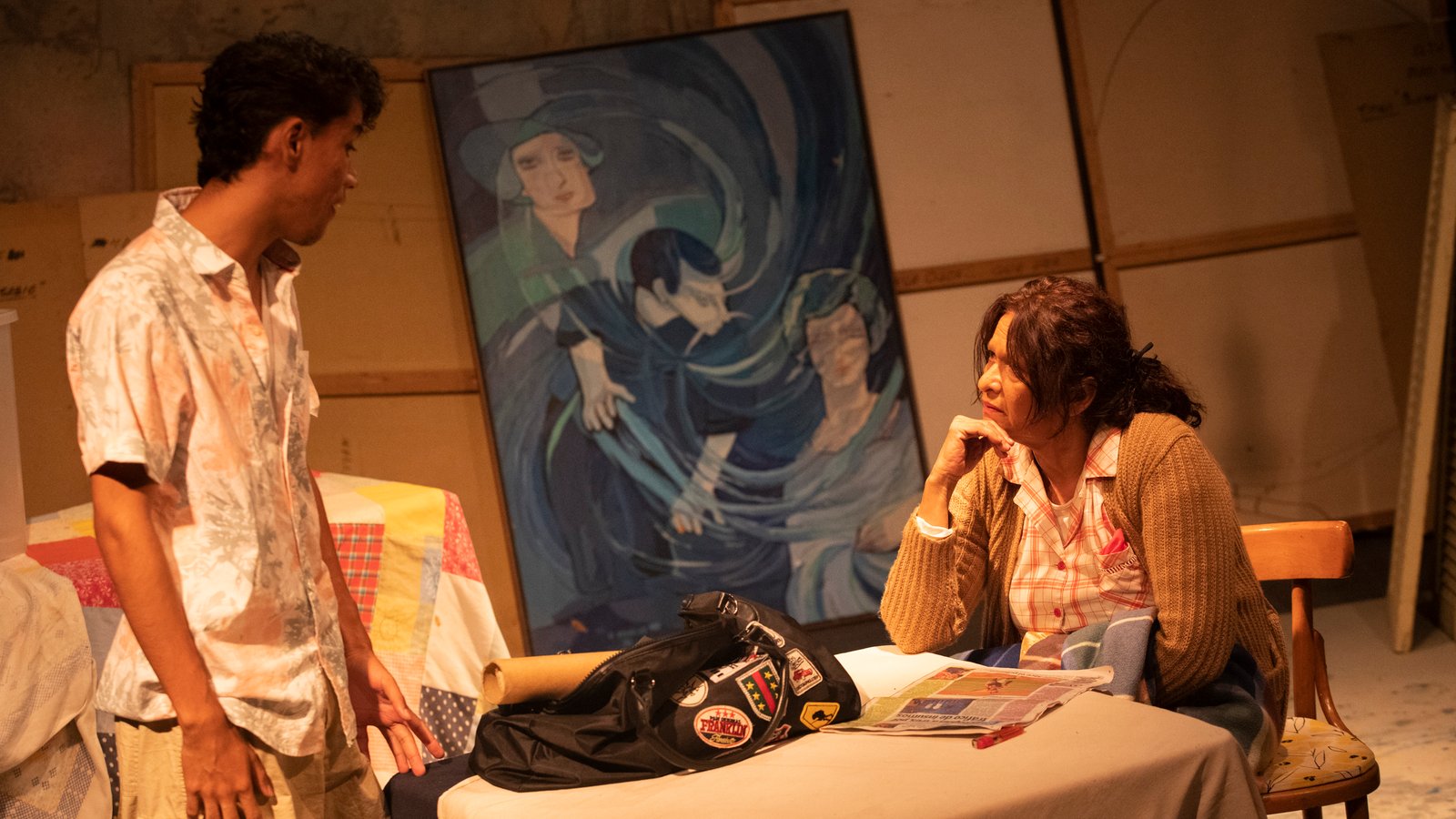
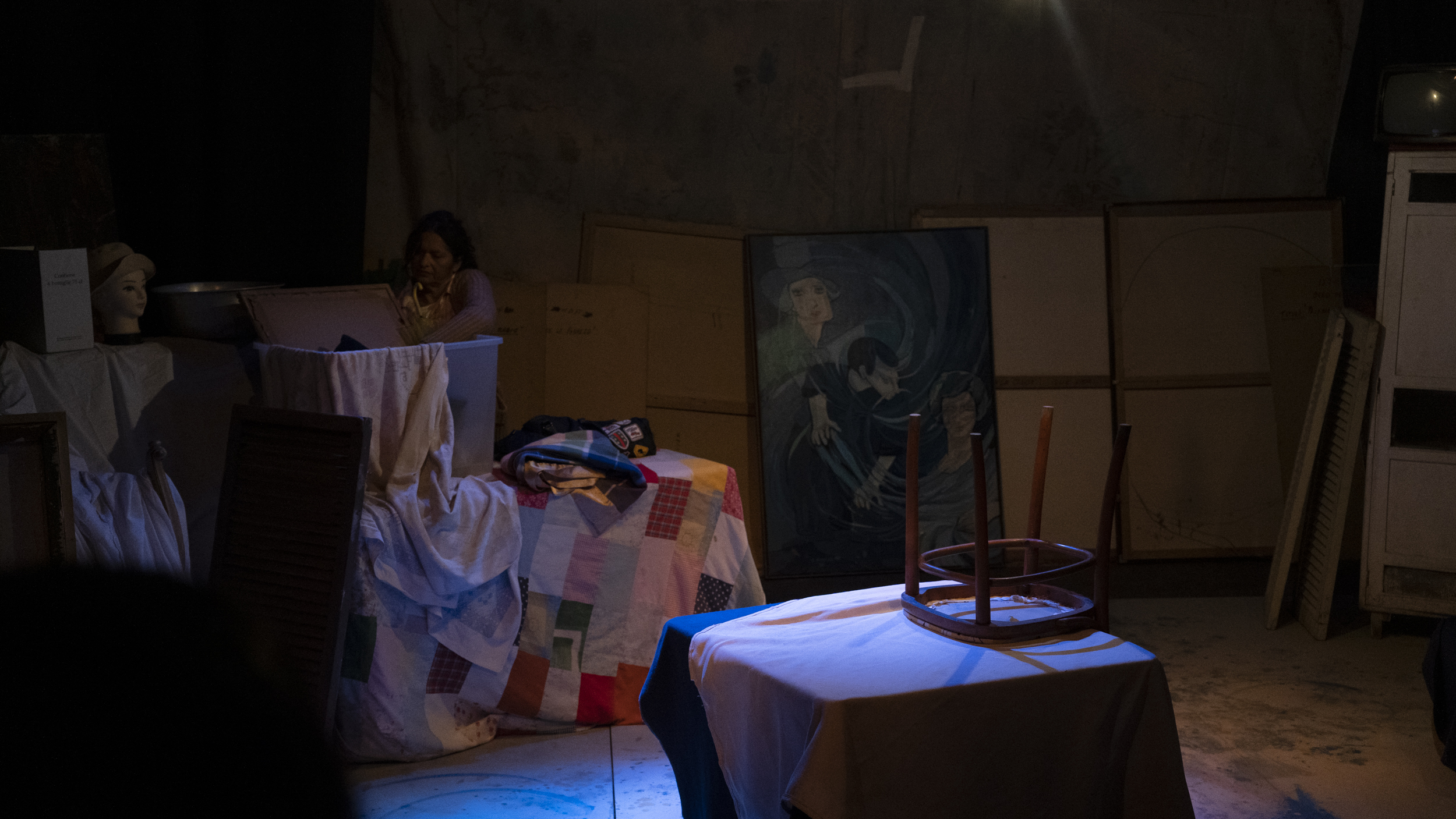
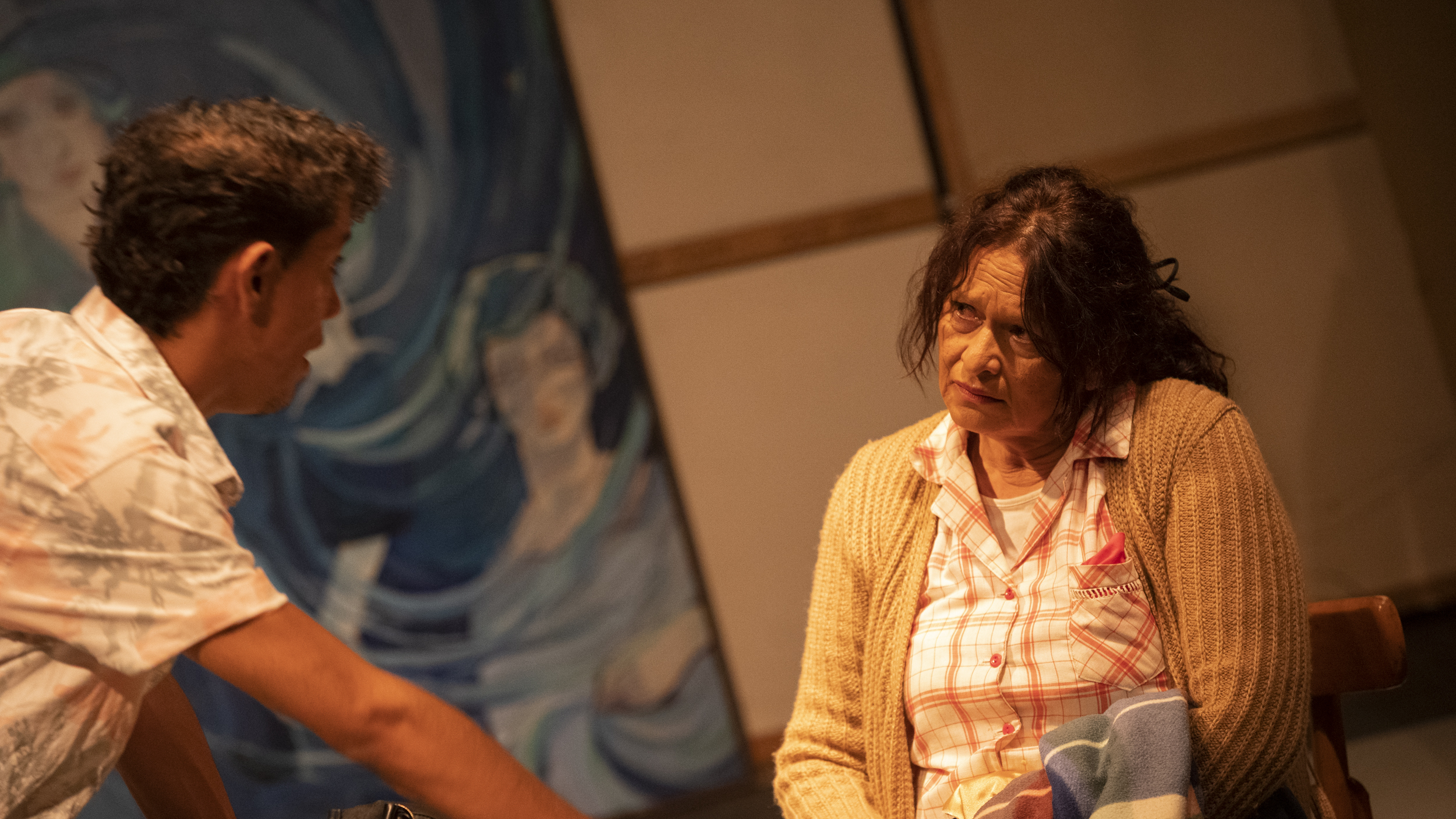
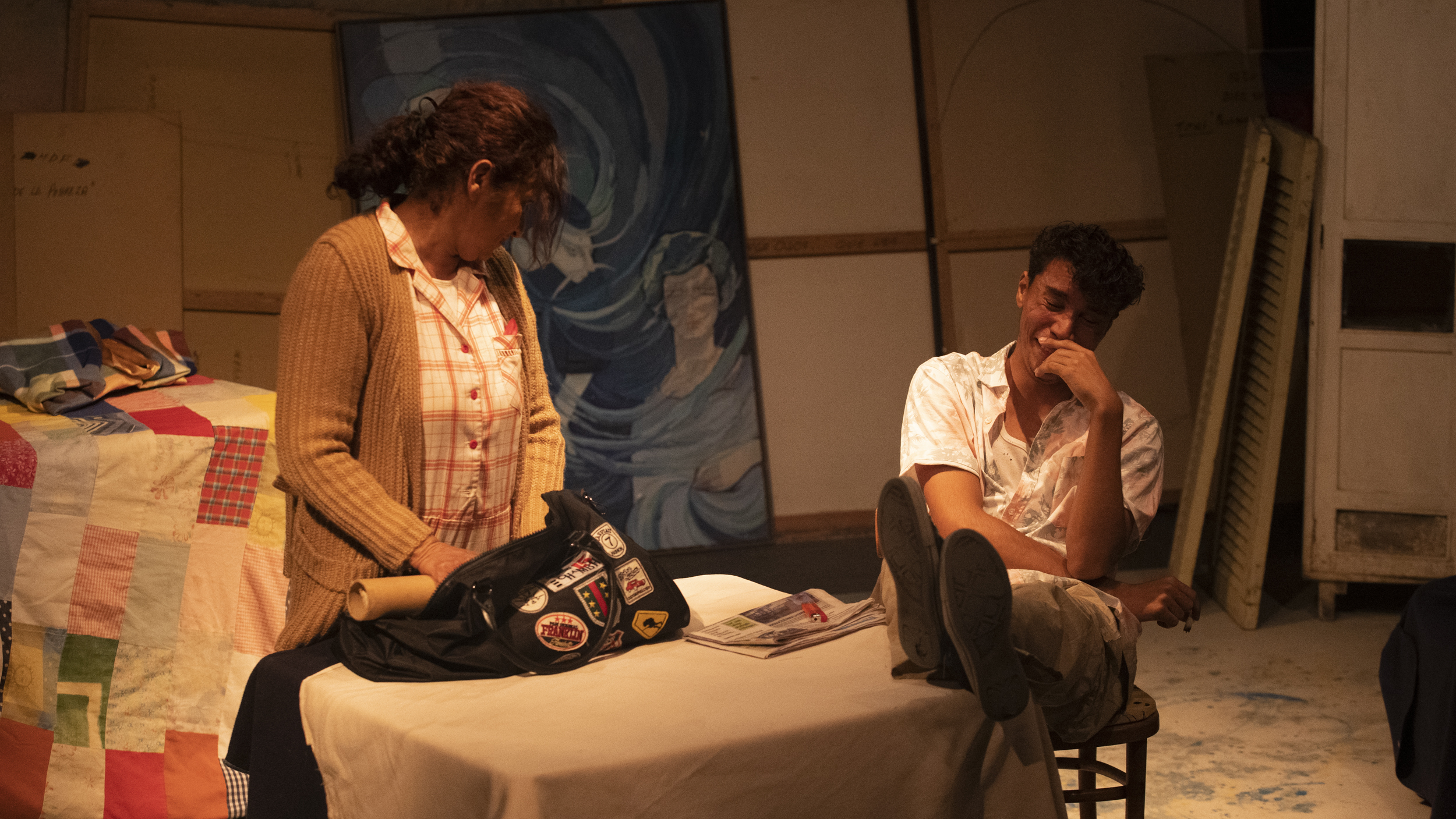
A woman in a white shirt and red pants rests on a couch. This is the work of the French painter Henri Matisse, Odalisque with red pants (1925), a piece that for Manuela (played by Haydee Peña) and her son (Miguel Ángel García) is the ticket to a better life. With plans to migrate to Colombia across the border, away from social conflicts and politicians in Venezuela, this small family faces scarcity as persecution and external threats lurk in the play The rapture.
Directed and written by 42-year-old artist, educator and director Jean Healmuth, the piece is inspired by a real fact to tell a fictional story. In the work, Manuela worked at the Museum of Contemporary Art in Caracas. His son, a misunderstood artist, showed a talent for painting from a young age. When the family economy went down, they both came up with a plan to survive: commit a robbery. They replaced Matisse’s original painting with an identical copy. Nobody noticed the difference.
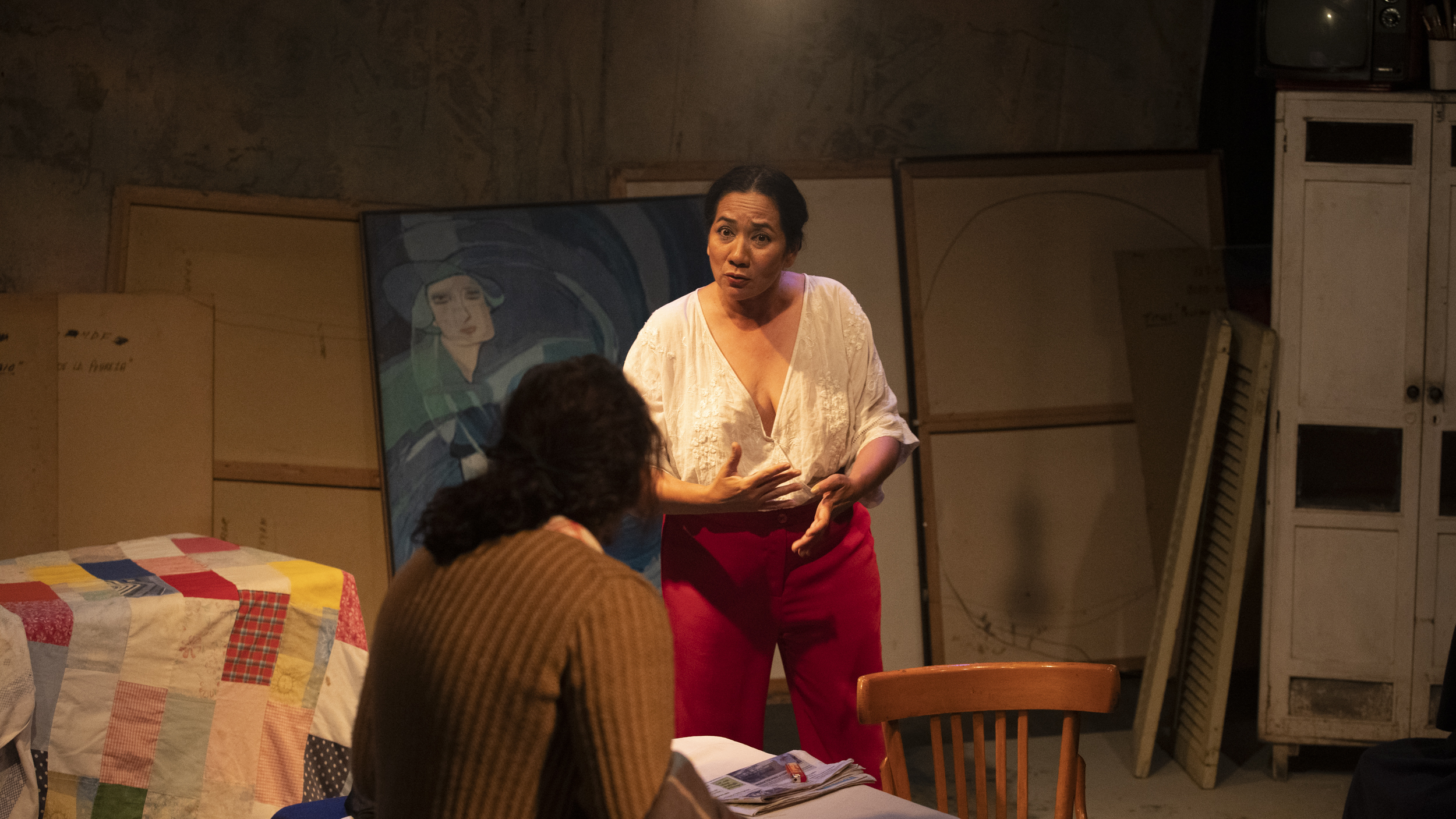
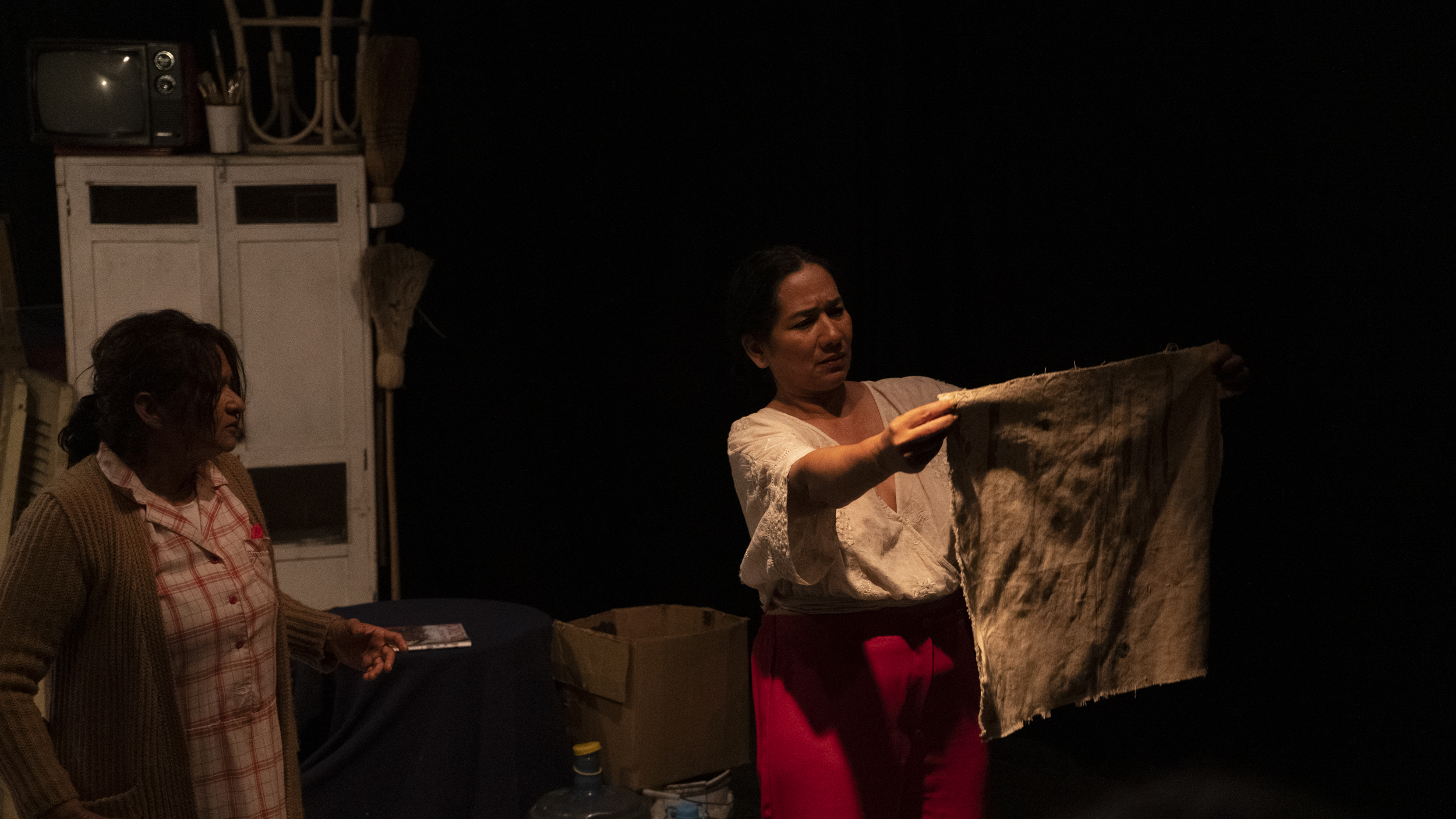
In the play, presented at the New Ink Festival from The Matchbox, both characters have to face the consequences of your decisions. The money for the painting does not arrive. There are rumors that the person they contacted to sell it was discovered. “They are looking for them,” warns his neighbor (played by Beusi Araque), they are getting closer to catching them. Both will have to make an immediate decision if they want to remain free to comply with the plan to migrate. That bright future, which will separate them from misery, seems increasingly distant.
Premiered at the Bello Monte Acoustic Shell, The rapture is the result of the Crosswords workshop taught by Orlando Arocha. For Healmuth, the piece addresses a historical event in Venezuelan art, a topic aligned with his current interests and the questions he asks himself as an artist: “The rapture It is about some questions that I am currently asking myself: who cares about art in a time as complicated as the one we live in in Venezuela? “I ask myself that question a lot,” he says.
It is also questioned about the theaterhow or why it continues to be done, and even to whom the works are directed. Healmuth asks a central question: what does art mean in a country where people try to survive every day?
The piece tries to answer and, in the attempt, provokes more questions in a proposal that leaves the viewer space to your own interpretation. Some facts are presented clearly: the neighbor is dressed like Matisse’s odalisque; others, however, he leaves suggested. In the play, the audience never sees the painting being talked about.
It is a text full of metaphors, images and ideas that float, are suggested or fall. For the playwright, the objective was for the audience to leave the room building their own story of what really happened after the theft of Matisse’s painting, a real fact that was never clarified: “We did not show the painting at any time to maintain the mystery, an ambiguity. I think that also meant that in some cases some things were not understood, but that is also fine because I did not want to give the public everything at once, but rather work on a style that was new to me: comic style. Use as little as possible to say something and that everything is as if in subtext, between the lines.”
With performances on Friday, Saturday and Sunday at 4:30 pm, The rapture It will be presented until October 11. Tickets are $10.
The truth behind the fiction
In December 2002, the Matisse Foundation in Paris denounced that the work Odalisque with red pants that was exhibited in Spain, coming from Venezuela, It was false. The news unleashed a great stir in the cultural world. The original painting was purchased by Sofía Ímber, founder and director of the Museum of Contemporary Art of Caracas, in 1981 from a gallery in New York for an approximate cost of $500,000. No one was able to specify when exactly the change occurred, but it was speculated that it could have occurred between 1999 and 2000.
The thieves stole the original canvas and quietly replaced it with a fake copy within the same frame. The change went unnoticed by the museum authorities, including the director Rita Salvestrini who, once warned by the foundation, filed the corresponding complaint and warned of the fraud committed. However, it was not until July 17, 2012, ten years later, that the original canvas was recovered.
The FBI (United States Federal Bureau of Investigation) was able to find the painting after an undercover operation at a Miami Beach hotel. The agents pretended to be art buyers interested in the piece to recover it. Salvestrini reconstructed what happened in a book titled The case of the Odalisque and other memories, in which it counts What was it like to file a complaint? and the subsequent investigations that were carried out.
It is not yet known who stole the painting from the museuma very striking fact for Healmuth. The artist, with a career of more than 20 years dedicated to scenic and pedagogical creation, was based on Salvestrini’s book and in-depth research to write The rapture. The story began to obsess him so much that he had no doubts about what he wanted to write in the workshop with Orlando Arocha, which he entered in 2025: “I began to become obsessed with the news. I researched a lot about what had happened at that time and what caught my attention was the gap in the story. It has never been discovered who the people who committed that crime were. From there I began to imagine who was responsible and that is how I made this work.”
The rapture shows a fictional hypothesis of what could have happened if those responsible for this crime were humble Venezuelans, overwhelmed by misery, poverty and social conflicts. At Manuela and her son’s house there are empty gas tanks and leaks in the roof. The simplicity of the home is reflected in every detail. The only luxury are the paintings painted by a misunderstood young man who has had to face criticism for his sexual orientation. He ideal future It doesn’t seem close.
“Many people who went to the museum, the visitors, saw the painting that was not really the painting, it was a forgery. That obsessed me,” he says. The text went through a process of writing, revising and constantly rewriting. Healmuth confesses that before he had the piece ready, he made about eight drafts. He was so committed to the story that he admits to being satisfied with the result.
The title also changed over time. At first it was The extraordinary abduction of the Odalisque with red pants. Due to a pragmatic decision, he decided to abbreviate it: “The one that you will be able to see on stage is the most finished, the one that it satisfies me more about what I wanted to say, what I really wanted to tell.” The writing process, however, was not easy at all.
Writing well is difficult
As a reference in children’s and youth artistic training, committed to promoting dramaturgy and creative development, Healmuth recognizes that there are not so many spaces to learn playwriting, nor schools that teach directing actors or directing staging. The Matchbox, through Orlando Arocha’s workshops, offers a space to access that knowledge: “You can learn from Orlando’s experience, which teaches us how to work with actors. The time I have been here has been very beneficial because we have been in contact with them in all the different processes. It is very enriching to know how to work with an actor. Many actors who read the first drafts helped from their perspective for the final work.”
What motivated him to be part of the workshop was a simple reason: after 20 years of artistic career, he had never worked with La Caja de Fósforos. I knew Arocha’s work and wanted to work with them. The process, although it has been very enriching, was also difficult.
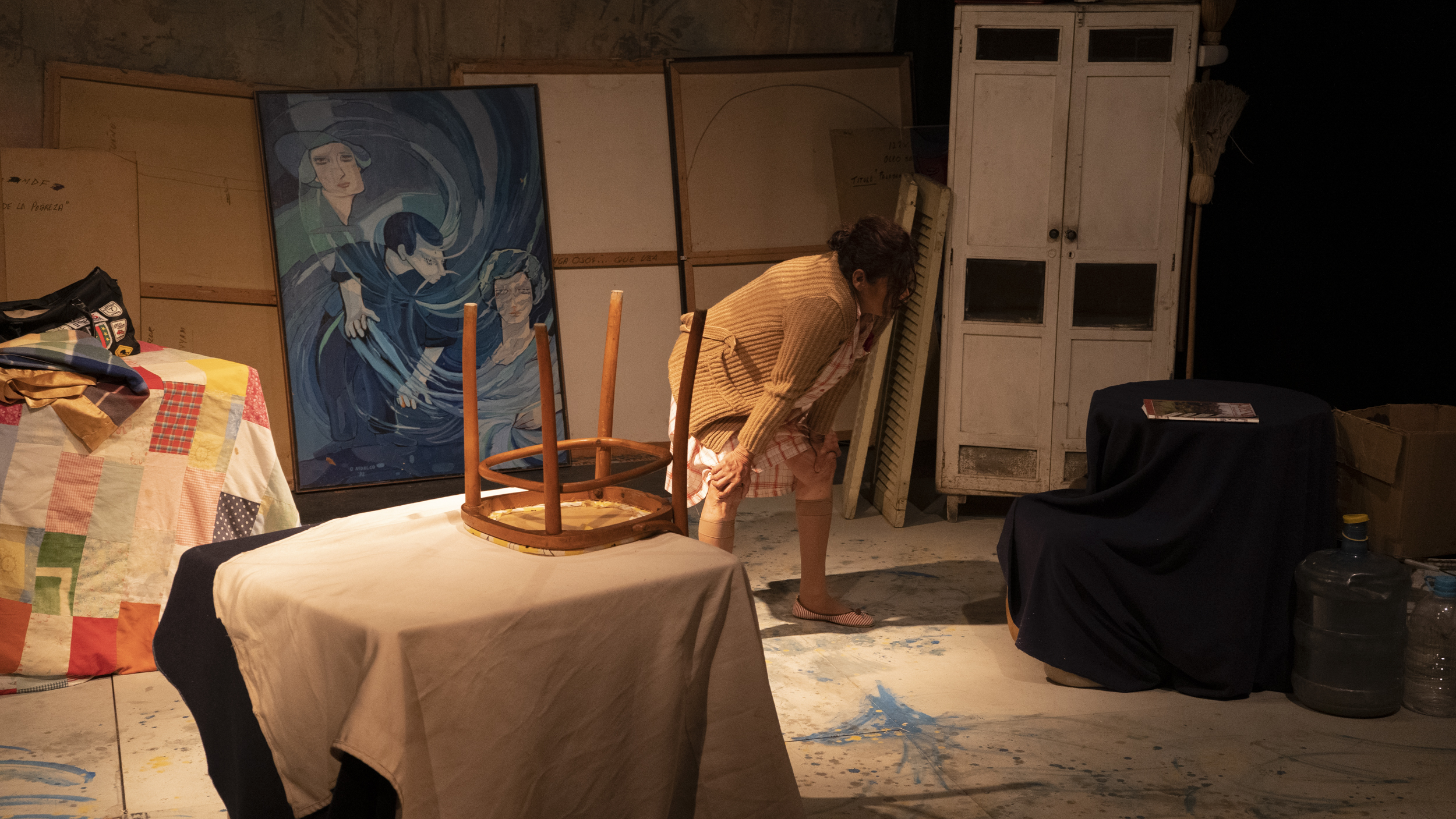
After writing the piece, he decided to take on the direction, a challenge that required him to dialogue in his own words: “I always say that they are very differentIt’s the words that are written than the words that are said. That was totally a challenge. More so with this text, which is a metaphor for how this crime can also mean that the memory of our country was stolen.”
Writing, according to Healmuth, is like singing: anyone can do it, but not everyone can do it well. It is difficult to achieve say what you want to say and, furthermore, do it well: “I have given few workshops about what I have learned. My work has mostly been with children and adolescents. I started studying with comprehensive theater training, where they gave you dramaturgy, acting and direction. I have also tried to transmit what I have learned.”
Thanks to his work with young people, the works he has written are, for the most part, children and young people. The rapture It is his second work for an adult audience after Cataclysma comedy of tangles tribute to the cinema of Pedro Almodovar presented in 2002 at the Espacio Plural del Trasnocho Cultural.
At this time he was interested in the topic of art and how it is perceived in Venezuela, but he also wants to write about other topics. You are exploring issues such as separation, grief or acceptance of suicide. But, at the moment, he is focused on finishing his season at La Caja de Fósforos: “You should come and see The rapture so they know more about the story, because many people don’t know her. The theft of works of art in general is interesting, but this is something of ours, it happened to us and people don’t know it.”