Text and image Edwien Bodjie
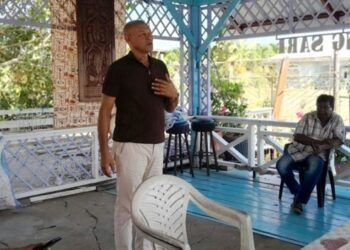
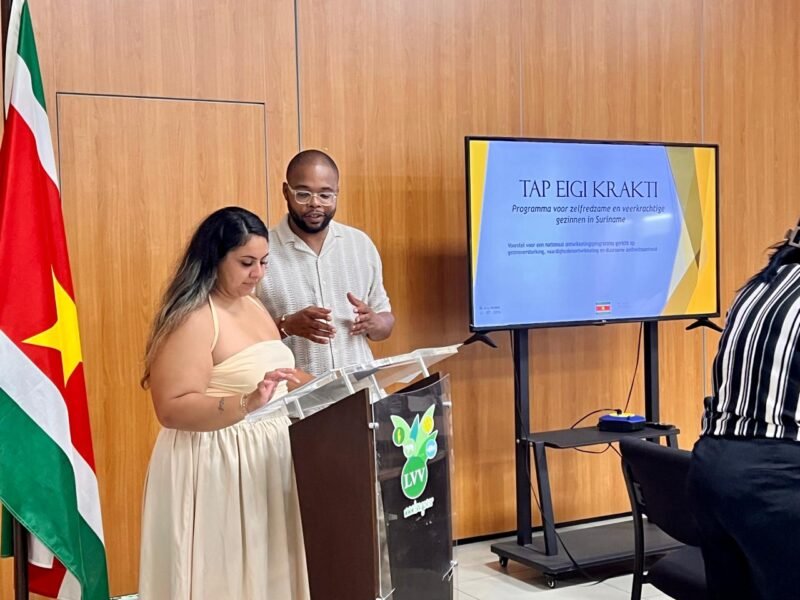
PARAMARIBO – “Surinamese have a lot of potential, but need to be better informed, trained and developed in what they are good at. This increases the chance of sustainable work in the future.” Garvin Profijt of the By Any Means foundation said this on Monday during the presentation of the Tap Eigi Krakti (On our own strength) program, which is aimed at strengthening socio-financially vulnerable families.
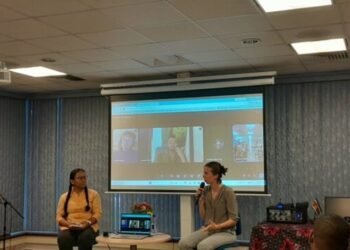
The presentation took place at the Ministry of Agriculture, Livestock and Fisheries (LVV) and should be seen as a first step towards possible cooperation with the government and other partners.
The program was developed by founder and director Profijt, together with colleague Dilan Algur. It focuses on increasing the self-reliance of families through practical skills and personal development. According to Profijt, the aim is to reach a hundred families in the first phase. “The aim is to make these families self-reliant through teaching packages,” he says. These packages include horticulture, agriculture, hairdressing skills and psychosocial guidance.
The approach goes further than just teaching practical skills. There is also a focus on mental resilience and the development of communication skills. “It’s not just about people being able to do something to generate income, but also about them becoming mentally stronger and functioning better in their environment,” says Profijt.
Focus on vulnerable groups
He points out that certain groups are extra vulnerable, such as widows and teenage mothers, who often have to find their way without support. “Imagine: a woman loses her partner and is left with children. How does she restart her life? Or a young mother who has cared for her child alone for years and then has to enter the labor market without the necessary skills,” he says.
According to him, targeted guidance can help these groups to rebuild perspective. Providing them with skills and support increases the chance that they will find and retain work. An important part of the program is communication. Profijt indicates that many people have difficulty holding their own in formal situations, for example in the workplace or at government agencies. “If you train people in this, they can better keep up and develop further,” he says.
The program is still in its early stages. He explains that the presentation at LVV is intended to bring the plan to the attention of policymakers and possible partners. Discussions are now underway with various ministries and agencies.
“This is our first presentation. We have presented the concept before and are now in discussions to see how we can implement this,” he explains. This looks at the role of the government, but also at cooperation with social organizations and the business community.
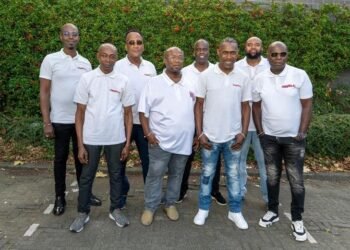
The foundation wants to use professionals, including from the Netherlands, for implementation. “These are independent professionals and social workers with a Surinamese background, who know the local dynamics and are willing to contribute,” says Profijt.
Free training
Financing is another point of attention. He indicates that the United Nations, the World Bank and the Inter-American Development Bank are possible financiers. The organization has previously supported projects in Morocco, the Dominican Republic, Congo and Paraguay, among others. According to him, the plan is designed in such a way that it does not have to rely exclusively on state resources. “We have developed a financial strategy with which we can achieve this together with partners,” he says.
In addition, Profijt emphasizes that participants will be trained and guided free of charge and without obligation. “They are already vulnerable people, so asking them for money is not entirely okay.”
The meeting also considered the broader impact of the program. Benefit: “Strengthening families can contribute to poverty reduction and social stability. By enabling people to provide for themselves, the pressure on social services can decrease.”