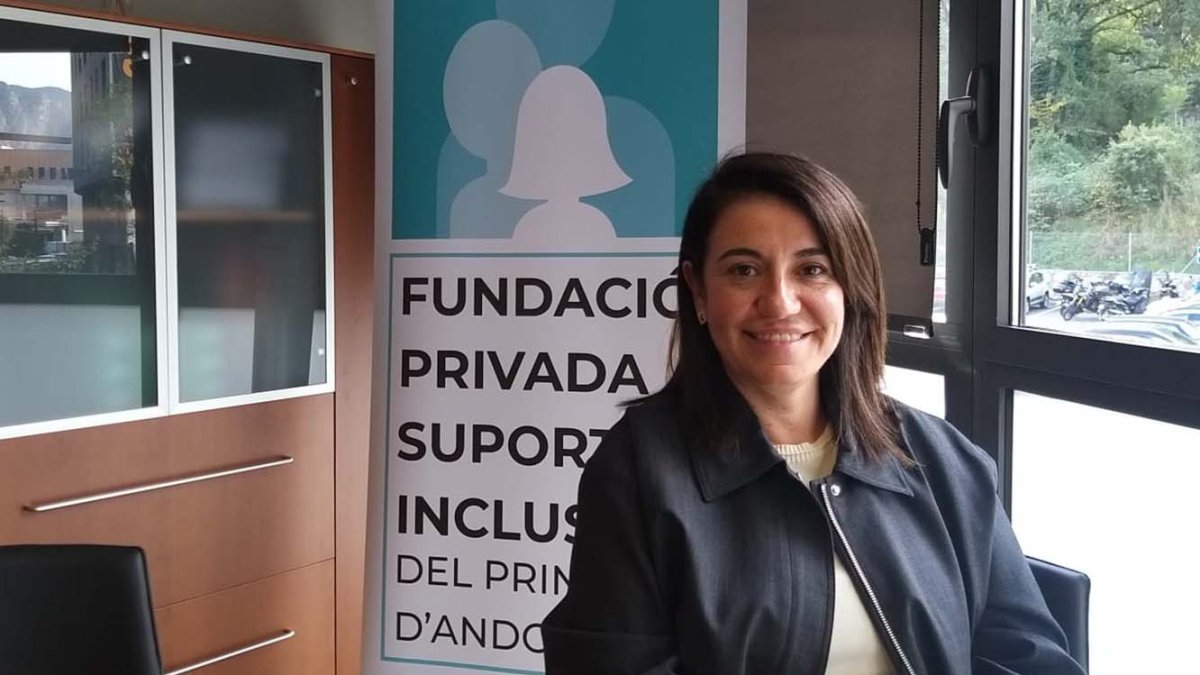
The Private Foundation for Support and Inclusion has started a new stage under the direction of Thaïs Mingorance. The new direction is to consolidate projects, but also to start new ones, with a very important weight on the dissemination of the work that is being carried out, with the desire for society to know the work of the entity. This new push is combined with the consolidation of programs that already work and with an increasing focus on users. So, as he remembers Mingorancewhen they were born, in 2009, they were accompanied by seven people and now the number reaches 75. “We are always growing”, details the director, who adds that “there has not been a year, not a single one, not with Covid or anything, that we have a decrease in people accompanied”. Among the new initiatives that the organization wants to promote is the 360 projectwhich plans to create an economic wallet to help users cover unforeseen expenses.
“We are updating the foundation and we are also updating ourselves in the name, because, obviously, tutelage is no longer a term that is used, it is now guardianship, and because support and inclusion are really done here, it is not only a matter of bringing guardianship to a strict and legal level (…) in the end we provide comprehensive support to the person in all areas of their life”, summarizes the new director to define the new course of the organization.
The treatment that people receive is “individualized”, since they need support that responds to the different problems they present, which is usually not just one problem, which makes it difficult to approach it on a case-by-case basis. Precisely to attend to these needs, sixteen professionals currently work at the foundation, in the curatorial part, and seven people work in the Youth in inclusion side. In this case, it should be noted that these are young people with severe autism and who often also present some other pathology. In this case the foundation cares for five young people with severe autism through the program that provides “individualized attention” with the aim of achieving that they “have as much autonomy as possible”. And beyond this accompaniment and this inclusion in the community what is wanted is “the social impact of normalizing” these cases.
Another of the existing projects are the flats with support, where there is supervision and support for users to achieve their autonomy. Currently, the foundation has one where three girls live. There had been times when there were more floors and in this sense, Mingorance it affects the fact that “it is very important that these people can have this independence. There must be a structure”. In this way, it values that some users of the foundation are on the floors of the Red Cross or those with mental health, but also points out that “not everyone needs this” and notes that obviously the difficulties with housing that affect the population in general become even more evident with a vulnerable group, since many of these people have economic difficulties and often cannot afford current market prices.
Future projects
As for future projects, Mingorance affects the dissemination of the work and in society knowing that they exist and what they do. “I would very much like first to raise awareness among the population, the citizens and for them to get to know us. Because many times in these months that I have been in office when I have gone to explain what we were doing, it is very common for us to be confused with another foundation or with another organization”, he exemplifies. “In the end, we have been around for many years. Many, many years. But we are a bit more unknown”, he laments.
Very soon they will launch the project 360, which is carried forward thanks to the financing of the Andbus forum. This is a proposal that seeks to facilitate access to basic resources for users. In this way, the director remembers that the 90% of the people they accompany do not have sufficient financial resources and that the intention with this initiative is to create an economic purse to be able to give aid when it cannot be obtained in any other way. Ultimately, it seeks to cover “overdue expenses” that they have to deal with immediately, such as for example the purchase of a washing machine.
And in the third Andbus forum, the organization has put another project on the table that they want to promote, dreams on the road, an initiative aimed at promoting the autonomy, inclusion and community participation of the people it accompanies. The organization is already carrying out the project We’re on vacationthrough which, thanks to a contribution, twelve users were able to enjoy holidays in a house rented in Mont-Roig this past summer For some of the people, the director of the organization points out, it was the first time “in twenty years that they had a holiday”. These are proposals that they could not otherwise have. And now with the project that we want to move forward with, what it would be about is to make day trips, since there are many of the users who for various reasons, especially medical ones, cannot go of Andorra several days and cannot enjoy the initiative We’re on vacation.
And in terms of dissemination, we want to make a special impact in schools, with the intention of “normalizing” the inclusion of the group in the community and also to “awaken vocations”.