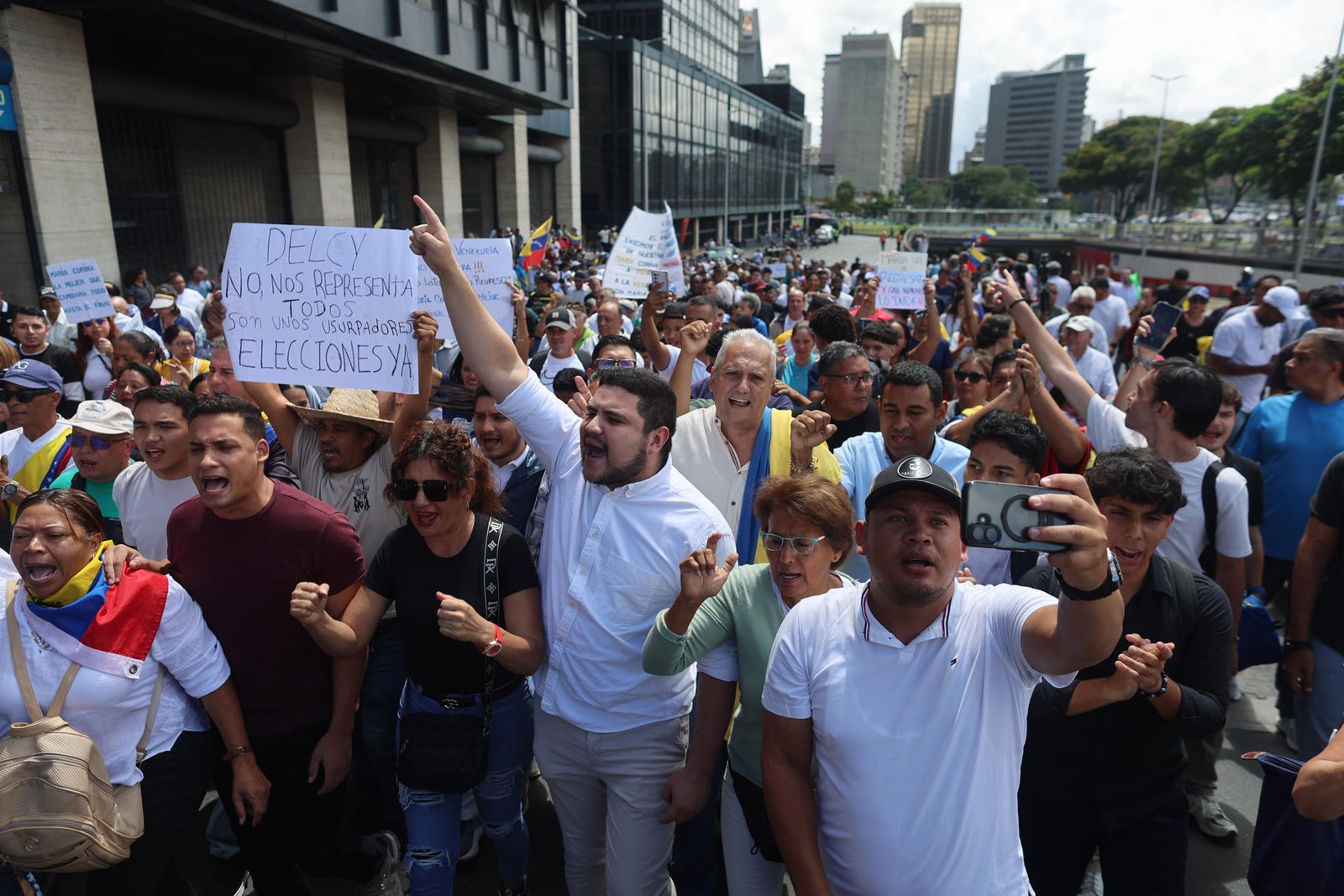
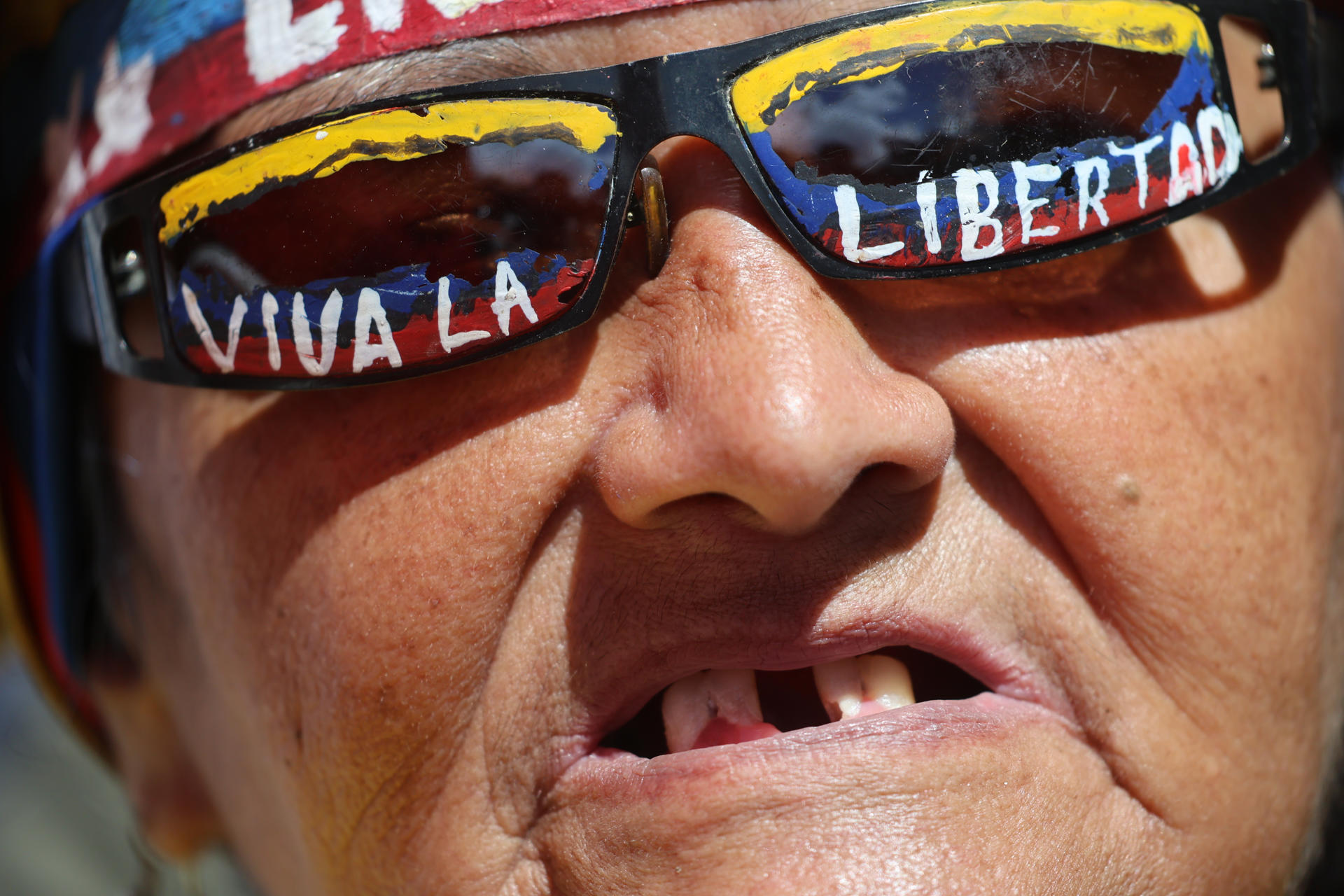
In recent days, the streets of Venezuela have once again become the scene of citizen protests due to the prolonged blackouts that have been registered for months in entities of the country, the low salaries, the lack of labor rights and various political demands. Although during 2026 there had already been demonstrations by workers, communities and families of political prisoners, among other sectors, these new spontaneous days are the first with a large turnout since the mobilizations that marked the nation after the presidential elections of July 2024.
The rebound also occurs after an August in which Venezuelan Conflict Observatory Social (OVCS) documented 652 protests in the countryabout 22 per day. The figure represented an increase of 288% compared to the 168 demonstrations registered by the organization in August 2025. Of that total, it indicates, 501 were related to economic, social, cultural and environmental rights, while 151 corresponded to civil and political rights.
Blackouts bring discontent to the streets
Wednesday night and Thursday morning were marked by protests in entities due to electrical interruptions which according to citizen reports have lasted for hours. In some locations they have exceeded 12 and even 16 hours.
In Araguaresidents of sectors such as El Paseo, Rosario de Paya, Fundación Mendoza and Las Guacamayas closed roads and threw pots and pans. In Portuguese There were protests in Araure and Pítu, while in Guarico Mobilizations were recorded in Zaraza, Camaguán, Valle de la Pascua and Calabozo. There were also reports of demonstrations in Anzoátegui, Zulia and Sucre. Local media reported similar actions on the night of September 22 and 23.
In Calabozo, neighbors expressed their annoyance over outages that, according to testimonies published by local media, exceed 12 hours. Kariela Higuera, a resident of the town, questioned the consequences of the interruptions for people with chronic diseases and for those who must go to hospitals and clinics, according to statements collected by The Patilla.
The protests also took place in the Panamerican Highwaya, on the axis that connects towns of Zulia and Merida. Residents of Caja Seca and Nueva Bolivia reported prolonged outages and blocked traffic. In Lauraresidents of Carora closed an avenue after days without service, according to media reports.
One of the main complaints that is repeated in the communities is the lack of information. Citizens report that they do not know when the cuts will occur and when the service will be restored.
The absence of an official schedule makes it difficult to plan commercial, work and educational activities. Citizens have also reported damage to appliances, loss of food and difficulties in preserving medicines.
In Las Garcitas, Valle de la Pascua, neighbors indicated that the failure of a transformer left them without electricity for approximately a week. The closure of roads then became a pressure measure to demand replacement.
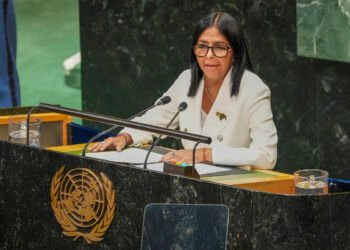
The government attributed the failures to various factors. The acting president, Delcy Rodríguez stated that the electrical system is being subjected to alleged sabotage and pointed out manipulations in gas pressures that would affect the thermoelectric system. He also related the difficulties to foreign sanctions, increased demand and high temperatures.
After returning to the country on September 24, Rodríguez visited the National Electric Energy Dispatch Center and stated that demand had exceeded 16,400 megawatts, a level that he said had not been observed since 2017. He asked citizens to reduce consumption to contribute to energy savings.
Labor demands join protests in Venezuela
As communities protested power failures, Education workers and union organizations mobilized on Thursday in Caracas and other entities in the country.
The day was convened by the Signatory Federations of Venezuelan Teachers, including the Venezuelan Federation of Teachers, the Federation of Associations of University Professors of Venezuela and other union organizations.
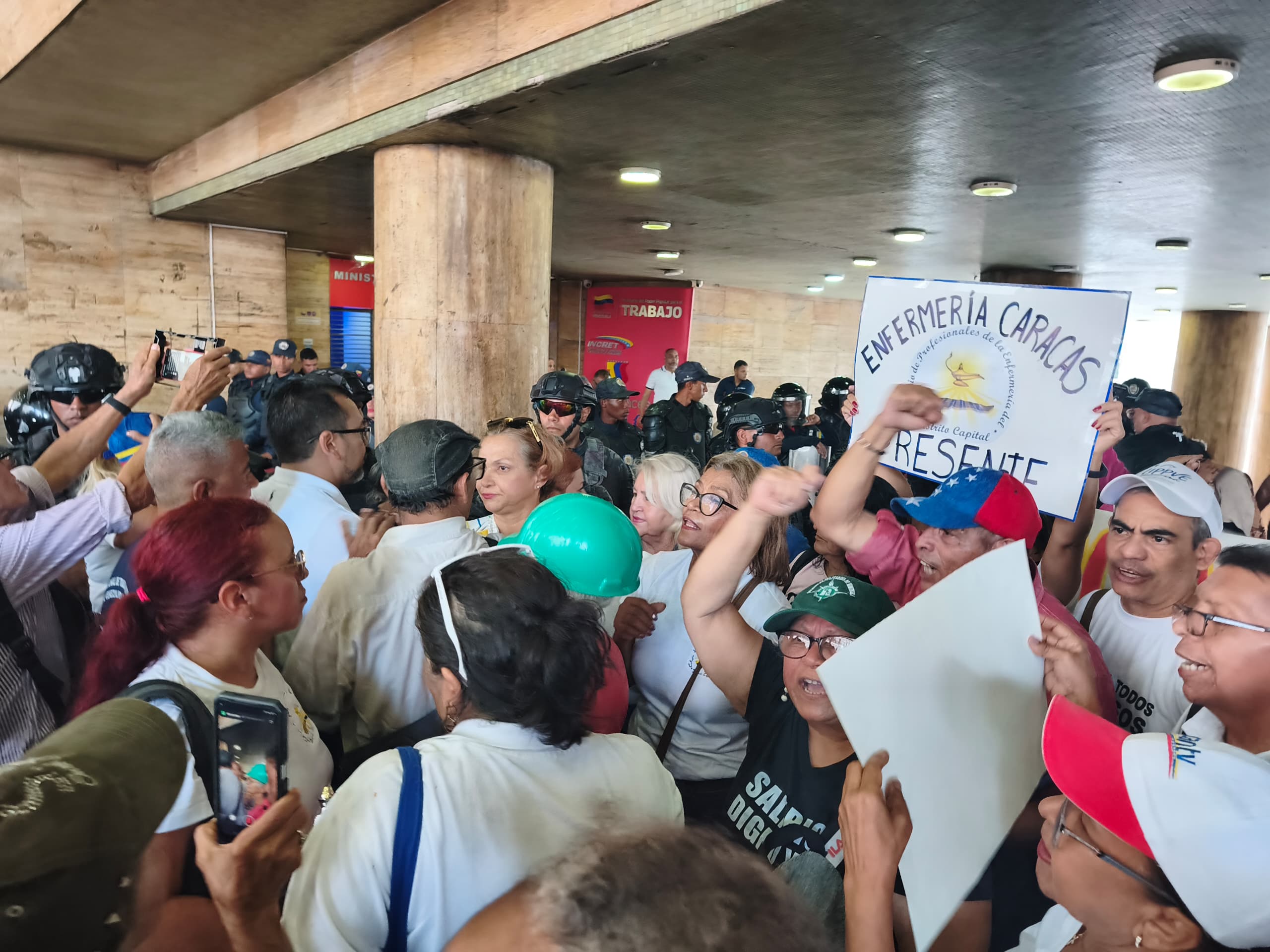
Teachers, university professors, active workers, retirees and pensioners They demanded salary increases, the incorporation of bonuses to the base salary, compliance with collective agreements and the restitution of labor and union rights.s. The call contemplated actions in the 24 entities.
In Caracas, the protesters left the vicinity of Parque Carabobo and advanced towards Plaza Caracas, where the headquarters of the Ministry of Labor is located.
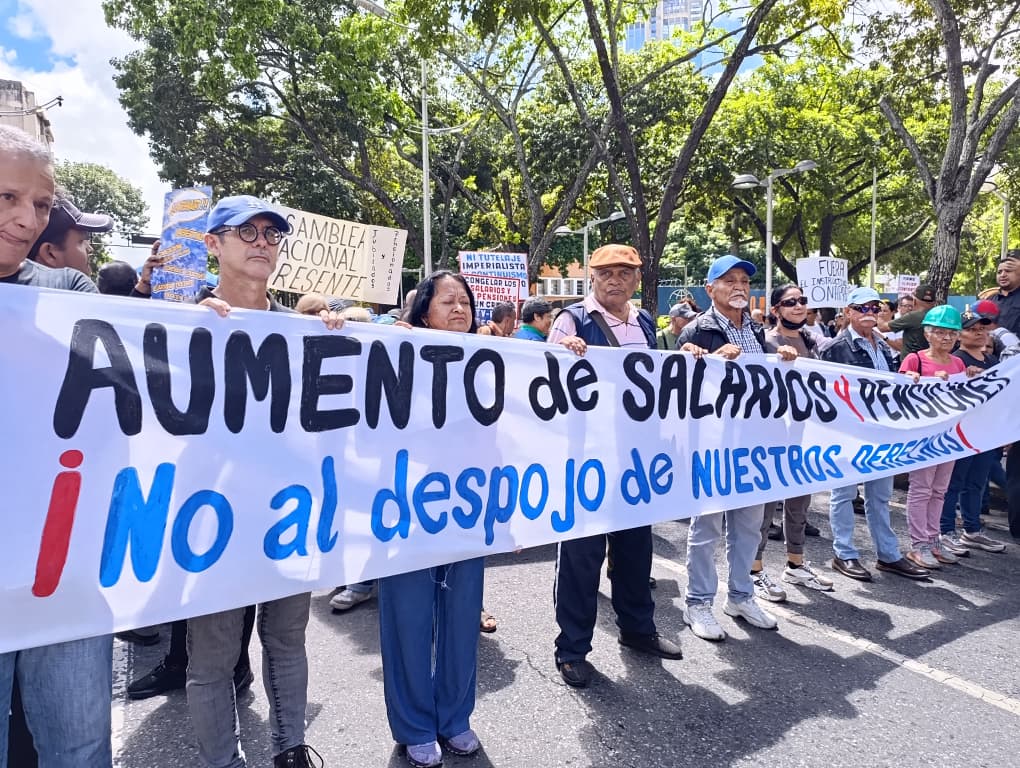
The mobilization encountered a picket from the Bolivarian National Police (PNB) along the route, but the workers finally managed to reach Plaza Caracas.
One of the main complaints from the sector is that bonuses do not replace the effects of a salary increase on benefits and pensions. Workers also question the purchasing power of a minimum wage that remains at 130 bolivars from 2022.
In August, the OVCS registered 124 protests in Venezuela related to labor rights, equivalent to 19% of the total protests documented that month. Among the protagonists were public workers, retirees and pensioners, who demanded sufficient salaries and pensions, compliance with collective contracts and better working conditions.
A political protest returned to Caracas
On Thursday, a political mobilization was added to the demands for public services and salaries.
Citizens and opposition leaders gathered in Plaza Venezuela to demand the return of María Corina Machado to the country and demand presidential elections with democratic guarantees. The demonstration was called by sectors linked to the Venezuelan Command and later part of the participants moved to the headquarters of the National Electoral Council (CNE).
Protesters chanted slogans such as “elections now” and “go back,” while carrying a national flag. The mobilization occurred in the rain and caused temporary traffic restrictions around Plaza Venezuela and on a section of the Gran Cacique Guaicaipuro highway, in front of the Central University of Venezuela.
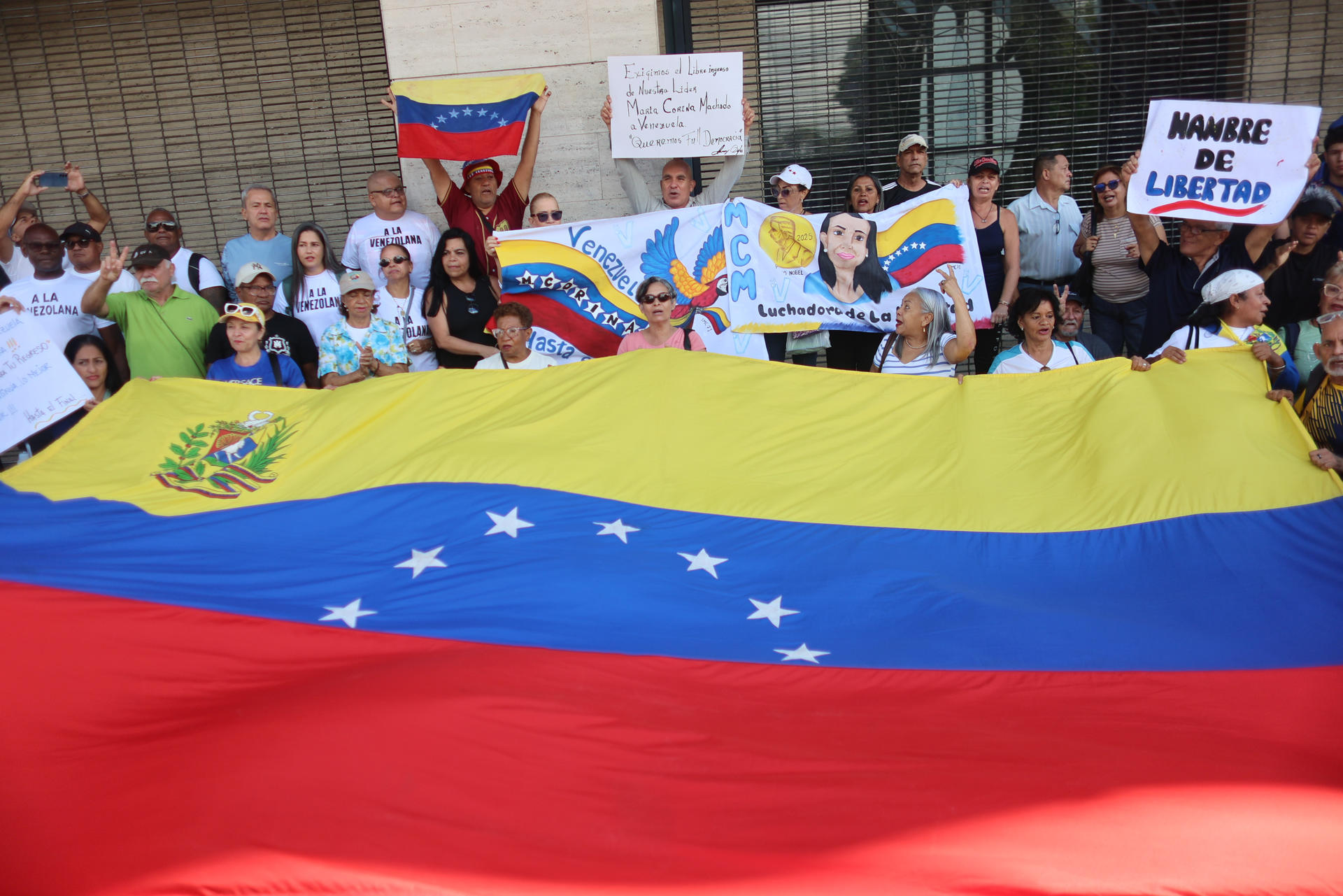
The claim came after Machado’s team reported frustrated attempts to return to Venezuela. According to the information released by its representatives, the three most recent attempts were planned from Panama and combined sea and air routes. Efe reported that its collaborators attributed the impossibility of completing one of the flights to the lack of landing permits on Caribbean islands.
The protesters also raised before the CNE the need to establish a date for presidential elections.
The protests in Venezuela did not disappear after the political days of 2024. During 2026 the demands have continued, and in August they reached a volume greater than that registered a year before. What has changed in the streets during this last week is the simultaneity and spontaneity of a large part of the concentrations.