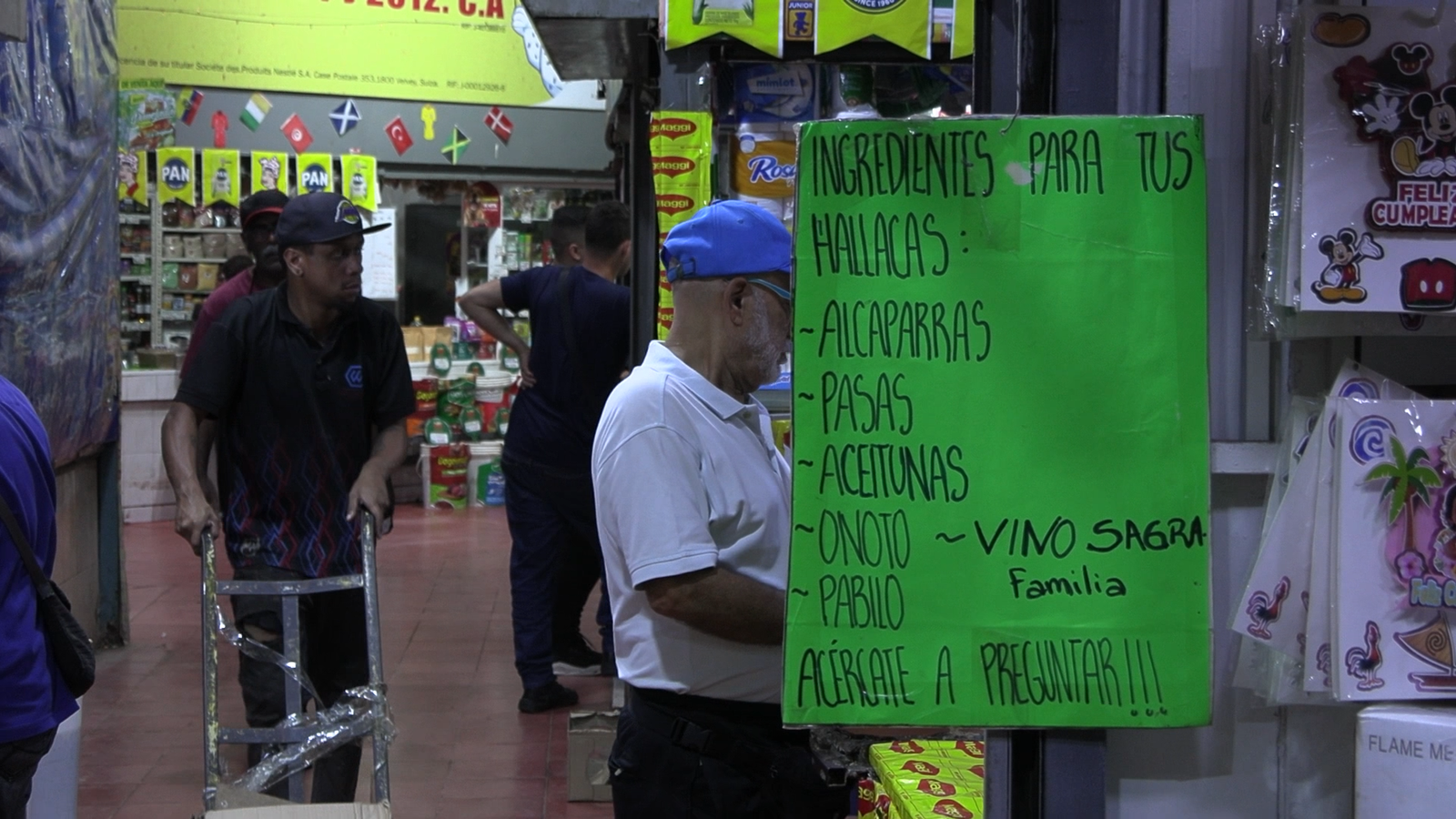
2026 has been one of the most difficult years for Venezuelans to endure due to the seismic double that shook the country on June 24, added to the economic and political crisis that the country is going through. However, Many families are already preparing to celebrate Christmas with traditional hallacas and ham bread on their tables.
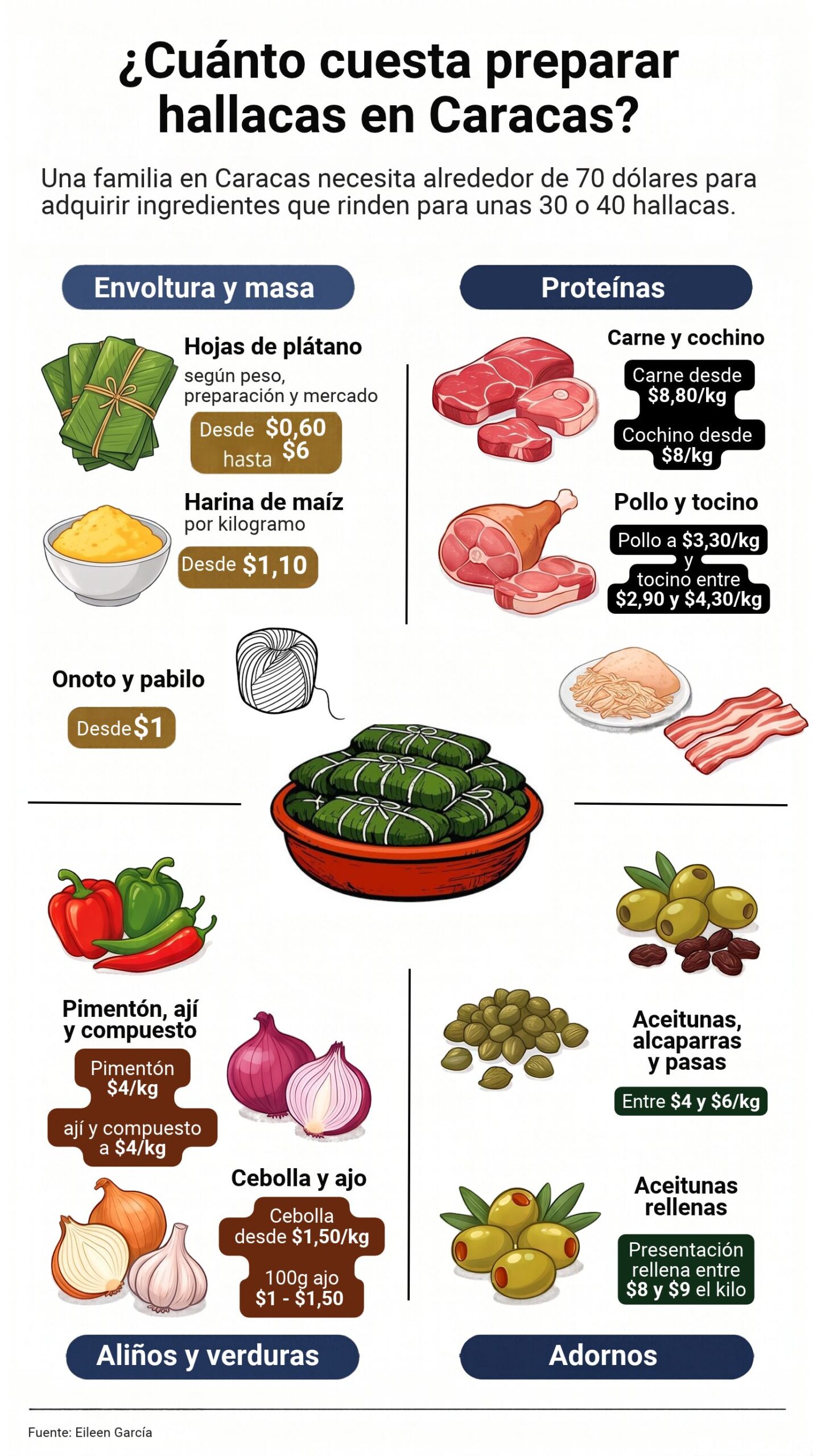
On a tour of several areas of Caracas, it was found that a family needs around 70 dollars to purchase the ingredients that make 30 or 40 hallacas.
In informal trade, The kilo of leaves is offered between 0.60 and 1 dollar, while the package with 50 already cut leaves (large, medium and small) ranges between 4.50 and 5 dollars. In municipal markets prices vary: a kilo is $1.60 and a package is between $5 and $6.
As for decorations and dry dressings, a kilo of pitted olives, capers and raisins costs between 4 and 6 dollars, while stuffed olives cost more than 8 dollars and reach up to 9 dollars. For its part, 100 grams of onoto cost between 1 and 1.50 dollars, and precooked corn flour is available from 1.10 dollars.
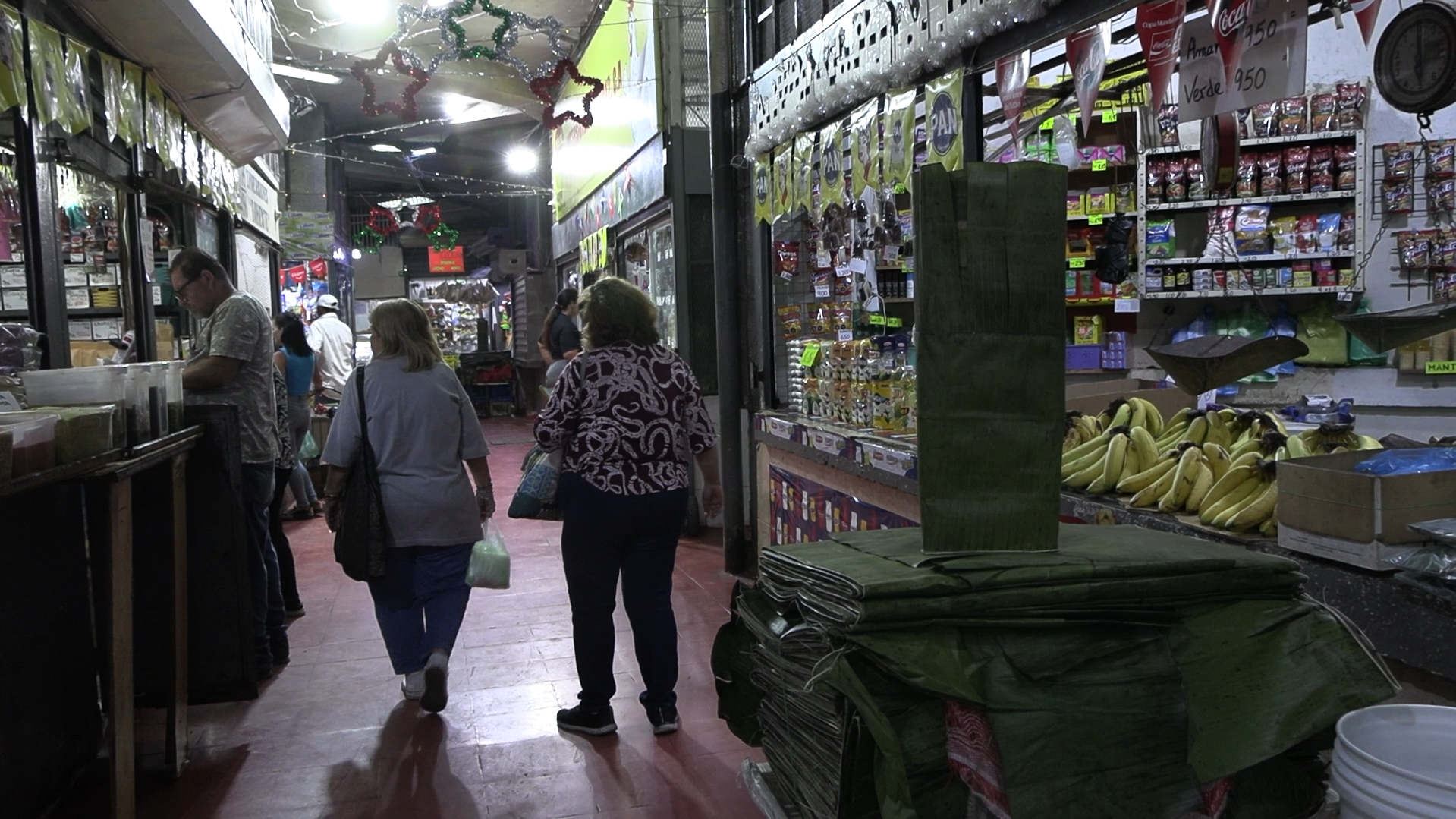
Proteins for the stew such as meat, chicken, pork pulp and bacon They represent one of the most important expenditures of this traditional dish. Meat for stew is available from $8.80 per kilo; Many buyers opt for the boneless lizard to save, although the price difference does not exceed a dollar.
Chicken sells for $3.30 per kilo, pork meat starts at $8, and bacon sells for between $2.90 and $4.30.
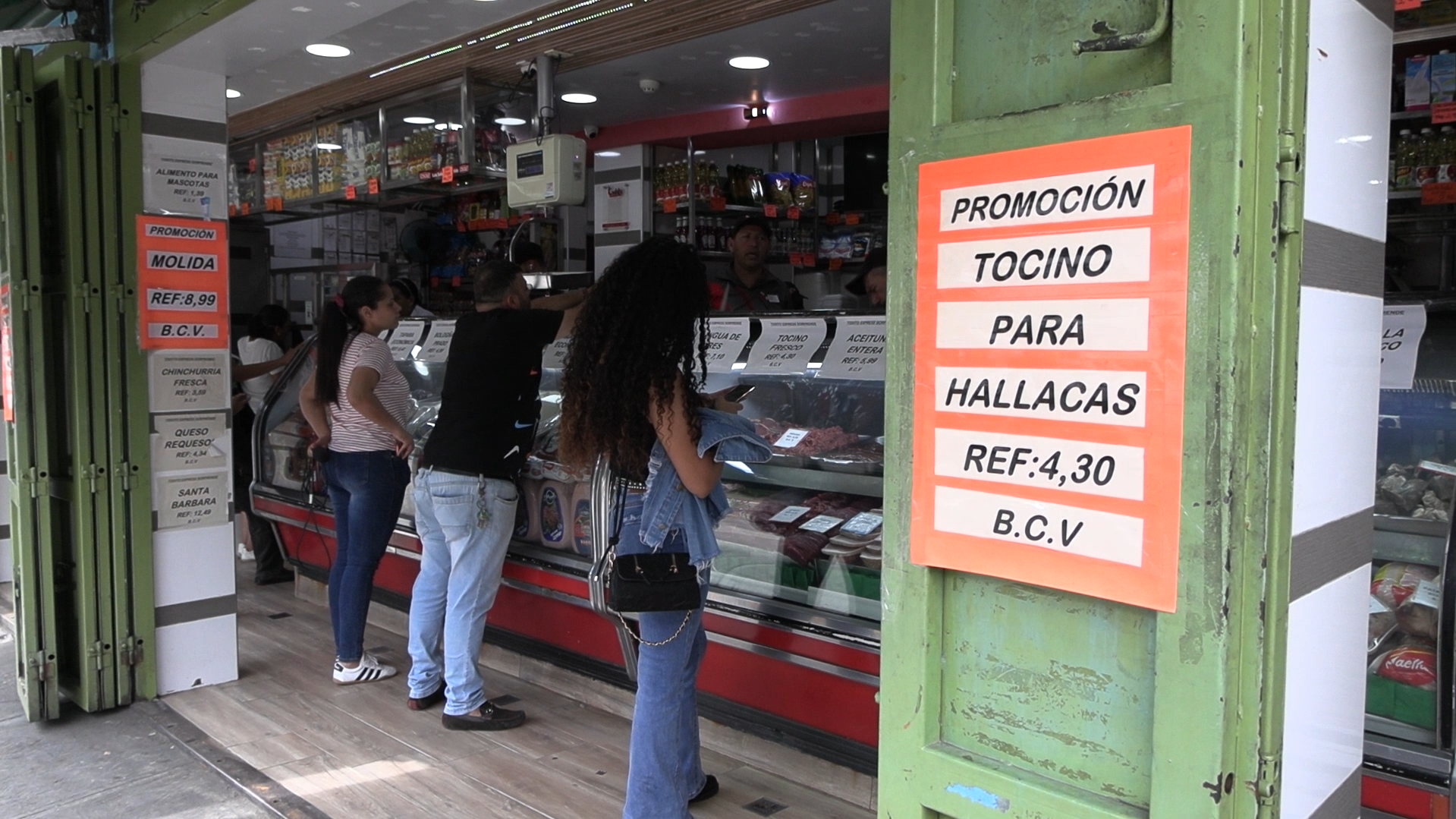
Some butcher shops and delicatessens visited offer the option of purchasing these products through the application of payments in Cashea installments, a modality under which prices present a minimal variation with respect to cash payment.
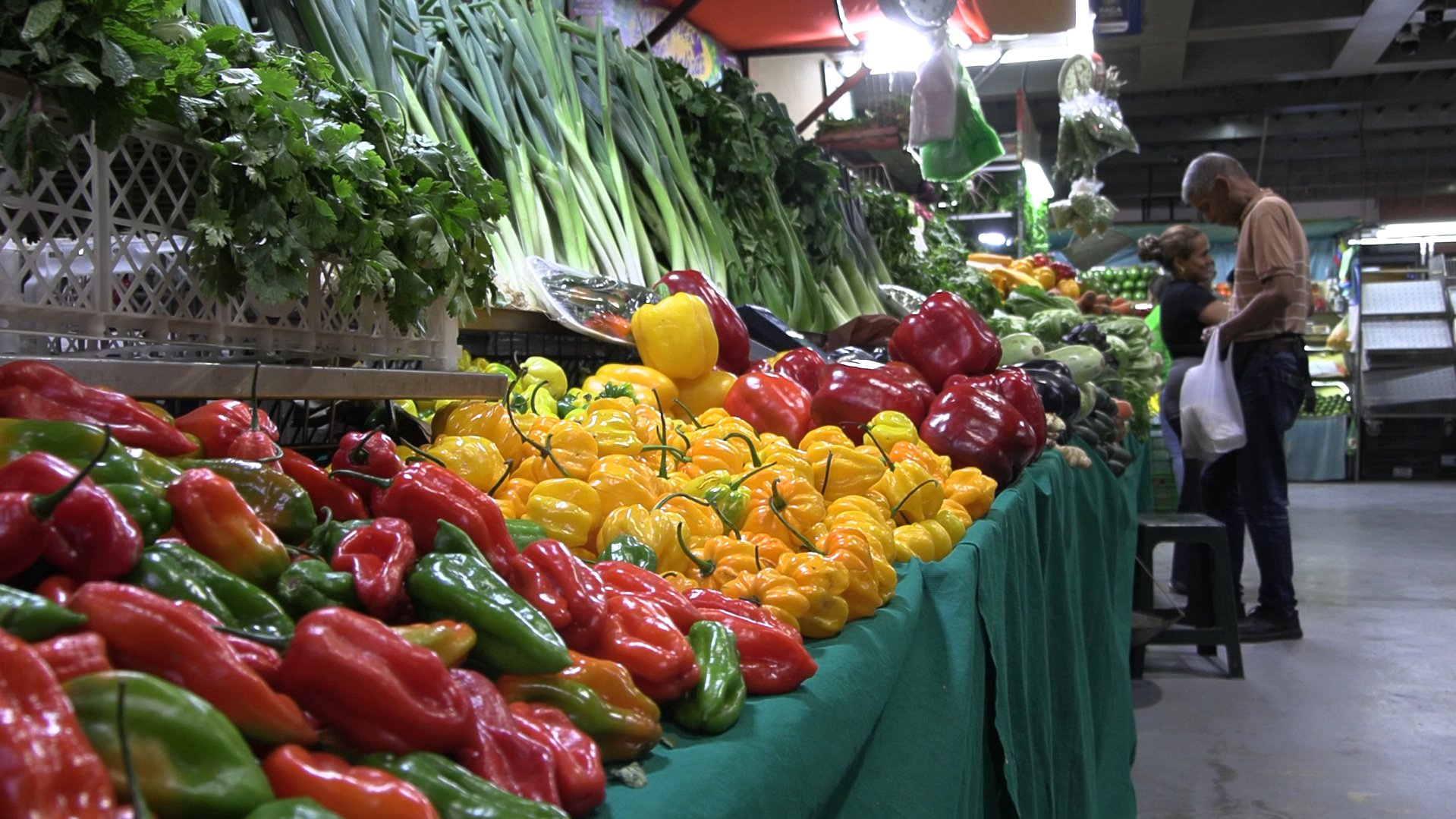
Onion and paprika have prices from 1.5 dollars and 4 dollars per kilo, respectively; and 100 grams of garlic cost between 1 and 1.5 dollars.
The kilo of chili and the compound (cilantro, chives, ajoporro and parsley) cost around 4 dollars each, although the final expense depends on the amount of hallacas that each family plans to make. For mooring, the small wicks are offered in a combo for between $1 and $1.50, and the large presentation for $1.20.
Hallaquero combos as alternatives
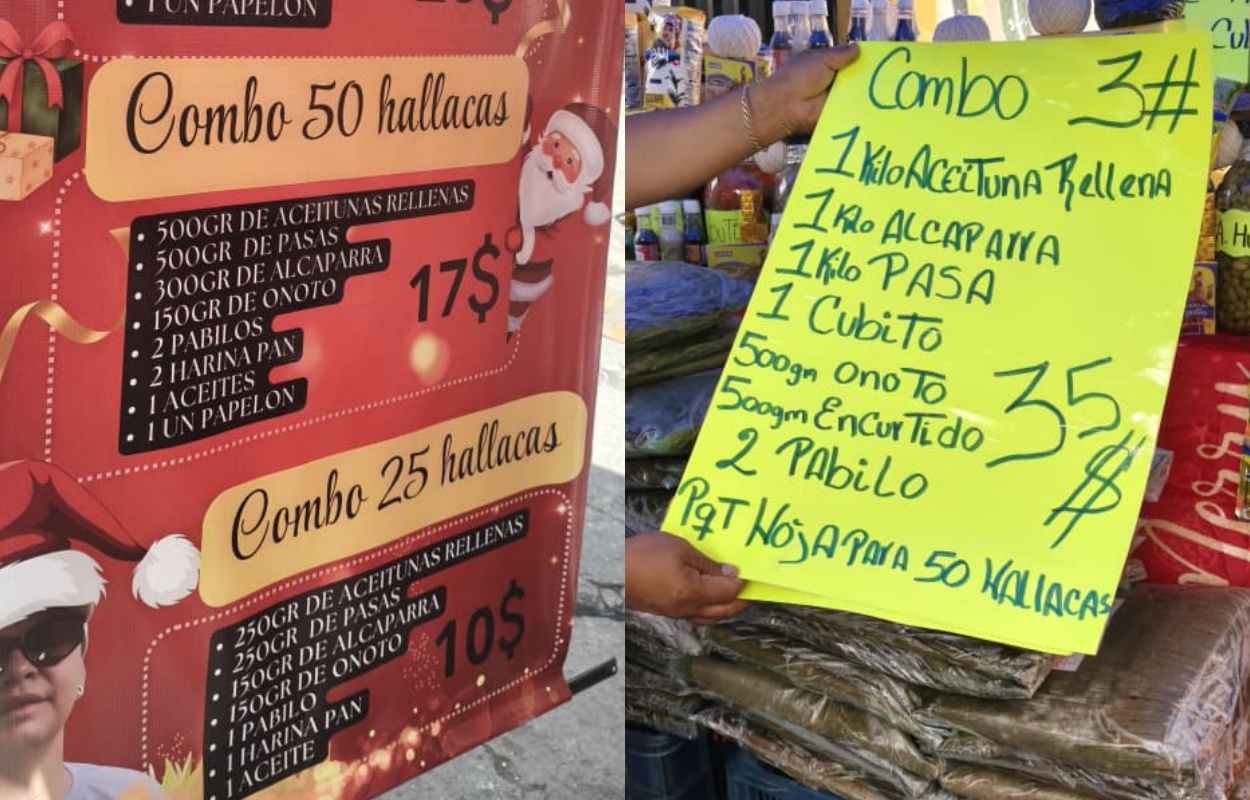
The Hallaquero combos are gaining space again this season, especially in the center and west of the capital. At Quinta Crespo they offer a $10 option that makes 25 hallacas and includes 250 grams of raisins, 150 grams of capers, 250 grams of stuffed olives, 150 grams of onoto, a straw, a liter of oil and a kilo of corn flour.
In the same area, a second combo of 17 dollars, calculated for 50 hallacas, doubles the portions of raisins, capers, olives, wicks and flour, maintaining the 150 grams of onoto and the liter of oil.
At Catia, packages range from $11 to $35. The latter is designed for 50 hallacas and includes one kilo of stuffed olives, one kilo of raisins, one kilo of capers, 500 grams of onoto, 500 grams of pickles, a cube, two wicks and a package of leaves.
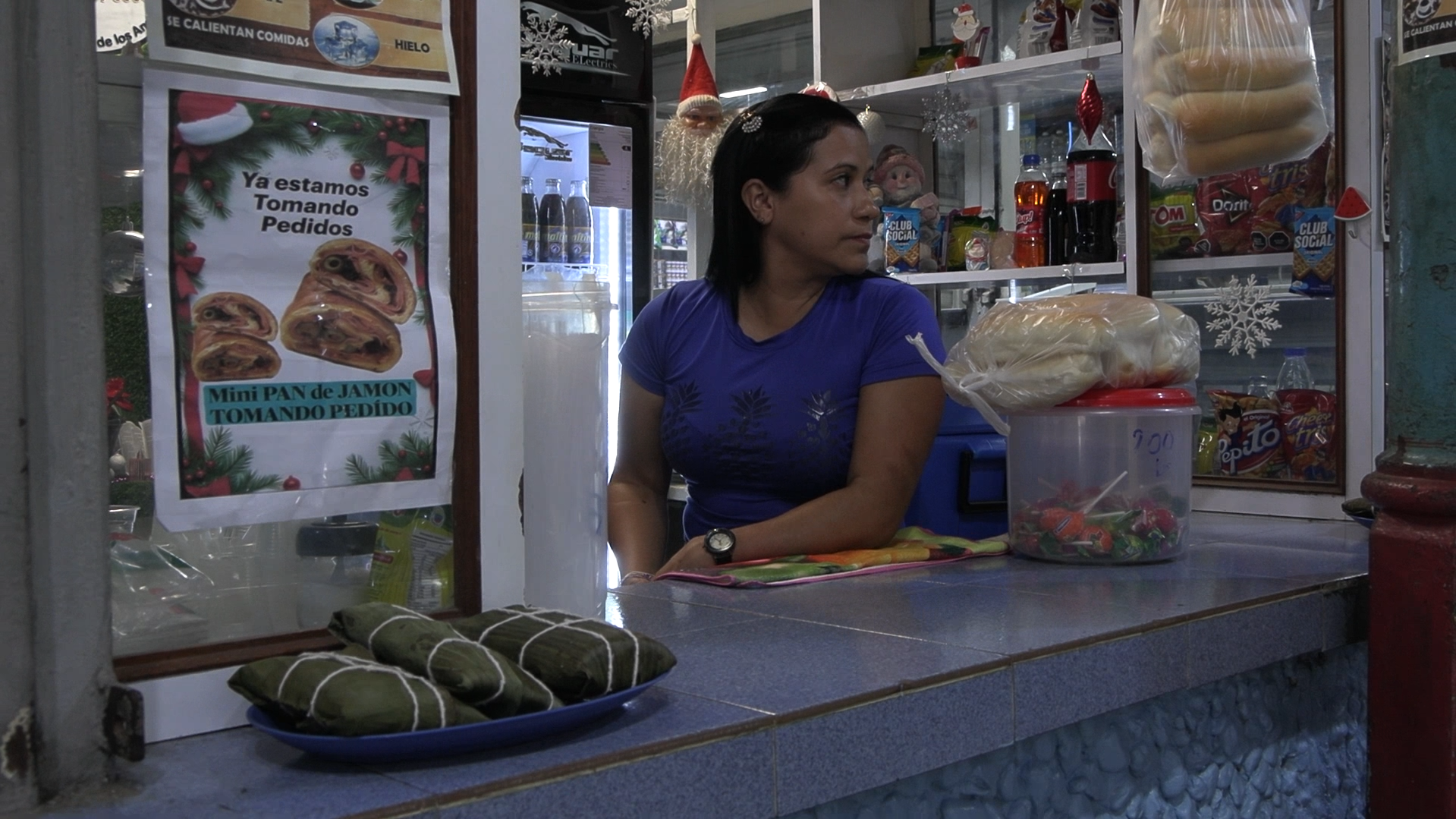
Traders waiting
Most of the sellers consulted remain attentive to the behavior of the dollar, the currency that sets the pace of prices in the country. Several agreed that costs will rise starting November 15, while pointing out that sales have started slowly compared to previous seasons.
“Prices increase every week and it is something that one cannot avoid, but one cannot raise everything at once because how would one sell?” commented Janeth Lozada, a seller at the Chacao Municipal Market.
Lozada, who prepares hallacas for sale throughout the year, stated that his base budget for making them is around $100. It currently offers the unit with meat and chicken for $5, while the traditional three-meat unit (beef, chicken and pork) is sold for $7.
For his part, Brian Gutiérrez, an informal merchant on Pérez Bonalde Boulevard, in Catia, admitted that the commercial movement has been “a little strong,” but he assures that he has managed to sustain himself these first weeks of November thanks to his fixed clientele.
“These products will increase in price after November 15. Right now I bought a pipe of stuffed olives for 210 dollars, but at any time I go and they tell me 240 or 250 dollars. These are costs that one has to review in order to make a living, although I hope to maintain my prices,” explained Gutiérrez.
However, many merchants expressed feeling optimistic and hope that at the end of the year the outlook will improve.
“Sales are regular, but let’s hope they improve. Despite all the problems there have been, the earthquake and other things, I think this year will be better; I’m optimistic. God squeezes, but he doesn’t choke,” commented José Pacheco, a merchant at the Chacao Market.
Ham bread
Along with hallacas, pernil and chicken salad, ham bread is also part of the Venezuelan Christmas table.
Unlike other traditional recipes that were born in domestic kitchens, this dish had a purely commercial origin in Caracas bakeries. However, today there are many families who prefer to prepare it at home to enjoy kneading and reduce expenses.
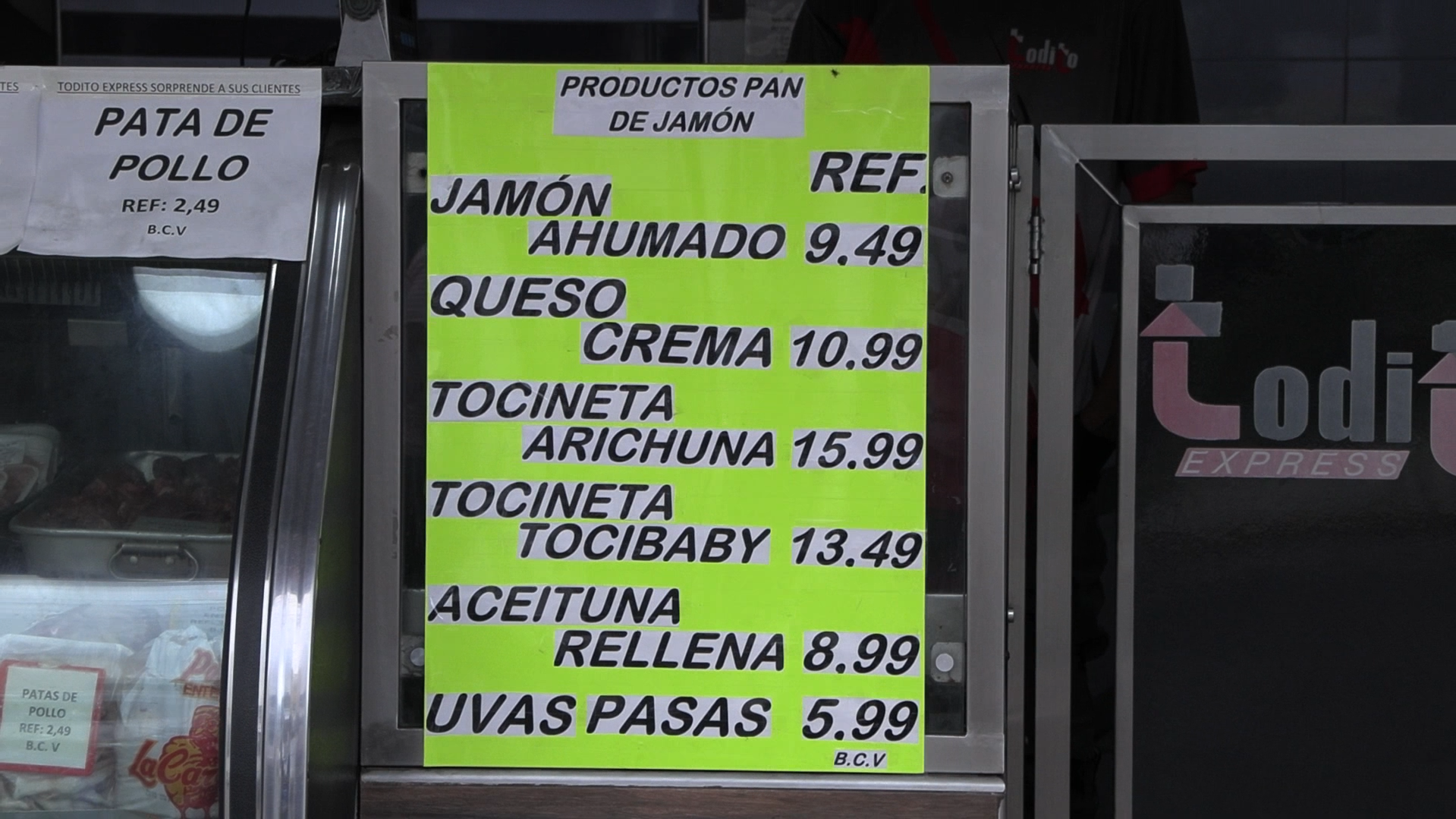
For those who decide to bake it on their own, a kilo of all-purpose or bakery flour costs $1.20. Smoked ham ranges from 9 to 17 dollars per kilo, depending on the brand.
Bacon is one of the most expensive ingredients, with prices ranging from 13 dollars, in its cheapest versions, up to $25. However, many substitute it with smoked pork loin, which starts at $7.50.
If you want to incorporate cream cheese into the recipe, you should add about 10 additional dollars to the budget.
With these amounts, anticipating purchases before December is the best strategy to protect the budget. This planning effort shows that, despite the economic situation that hits the pockets of Venezuelans, preparing hallacas and ham bread continues to be an essential tradition to bring the family together at the table.