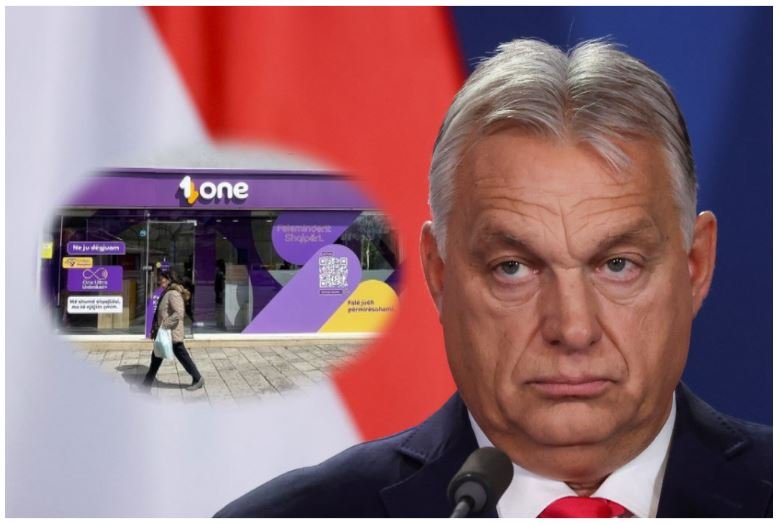
The new Hungarian government announced that it will review the 16 billion euro loan application for the defense sector from the European Commission due to corruption risks. The news was made public by Euronews, which cites sources from the party of the newly elected Magyar Prime Minister.
“We will critically examine the list presented by the outgoing government and make decisions based on real needs and an assessment of corruption risks,” a source within the Tisza Party told Euronews on condition of anonymity.

According to Euronews the corruption risks mentioned are understood to be related to Hungarian industrial interests with ties to the outgoing government of Viktor Orbán. And the main company representing these interests is 4iG, which in Hungary is considered one of the corruption pillars of Orban’s government.
CREDIT
Last year, the European Commission launched a scheme of hundreds of billions of euros to support the defense costs of member countries. The financing package was based on loans with soft interest and the former government of Viktor Orban applied for 16 billion euros. But after the launch of the scheme a large part of the Hungarian defense industry was privatized by 4iG, through several procedures that are now under investigation for corruption. According to the Hungarian media, the majority of these funds would benefit the company 4iG.
The loan freeze by the Magyar government is suspected to be mainly related to 4iG, described as Orban’s court company. Due to these developments, kontroll.hu, a media outlet close to Prime Minister Magyar’s party, writes that 4iG may go towards bankruptcy.
Risks for ONE Albania
4iG is the parent company, which owns One Albania, one of the two mobile oligopoly actors in Albania. 4iG’s financial turmoil is expected to have serious consequences for One.
Data from the mobile company’s balance sheet show high funding dependence on its parent 4iG. According to data from the balance sheet, at the end of 2024 One Albania had about 9.1 billion ALL or over 96 million euros in loans received from the parent group.