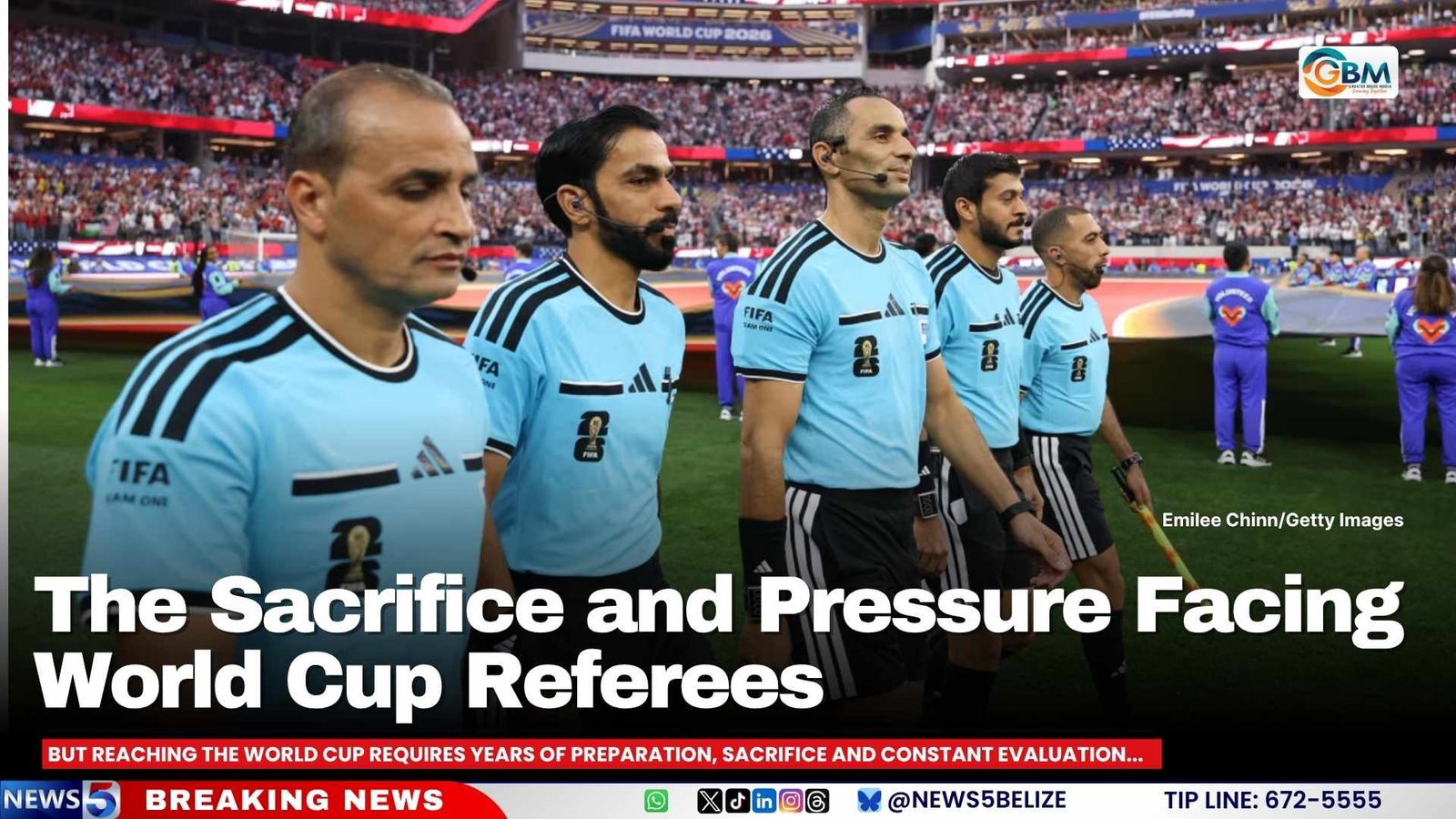
According to CNN, FIFA selected 170 officials for this year’s World Cup, including 52 referees, 88 assistant referees and 30 VAR officials. They represent 50 FIFA member nations, with eight officials from the United States and six women included in the group.
But reaching the World Cup requires years of preparation, sacrifice and constant evaluation.
Former assistant referee Leif Lindberg, who worked the 2002 World Cup final between Brazil and Germany, told CNN Sports that officiating at the tournament is a lifelong dream for many referees. “Every one of us was dreaming about officiating the World Cup,” Lindberg said. However, he noted that the journey often comes at a personal cost, with many officials sacrificing family time because of demanding training and travel schedules.
FIFA’s selection process began after the 2022 World Cup, with candidates undergoing fitness tests, training seminars and evaluations from domestic and international matches. Former Italian assistant referee Renato Faverani, who officiated the 2014 World Cup final between Germany and Argentina, said referees are closely monitored throughout major competitions. “Afterwards, you receive an evaluation, which is then compared with other referee teams,” Faverani told CNN.
Only officials with extensive experience at the highest levels of the sport are considered. Before reaching the World Cup, Faverani had worked in competitions including Serie A, the UEFA Champions League and European Championship.
Unlike players, referees do not know which matches they will officiate ahead of time. CNN reports that FIFA assigns officials three to four days before each game based on performance and tournament needs. Officials also cannot referee matches involving their own countries.
Refereeing a World Cup match requires more than knowing the rules. Officials study team tactics, player behavior and previous matches before taking the field.
CNN reports that only a small percentage of FIFA’s thousands of registered officials ever reach the World Cup.
Referees are also facing increased abuse from fans, especially online. Daniele Curcio, president of Referee Abroad, told CNN Sports that declining trust in officials is affecting the future of refereeing. “Referees can be wrong, just like a player can miss a penalty,” Curcio said. “But you need to believe in them.” Despite the criticism, former officials say refereeing remains a rewarding career that builds discipline, resilience and leadership skills.