From our point of view
The public often hears that justice that comes too late is half justice. Let’s say that’s true. But it is even more dangerous when the injustice would never be corrected. Then the state sends a message that laws only apply as long as someone is powerful enough to circumvent them.
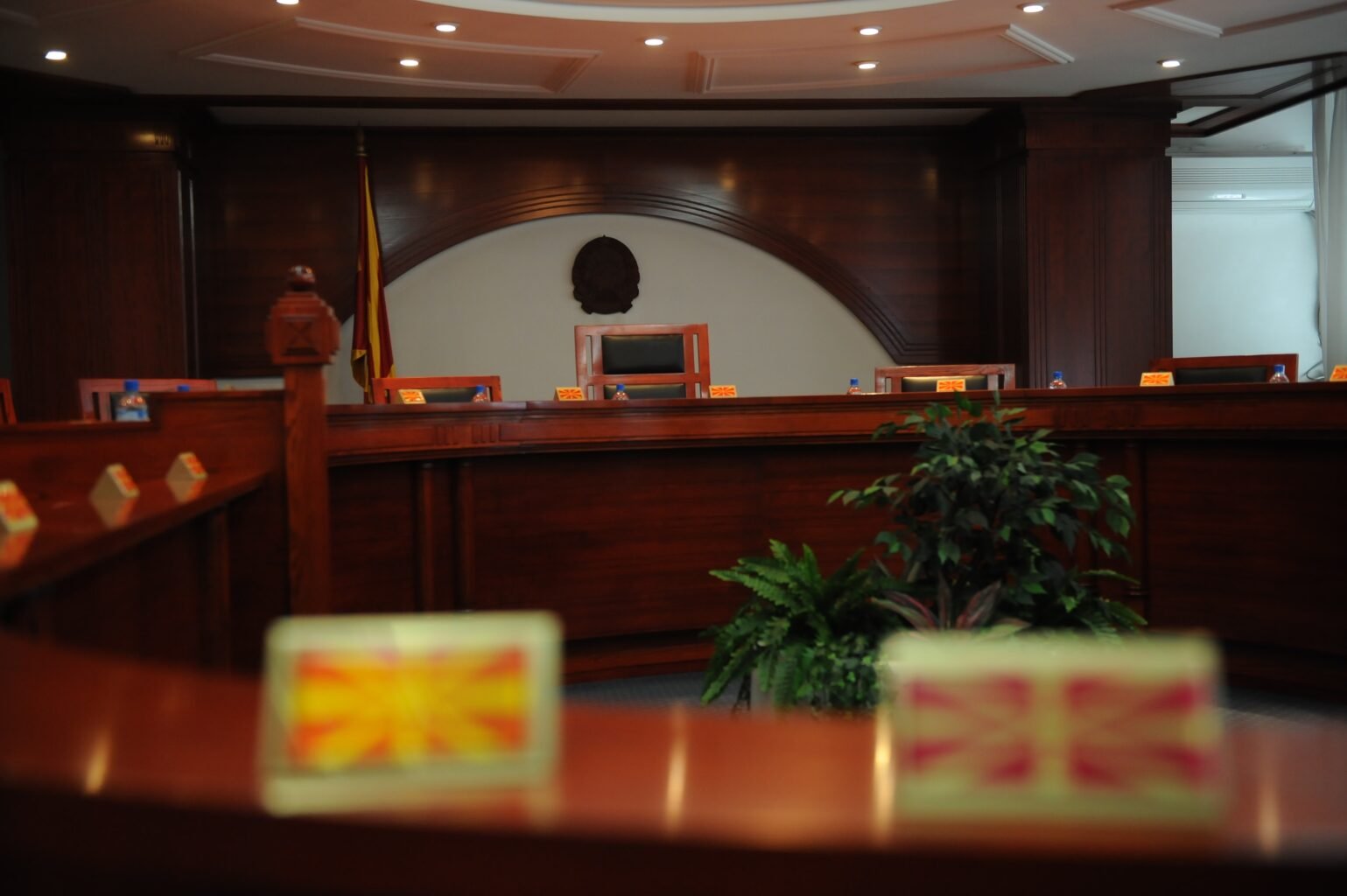
That is why the decision of the Constitutional Court to cancel the decision of the Council of the Municipality of Tetovo from 2007 has a meaning that far exceeds the names of the streets and squares. Despite the political pressures and political calculations of the holders of the highest state and local authority at that time, who were inspired by the ideas of de facto and de jure separation of territories, their regionalization and guided by ethnocentric and chauvinistic motives, and encouraged by the legitimacy given to them by some of the “big ones” in the international community, they continued the war not as aggressors, but from within, embedded in the institutions of the system, by practicing the same leitmotif as with the provoked military conflict.
That is why the decision of the Constitutional Court to annul the decision of the Tetovo Municipality Council from 2007 and its essence is in the principle that “no institution, no local authority, no political majority can be above the Constitution and the laws”!
It took two decades for the institutions to determine that a decision was made contrary to legal procedures?! That’s no reason to celebrate the slowness of the system. But it is a reason to welcome the fact that the system still works!
The rule of law is not measured by how quickly it corrects a mistake, but by whether there are institutions that are ready to correct it. The decision of the Constitutional Court shows that legality can be delayed, but it must not be permanently defeated.
For years, Macedonia was, and still is, strongly faced with a serious deficit of legal certainty. Citizens too often witness cases in which the political will tries to become more important than the legal order. That is why every institutional victory of the Constitution over arbitrariness represents an investment in public trust.
In essence, this decision of the Constitutional Court opens a much wider issue. Namely, that is the kind of country we want to build.
A country in which the laws are interpreted according to daily political needs or a country in which the rules apply equally to everyone?
The answer should be unequivocal. If Macedonia wants to become a real (European) functional state, then the Constitution must be above politics, the law above the current government, and the institutions above party interests.
In that sense, the “Tetovo” case will be remembered not only as a dispute over street names but as a reminder that the state begins where arbitrariness ends and where the rule of law begins. The Constitutional Court breaks the ice of decades of unconstitutionality and illegality. He just started. R.N.M.